Gathoni Wamuchomba Dumps UDA as She Eyes Third Githunguri Term on a New Political Party Ahead of 2027
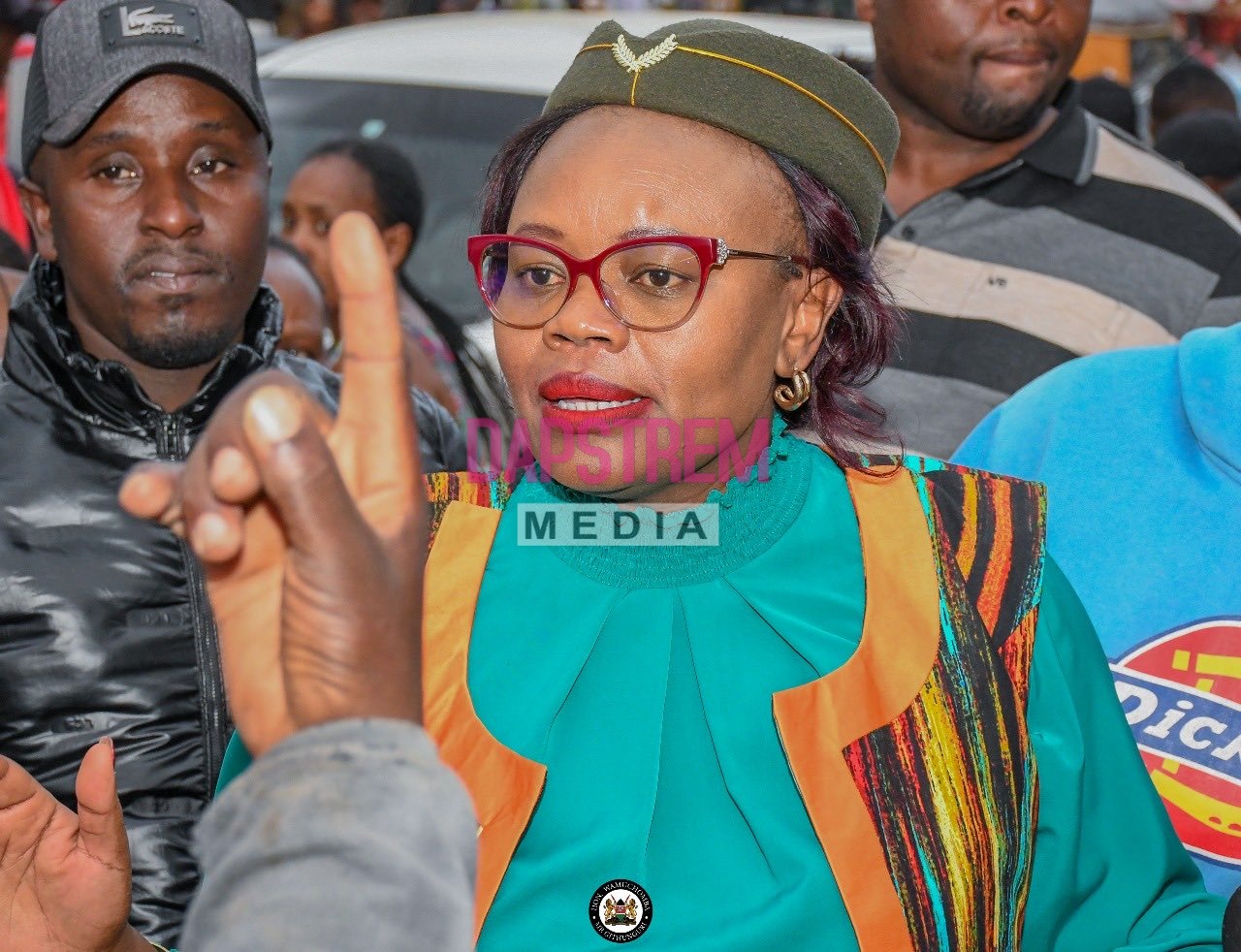
Githunguri Member of Parliament Gathoni Wamuchomba has officially left the United Democratic Alliance (UDA), ending her association with President William Ruto’s ruling party as the country moves closer to the 2027 General Election.
Wamuchomba announced her decision on Thursday, October 8, 2026, during a press conference at Parliament Buildings in Nairobi. She said she would seek to retain the Githunguri parliamentary seat in 2027, but not under the UDA ticket.
The outspoken legislator said her decision followed extensive consultations with her constituents, community leaders, church leaders and other stakeholders.
She also made it clear that her departure was a matter of conscience, saying she could no longer remain in a political arrangement with people whom she believes have shown disregard for other communities.
“I am going to defend my seat for the third term but I am not going to use UDA party,” Wamuchomba said during the press briefing.
The MP has not yet revealed the political party she intends to join or use in the 2027 election. Instead, she said she would continue consulting her constituents before announcing her next political home.
Her decision adds another significant twist to the rapidly changing political landscape in the Mt Kenya region, where several leaders have been reassessing their political alliances ahead of the 2027 elections.
Wamuchomba’s exit is particularly notable because of the journey she has taken since the 2022 General Election.
She was elected Githunguri MP on a UDA ticket and became one of the politicians associated with the Kenya Kwanza administration. However, her relationship with the administration has often been complicated, with the legislator repeatedly raising concerns over government policies and political statements made by leaders within the ruling coalition.
Her latest move therefore marks another major stage in her political career.
Wamuchomba said she had waited for the government to respond to concerns that she had raised over what she described as tribal attacks and inflammatory political statements.
According to her, she could no longer continue defending or associating herself with an administration where she believed similar standards were not being applied to all political actors.
She particularly questioned what she described as selective action against leaders accused of making remarks targeting particular communities.
Her concerns come at a time when ethnic politics and inflammatory political rhetoric have once again become major issues in Kenya’s political debate ahead of the 2027 elections.
Wamuchomba has previously criticised leaders accused of making remarks that could deepen ethnic divisions. In August, she threatened to leave UDA if action was not taken against leaders whom she accused of making inflammatory statements. She also criticised remarks attributed to Nominated MP Josphat Wainaina and raised concerns over comments by Health Cabinet Secretary Aden Duale.
Her latest decision suggests that those disagreements were not merely temporary political differences.
Instead, they appear to have contributed to a broader decision to separate herself from UDA.
Wamuchomba said she could not “dine and associate” with people who, in her view, have no regard for other communities.
She also argued that she had raised concerns about tribal balkanisation, discrimination and rising political temperatures but did not receive the response she expected.
The decision is likely to generate considerable political debate, particularly in the Mt Kenya region, where political loyalties have shifted significantly since the 2022 elections.
Wamuchomba’s Political Journey Takes Another Turn
Wamuchomba’s political journey has been marked by an ability to take positions that have sometimes put her at odds with powerful political figures.
She initially emerged as one of the more vocal supporters of former Deputy President Rigathi Gachagua and was widely viewed as being close to the former DP’s political camp.
Her relationship with Gachagua and his allies, however, became increasingly complicated.
Earlier in 2026, Wamuchomba accused Gachagua and some of his allies of attempting to intimidate and pressure her into joining his political movement. At the time, she insisted that she would remain in UDA and continue supporting President Ruto.
She later publicly expressed support for Ruto and appeared to be positioning herself firmly within the ruling party.
That political shift made her latest decision particularly significant.
Wamuchomba is now once again moving away from UDA, although it remains unclear whether she will join Gachagua’s Democracy for Citizens Party (DCP), another opposition vehicle, or a completely different political formation.
She has not committed herself to any particular party.
Instead, she has placed her next move in the hands of the people of Githunguri.
That position could be strategic.
By consulting her constituents before announcing her political vehicle, Wamuchomba could be attempting to ensure that whichever party she eventually chooses has sufficient support on the ground.
For an incumbent MP seeking a third term, the strength of the local political network is often just as important as the national profile of a political party.
Githunguri will therefore be watching closely as the MP decides where to take her political future.
Wamuchomba has already made one thing clear: she wants another term in Parliament.
Her immediate objective is therefore not to leave elective politics but to find a political platform that she believes can deliver another victory.
Farmers’ Issues Also Feature in Her Decision
Beyond political and ethnic concerns, Wamuchomba has also raised economic issues affecting farmers.
She has particularly focused on the tea and coffee sectors, which are important to many households in the Mt Kenya region.
In explaining her dissatisfaction with the government, she has previously raised concerns about the economic promises made to farmers and what she considers inadequate action to improve their earnings.
On Thursday, she again called for government intervention in the tea sector, including the suspension of the 0.8 per cent tea export levy.
She argued that the levy should be suspended to give tea farmers and exporters room to recover lost markets and improve their bargaining position.
Wamuchomba also raised concerns over the accumulation of tea stocks at the Port of Mombasa and the loss of important markets, including Sudan and Iran.
She called for an audit of tea factories and a clear restructuring and recovery plan for factories facing financial difficulties.
The MP also raised concerns about the Nairobi Coffee Exchange and the management of farmers’ coffee earnings.
These issues are politically important because agriculture remains a major economic concern in the Mt Kenya region.
Tea and coffee farming supports thousands of households, and politicians from the region have traditionally used agricultural policy and farmer incomes as major campaign issues.
For Wamuchomba, positioning herself as a voice for farmers could therefore become an important part of her 2027 campaign.
Her decision to leave UDA could allow her to campaign on issues where she believes the government has failed to deliver.
It could also give her greater freedom to criticise policies without having to defend the wider administration.
A New Political Battle in Githunguri
Wamuchomba’s announcement now sets the stage for an interesting political contest in Githunguri.
She will be seeking a third term, but her decision to leave UDA means she will have to build a new political alliance.
The strength of that alliance will depend on the party she eventually chooses.
If she joins an established opposition party, she could benefit from an existing national network and campaign machinery.
If she chooses a smaller party, she could have greater control over her political platform but may have to build much of the machinery herself.
Another option would be to work with a new political movement emerging around Mt Kenya politics.
The region has witnessed considerable political realignment ahead of 2027, with politicians moving between parties as they assess their chances of winning nominations and retaining their seats.
Wamuchomba’s move is therefore part of a much larger trend.
Kenya’s political parties are already positioning themselves for the next General Election, with leaders searching for alliances that can give them an electoral advantage.
Party loyalty is increasingly being tested by local political interests.
For incumbent MPs, the biggest question is often whether their current party can guarantee them a competitive nomination.
For voters, however, the more important question is increasingly becoming what individual politicians have delivered for their constituencies.
Wamuchomba will therefore have to convince Githunguri voters that leaving UDA is in their interest.
She will also need to demonstrate that her new political vehicle can effectively represent the constituency.
Her critics may argue that she is simply changing political sides ahead of the election.
Her supporters, on the other hand, may view the decision as a demonstration of political independence.
The coming months will determine which interpretation gains more traction among voters.
Her Exit Comes as 2027 Politics Intensifies
The timing of Wamuchomba’s announcement is significant.
Kenya is less than a year away from the August 2027 General Election, and political parties are already preparing for nominations, alliances and campaigns.
The political environment is becoming increasingly competitive.
Across the country, elected leaders are assessing their positions and exploring new political alliances.
The Mt Kenya region is particularly important because of its large voting population and its strategic importance in presidential politics.
The region supported Ruto and Kenya Kwanza heavily in 2022, helping the coalition secure victory.
Since then, however, political relations have changed significantly.
The fallout between Ruto and Gachagua has reshaped political alignments across the region.
Some leaders have remained loyal to Ruto.
Others have moved closer to Gachagua.
Some have attempted to maintain political independence.
Wamuchomba’s latest decision places her in the third category for now.
She has not declared allegiance to another party.
Instead, she says she will consult her people before deciding.
That could allow her to keep her options open as the political landscape continues to change.
Her decision could also influence other leaders who may be considering leaving UDA.
If she successfully defends her seat under another political party, her move could strengthen the argument among other incumbents that they do not necessarily need the ruling party’s ticket to survive politically.
However, if she struggles to retain her seat, her departure could serve as a warning to other politicians considering a similar move.
UDA Faces Another Test in Mt Kenya
For UDA, losing an incumbent MP is politically significant.
The party has invested heavily in building a nationwide political structure since its formation and has sought to maintain a strong presence in the Mt Kenya region.
Wamuchomba’s exit could therefore raise questions about the party’s relationship with some elected leaders from the region.
However, it does not automatically mean that UDA will lose Githunguri.
The party is likely to field another candidate, and the eventual strength of that candidate will determine whether the party can remain competitive.
The 2027 election will also be different from 2022.
Voters may be less influenced by the national popularity of a party and more focused on individual candidates and local issues.
In Githunguri, matters such as roads, healthcare, agriculture, employment and access to government services are likely to feature prominently in the campaign.
Wamuchomba will need to defend her record in Parliament and demonstrate why voters should give her another term.
Her decision to leave UDA alone will not guarantee victory.
She will have to win the confidence of the electorate once again.
What Happens Next?
The immediate question is which party Wamuchomba will choose.
She has promised to announce her next political move after consulting her constituents.
That announcement could have wider implications.
If she joins a party associated with the opposition, her departure could be interpreted as a direct rejection of the Kenya Kwanza administration.
If she joins another Mt Kenya political vehicle, it could reinforce efforts to create a stronger regional political bloc.
If she chooses an independent or smaller political platform, it could demonstrate her determination to build a campaign around her personal popularity rather than a major party.
For now, however, Wamuchomba is keeping her cards close to her chest.
Her message is that the people of Githunguri will have a significant say in determining her next political home.
What is already clear is that her relationship with UDA has come to an end.
Her departure represents another important development in Kenya’s rapidly shifting political landscape ahead of 2027.
Wamuchomba entered Parliament through UDA in 2022.
She will now attempt to return to Parliament through a different political vehicle.
Whether that decision strengthens her political career or creates new challenges will ultimately be decided by the voters of Githunguri.
For now, her announcement has opened another chapter in the increasingly competitive battle for political influence in Mt Kenya.
And with the 2027 General Election approaching, Wamuchomba’s next move will be closely watched not only in Githunguri but across the wider political landscape.