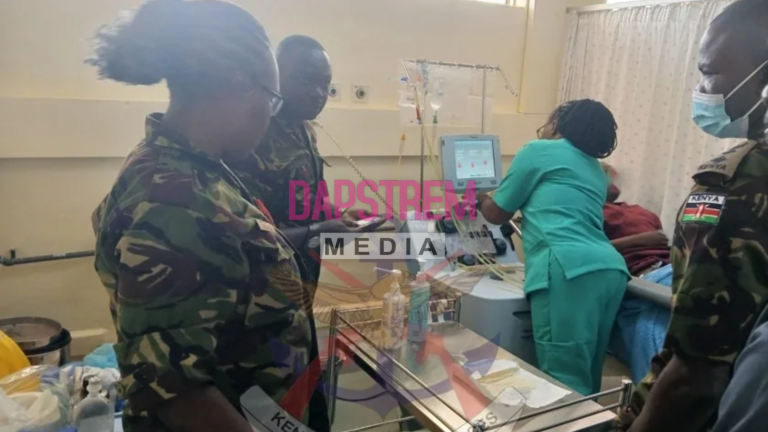
Kenya on High Alert as First Ebola Case Is Confirmed After Patient Arrives From DRC and Dies in Nairobi
Kenya has confirmed its first case of Ebola after a Kenyan citizen who had been living in the Democratic Republic of Congo (DRC) died while receiving treatment at a Nairobi hospital.
The confirmation has placed the country on heightened alert as health authorities move quickly to trace people who may have come into contact with the deceased and prevent further transmission.
Health Cabinet Secretary Aden Duale announced the development on Tuesday, October 6, 2026, saying the patient had arrived in Kenya after spending seven years in the DRC.
The patient had reportedly fallen ill about a month before returning to Kenya and had received treatment at several health facilities in the DRC.
He later travelled by road from the DRC to Kampala, Uganda, before boarding a Jambojet flight to Nairobi.
According to the Ministry of Health, he arrived at Jomo Kenyatta International Airport on Saturday, October 3, where he underwent routine public health screening before proceeding through immigration.
He was subsequently taken directly from the airport to Nairobi Hospital by a relative and a friend.
At the hospital, doctors quickly recognised that his symptoms could be consistent with a viral haemorrhagic fever and placed him in isolation.
Tests later confirmed that he had Ebola Bundibugyo virus disease, the strain responsible for the current outbreak in the region.
Despite receiving supportive treatment, the patient died at approximately 11:30pm on Monday.
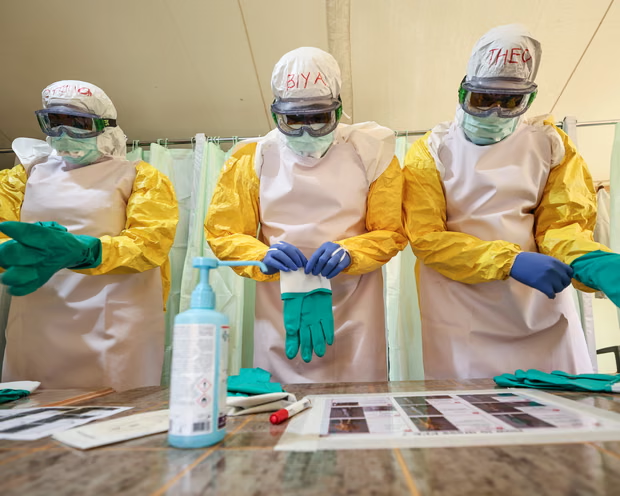
His death has now made Kenya the latest country affected by an outbreak that began in the DRC and has already spread beyond its borders.
The Ministry of Health has said arrangements were being made for a safe and dignified burial under Ebola-specific public health protocols.
The government has also urged Kenyans not to panic, insisting that surveillance and response systems have been activated to prevent the disease from spreading further.
Health authorities begin contact tracing
The immediate priority for Kenya’s health authorities is contact tracing.
The Ministry has identified 28 people who had contact with the deceased, including family members and healthcare workers who attended to him.
Authorities are also tracing passengers and crew members who travelled on the same flight from Uganda to Nairobi.
The Ministry said 23 passengers and four crew members are being pursued as part of the response.
Those considered to have been exposed will be monitored for 21 days, which corresponds to the maximum incubation period used for Ebola monitoring.
Contact tracing is one of the most important tools available to health authorities during an Ebola outbreak.
Unlike diseases that can spread easily through casual contact, Ebola transmission generally requires direct contact with the blood or other bodily fluids of an infected person, or contact with contaminated materials.
This means identifying people who had close contact with an infected person can allow health officials to monitor them for symptoms and isolate suspected cases quickly.
The approach is particularly important in the Kenyan case because the patient travelled through several locations before being diagnosed.
His journey began in the DRC, where he had been living for several years.
He then travelled overland to Kampala before boarding a commercial flight to Nairobi.
After arriving at JKIA, he travelled to a hospital where he was subsequently isolated.
Every stage of that journey provides health officials with potential contacts that need to be assessed.
Authorities will therefore have to work closely with their counterparts in Uganda and the DRC as they reconstruct the patient’s movements.
The cross-border nature of the case highlights the difficulty of containing infectious diseases in a region where people frequently move between countries for work, family reasons, trade and other activities.
Kenya had already strengthened surveillance at airports and land borders because of the regional Ebola outbreak.
The Ministry of Health says these measures include enhanced surveillance, laboratory testing, contact tracing, screening at points of entry and preparedness at health facilities.
Earlier in the year, Kenya had screened more than 71,000 travellers and investigated 22 Ebola alerts, all of which tested negative.
More than 1,000 healthcare workers had also undergone specialised Ebola preparedness training, while a reserve team of 241 experts in epidemiology, laboratory services and emergency response had been placed on standby.
Those preparations are now being put to the test.
Kenya’s preparedness faces its first major test
For months, Kenya had been preparing for the possibility that Ebola could cross into the country.
The preparations intensified after outbreaks were reported in the DRC and Uganda.
In May, the Ministry of Health announced that it had strengthened surveillance and emergency response systems because of the regional outbreak of the Bundibugyo strain.
Kenya activated its National Ebola Incident Management System and increased screening at high-risk points of entry.
The country also strengthened its laboratory capacity and designated isolation and treatment facilities in selected hospitals and border locations.
Nairobi Hospital, where the patient was treated, had an isolation facility that had previously been used during the COVID-19 pandemic.
The facility has intensive care and high-dependency capacity and more than 145 beds, according to the Ministry.
This infrastructure allowed the patient to be separated from other patients after doctors suspected a viral haemorrhagic fever.
The case demonstrates why governments often invest in outbreak preparedness even when there are no confirmed cases.
Before Tuesday’s announcement, Kenya had no confirmed Ebola case despite the outbreak occurring in neighbouring countries.
The preparedness measures were therefore designed to ensure that the country would be able to detect an imported case quickly if one occurred.
The first confirmed case now provides an important test of whether those systems can prevent further transmission.
The World Health Organization has said the Bundibugyo virus involved in the current outbreak is particularly challenging because there is no approved vaccine or specific treatment for this species of Ebola.
Work is ongoing to test potential vaccines and treatments.
This makes early detection, isolation, contact tracing, infection prevention and community engagement especially important.
The absence of a specific approved treatment does not mean that patients cannot receive care.
Supportive treatment can help manage symptoms and complications, while rapid isolation can reduce opportunities for the virus to spread.
Health workers therefore remain at the centre of the national response.
They are also among the people who can face the highest risk because they come into close contact with suspected and confirmed patients.
For this reason, strict infection prevention and control measures are essential in hospitals.
Healthcare workers who treated the deceased patient are among the contacts being monitored.
Their status will be closely watched during the monitoring period.
The government is also expected to continue providing personal protective equipment, training and technical support to health workers involved in the response.
A wider regional health crisis
Kenya’s first Ebola case cannot be viewed separately from the much larger outbreak in the DRC.
The DRC has been battling an unusually severe outbreak caused by the Bundibugyo strain.
According to Reuters, the outbreak had surpassed 8,300 confirmed cases and 4,000 deaths by early October, making it the largest and deadliest Ebola outbreak recorded in the country.
The outbreak began in eastern DRC and has proved difficult to contain.
The situation has been complicated by population movement, insecurity and the challenges of reaching communities in affected areas.
The WHO has highlighted the importance of surveillance, contact tracing, clinical preparedness, infection prevention and community engagement in controlling the outbreak.
Uganda was also affected earlier in the year.
The country recorded 20 cases and two deaths before being declared Ebola-free in August.
Kenya’s confirmed case therefore represents another indication of the challenge posed by cross-border movement during an active regional outbreak.
The movement of people between East and Central Africa is extensive.
Kenya is a major transport and aviation hub, while Uganda serves as an important transit point for people travelling between the DRC and other parts of the region.
That makes border surveillance particularly important.
However, surveillance does not mean shutting borders or stopping ordinary movement.
Instead, health authorities have to identify people who may have been exposed, provide them with information and ensure that suspected cases are detected and isolated quickly.
This requires cooperation between governments.
Kenya, Uganda and the DRC must share information about suspected cases, travellers and contacts so that people do not disappear from monitoring systems simply because they have crossed an international border.
The current case illustrates why regional cooperation is essential.
The patient travelled from the DRC to Uganda and then to Kenya before his illness was confirmed.
Without coordination between the three countries, tracing everyone who may have been exposed would be significantly more difficult.
The health authorities must also balance disease control with the need to prevent unnecessary fear.
Ebola is a serious disease, but confirmation of one imported case does not automatically mean that Kenya is facing widespread community transmission.
At this stage, the government’s focus is on determining whether the patient infected anyone else and ensuring that any potential secondary cases are detected early.
The identification of 28 contacts is therefore an important development.
If those contacts remain under observation and none develops symptoms, the likelihood of onward transmission will fall.
If someone develops symptoms, rapid testing and isolation can help prevent that person from infecting others.
This is why members of the public have been urged to cooperate with health officials.
People who may have been exposed should not hide symptoms or avoid contact tracing.
Doing so could make it much harder for health workers to contain the disease.
The government has also urged Kenyans to rely on official information rather than social media rumours.
Public health emergencies can create an environment where misinformation spreads quickly.
Unverified claims about Ebola can cause unnecessary panic, discrimination and stigma against people from affected countries or people who are merely suspected of having been exposed.
Such reactions can undermine the health response.
People may become afraid to seek medical care because they fear being isolated or labelled.
Others may avoid hospitals entirely.
Health authorities therefore need to communicate regularly and clearly throughout the response.
The Ministry of Health has previously warned that misinformation and disinformation can undermine outbreak preparedness and response.
It has urged media organisations and the public to rely on verified information from health authorities.
The media also has an important responsibility.
Ebola stories naturally attract attention because of the seriousness of the disease.
However, reporting must avoid sensationalism.
Accurate information about symptoms, transmission, prevention and official response is more useful to the public than frightening speculation.
The latest development also reminds Kenyans that preparedness cannot stop once an outbreak appears.
Health facilities need to maintain isolation capacity.
Laboratories need to remain ready to test suspected cases.
Border health teams need to remain alert.
Healthcare workers need continuous training.
And communities need to know where to report suspected cases.
The government has already invested in these systems.
The coming days will show how effectively they work.
For the family of the deceased, however, the focus is more personal.
The confirmation of Kenya’s first Ebola case has come with the loss of a Kenyan citizen who had been living abroad for years and returned home while seriously ill.
The Ministry has expressed condolences to the family and said arrangements were being made for a safe and dignified burial.
Because Ebola can spread through contact with the body of a person who has died from the disease, burial procedures must be carefully managed.
Health officials will therefore oversee the process to minimise the risk of transmission while ensuring that the deceased is treated with dignity.
The situation is a reminder of the delicate balance health authorities must maintain during outbreaks.
They have to protect the living while respecting the dignity of those who have died.
For Kenya, the priority now is clear.
The country must prevent the first confirmed case from becoming the beginning of a wider chain of transmission.
That will depend heavily on contact tracing, monitoring, laboratory testing, hospital preparedness and cooperation from the public.
The 28 identified contacts will remain an important part of that effort.
So will the passengers and crew members being traced from the flight that brought the patient into Nairobi.
Authorities will need to establish whether any of them have developed symptoms and whether additional contacts exist.
At the same time, Kenya must continue working closely with Uganda and the DRC to understand how the outbreak is evolving in the region.
The World Health Organization has stressed that community engagement is central to controlling the outbreak.
Communities must understand the disease and trust the people leading the response.
Without that trust, people may hide cases, avoid health facilities or reject public health measures.
With cooperation, however, suspected cases can be reported earlier and contacts can be monitored more effectively.
Kenya’s first confirmed Ebola case is therefore a serious development, but it is also a test of the preparedness systems the country has spent months building.
The government says it has been preparing for the possibility of an imported case since the outbreak emerged in the region.
Now those systems must deliver.
The immediate goal is to contain the infection, protect healthcare workers, trace every possible contact and ensure that any new suspected cases are identified quickly.
For ordinary Kenyans, the message from health authorities is one of vigilance rather than panic.
People should pay attention to official health guidance, seek medical attention when they develop concerning symptoms and cooperate with contact-tracing teams when requested.
The country’s first Ebola case has brought the regional outbreak closer to home.
But the speed and effectiveness of the response in the coming days will be critical in determining whether it remains an isolated imported case or develops into a larger public-health challenge.
Kenya now faces its first confirmed Ebola case with systems already activated, health workers on alert and authorities racing to trace everyone who may have been exposed.
The next several weeks will be crucial as the country works to ensure that the virus does not gain a foothold beyond the initial case.