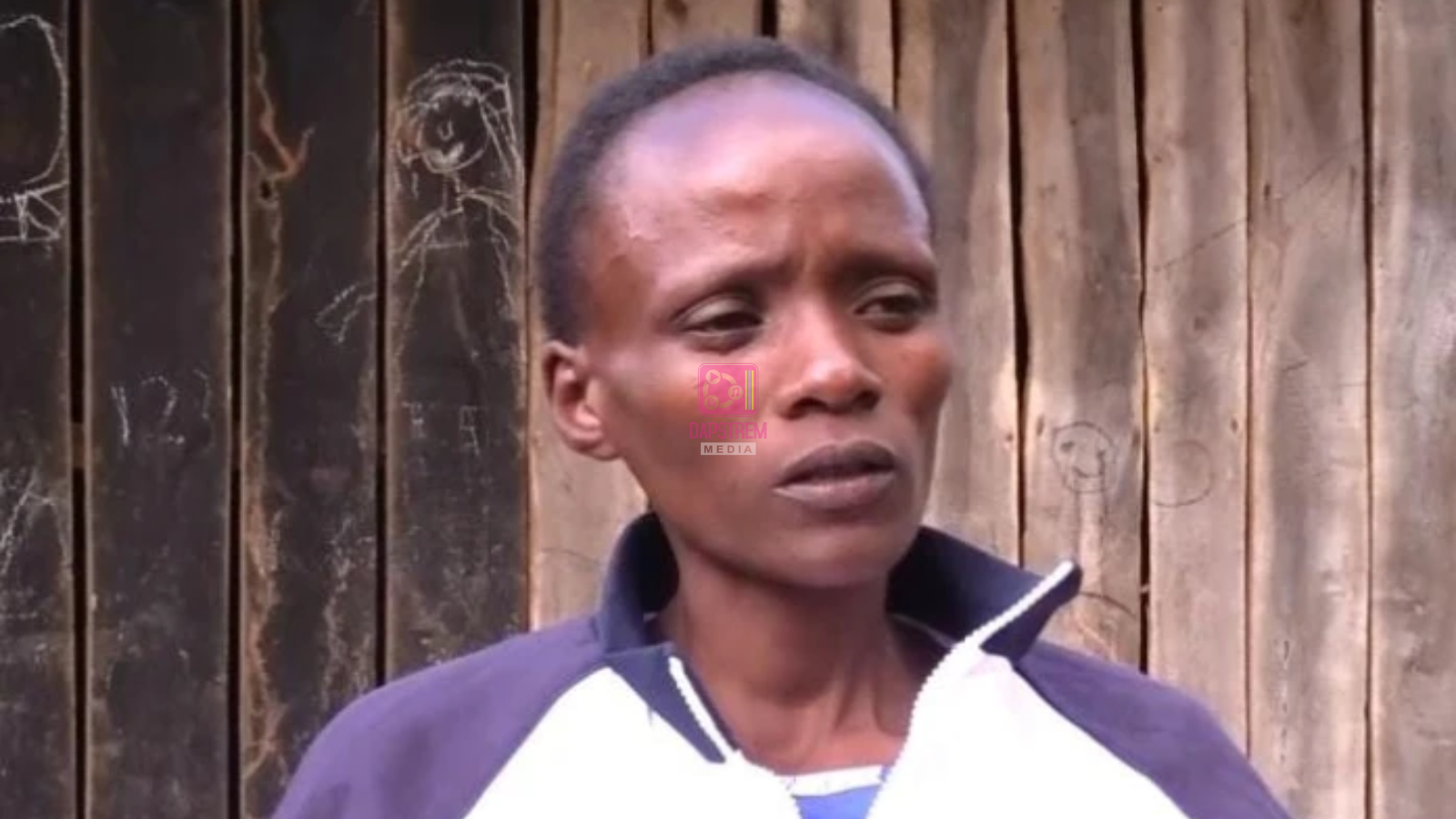
By the time Beatrice Murugi began picking tea in Kirinyaga, the long roads that had once carried her across international races had become a distant memory. An illness, financial setbacks and a difficult family situation have left the former Kenyan athlete fighting a very different race one for survival.
The former Kenyan distance runner competed in 10-kilometre and half-marathon races and, at the height of her career, represented Kenya internationally. Her talent took her from her rural home in Nyahururu to Japan, where she continued her education and developed her athletics career.
According to recent accounts about her life, Murugi’s journey into elite athletics began after a village elder recognised her potential and helped her travel to Japan in 2009. By 2012, she had entered professional competition.
Her success did not only change her own life.
She used her earnings to buy land, build a home for her mother and contribute towards the education of her siblings. Her sporting career had become a means of lifting an entire family from hardship.
When the running stopped
Murugi’s problems were not caused by a single event.
Reports about her circumstances describe a series of financial and personal setbacks that eventually left her without the security she had built during her years as an athlete.
One of the setbacks involved a commercial lorry she had acquired as an investment. According to reports, the vehicle was involved in a fatal accident near the Del Monte area. Those reports say the vehicle’s insurance had lapsed without Murugi’s knowledge, leaving her facing substantial financial consequences. These details have been reported by local publications but have not been independently established through court or insurance records.
For someone who had depended on athletics for her income, the loss was significant.
But the more devastating blow came from her health.
Reports differ slightly over the exact onset of her condition. One account dates the beginning of her serious stomach problems to December 2020, while other reports place the major deterioration in 2021. What is consistent across the recent accounts is that Murugi developed a persistent abdominal condition that progressively interfered with her ability to work and maintain the physically demanding lifestyle required of an athlete.
The illness effectively took away the very thing on which her livelihood had depended: her physical strength.
From running long distances to picking tea
Today, Murugi’s circumstances are a stark contrast to the years when she travelled and competed as a professional athlete.
Recent reports place her in Kerugoya, Kirinyaga County, where she has been surviving through casual work, including tea picking.
She is reportedly living in a small rented room costing about KSh1,000 a month and caring for her 10-year-old child. The work is physically demanding particularly for someone already struggling with a serious health condition but it has become a means of putting food on the table.
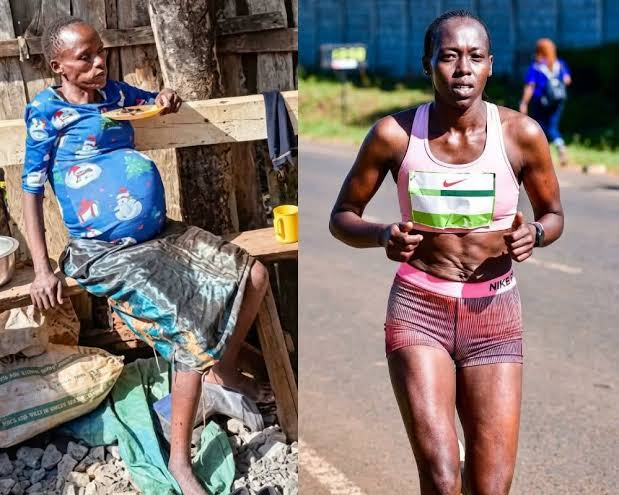
The contrast is difficult to ignore.
Once, Murugi’s legs carried her through competitive races as she represented Kenya.
Now, those same legs take her into tea plantations in search of a day’s income.
Her immediate concerns are no longer race preparation, competition schedules or finishing times. They are food, rent, medical treatment and her child’s education.
A mother fighting another battle
Murugi’s illness has also affected her ability to provide for her child.
Recent reports say she has struggled to meet school expenses and other basic needs. Her situation attracted wider attention after her story and images circulated on social media, prompting members of the public to seek help for her.
A community-led response subsequently saw Murugi taken to Kerugoya Level 5 Hospital, where doctors reportedly recommended surgery.
The Face of The Street Kids Foundation, which has highlighted her case, says she was taken to hospital after her plight became known and that doctors recommended an operation. The organisation is appealing for assistance with her treatment and with the needs of her child.
The intervention has given her situation a new sense of urgency.
For the first time in years, the objective is not simply to survive from one casual job to another. It is to obtain proper medical attention and regain enough health to rebuild her life.
The family burden behind an athlete’s success
Murugi’s story also illustrates something familiar in Kenyan athletics: sporting success can carry responsibilities far beyond the athlete.
For many young runners, success is not simply about personal ambition.
It can mean paying school fees for siblings, building a home for parents, buying land or creating an investment that will provide income after retirement.
Murugi appears to have followed that path.
Her reported investments in her family meant that her success was shared. But it also meant that when her ability to earn disappeared, the consequences extended beyond her.
The money that had once provided security could not easily be replaced.
Her experience demonstrates one of the vulnerabilities of a sporting career: an athlete’s greatest economic asset is often their body. When illness or injury prevents them from competing, income can disappear rapidly.
Questions beyond one athlete
Murugi’s plight has prompted renewed calls for Athletics Kenya and the Ministry of Sports to consider her situation and provide assistance.
The appeals also raise a broader question: what happens to athletes when the competition ends particularly when retirement is forced by illness rather than choice?
Kenya has built an international reputation around distance running. Its athletes compete on some of the world’s biggest stages and have helped make the country synonymous with long-distance excellence.
But an athlete’s career is temporary.
The body eventually slows down. Injuries occur. Illness can arrive unexpectedly. Investments can fail. And family responsibilities continue.
Murugi’s story therefore goes beyond one woman’s misfortune.
It raises questions about healthcare, financial planning, insurance, career transition and social protection for athletes who can no longer compete.
Her case has also highlighted the role of communities and ordinary citizens. Much of the immediate response to her plight has come after members of the public encountered her story online and began organising assistance.
That response may provide an immediate lifeline, but it also exposes a deeper challenge: emergency fundraising can help an individual through a crisis, but it is not a substitute for sustainable systems that protect athletes after their competitive careers.
There is an irony in Murugi’s story.
She once spent her career chasing finish lines.
Now, her most important finish line is not marked by a race clock or a medal.
It is recovery.
It is finding treatment for the illness that changed her life.
It is being able to provide for her child without having to choose between food and medical care.
And it is, perhaps, rebuilding the independence that her athletic career once gave her.
Recent reports say that public attention has already resulted in medical intervention and renewed efforts to support her.
But the larger questions remain.
Murugi’s story is a reminder that the applause surrounding sporting success can be temporary, while the consequences of a career can last a lifetime.
For a woman who once ran for her country and used her earnings to support her family, the journey has taken an extraordinary turn.
The international races are now behind her.
The tea plantations of Kirinyaga have become her workplace.
And her next race is one she cannot afford to lose: the fight to regain her health, protect her child and find a way to begin again.