Kenyan Forex Traders Lost KSh 7 Billion Against Just KSh 1.2 Billion in Wins in 2025, Losing KSh 856 for Every KSh 1,000 Invested
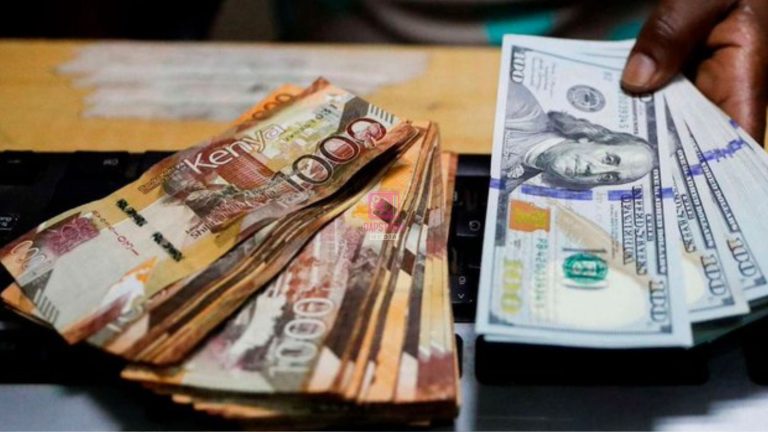
Kenya’s retail foreign exchange (forex) trading industry has come under renewed scrutiny after new figures revealed that traders collectively lost KSh 7 billion in 2025 while recording only KSh 1.2 billion in profits. The statistics paint a sobering picture of the realities facing thousands of retail investors, showing that for every KSh 1,000 invested, traders lost approximately KSh 856, highlighting the high-risk nature of forex trading despite its growing popularity across the country.
The findings have sparked fresh debate among financial experts, regulators, investment professionals, and market analysts about the level of financial literacy among retail traders and the need for greater awareness regarding the risks associated with leveraged financial markets.
Over the past several years, forex trading has experienced remarkable growth in Kenya, particularly among young people seeking alternative sources of income. Social media platforms have played a significant role in promoting online trading, with countless influencers, mentors, and self-proclaimed trading experts showcasing luxury lifestyles allegedly funded through forex profits. These success stories have attracted thousands of aspiring traders hoping to achieve financial independence through the global currency markets.
However, the latest figures reveal a reality that differs significantly from the glamorous image often portrayed online. While a small number of experienced traders consistently generate profits, the overwhelming majority of retail investors continue to struggle, with many losing substantial amounts of money before developing the skills required to trade successfully.
Forex trading involves buying one currency while simultaneously selling another, with traders attempting to profit from changes in exchange rates. The foreign exchange market is the largest financial market in the world, handling trillions of dollars in transactions every day. Prices fluctuate continuously due to economic data, interest rate decisions, inflation, geopolitical developments, central bank policies, employment reports, and global investor sentiment.
Unlike traditional investments such as government bonds or fixed deposits, forex trading is highly speculative. Success depends on accurately predicting short-term market movements, something even experienced institutional traders find extremely challenging. Retail traders therefore compete in a market dominated by banks, multinational corporations, hedge funds, investment firms, and sophisticated institutional investors equipped with advanced technology and extensive research resources.
One of the biggest reasons behind the high loss rate is the widespread use of leverage. Forex brokers often allow traders to control positions worth many times more than the money deposited in their trading accounts. While leverage has the potential to multiply profits, it equally magnifies losses. A relatively small movement in the market can therefore wipe out a trader’s capital within a short period if risk is not managed properly.
Financial experts have repeatedly warned that many beginners enter the forex market without fully understanding leverage, margin requirements, position sizing, or risk management principles. Excited by stories of overnight success, some invest money they cannot afford to lose, only to discover that the markets are far more unpredictable than expected.
The latest statistics indicating losses of KSh 7 billion compared to gains of only KSh 1.2 billion illustrate this imbalance. The figures suggest that a relatively small percentage of traders generated profits while the vast majority incurred losses. Such trends are consistent with international studies showing that most retail forex traders lose money over time.
Analysts attribute these losses to several factors, including insufficient market knowledge, emotional decision-making, unrealistic expectations, poor risk management, and overtrading. Many beginners frequently chase losses by increasing their trade sizes after unsuccessful positions, a practice that often accelerates account depletion rather than improving performance.
Another challenge facing retail traders is misinformation circulating online. Social media has become saturated with advertisements promising guaranteed profits, automated trading systems, expensive mentorship programs, and signal groups claiming exceptionally high success rates. While some educators provide valuable training, others exploit inexperienced traders by marketing unrealistic expectations that rarely reflect actual market conditions.
Financial regulators have consistently encouraged investors to verify the legitimacy of brokers and trading platforms before depositing funds. Choosing regulated brokers helps protect traders from fraud, manipulation, and unethical business practices. Investors are also advised to understand all fees, spreads, commissions, and withdrawal policies before opening trading accounts.
Education remains one of the most important factors influencing trading performance. Professional traders often spend years studying technical analysis, fundamental analysis, macroeconomics, trading psychology, and risk management before achieving consistent profitability. Successful trading requires discipline, patience, continuous learning, and strict adherence to well-defined strategies rather than relying on luck or speculation.
Risk management is particularly critical in forex trading. Experienced investors typically risk only a small percentage of their capital on any single trade, allowing them to survive periods of market volatility without exhausting their trading accounts. They also use stop-loss orders to automatically limit potential losses when markets move against their positions.
Psychology plays an equally important role. Fear, greed, overconfidence, frustration, and impatience frequently influence trading decisions, causing investors to abandon carefully planned strategies in favor of emotional reactions. Developing emotional discipline is widely regarded as one of the most difficult yet essential aspects of becoming a successful trader.
Despite the discouraging statistics, experts emphasize that forex trading itself is not inherently fraudulent or illegal. Instead, it remains a legitimate financial market used globally by banks, multinational corporations, exporters, importers, governments, and professional investment firms. The challenge lies in ensuring that retail participants fully understand the risks before committing their money.
Kenya has witnessed rapid growth in digital financial services, making access to online trading platforms easier than ever before. Mobile internet connectivity, digital payment systems, and increased smartphone ownership have enabled more people to participate in global financial markets from virtually anywhere. While this accessibility creates opportunities, it also increases the need for investor education and responsible financial decision-making.
The latest figures are expected to encourage stronger public discussions regarding financial literacy. Many economists argue that schools, universities, financial institutions, and regulators should expand programs teaching investment principles, budgeting, savings, diversification, and responsible risk-taking. Better-informed investors are generally less vulnerable to unrealistic promises and speculative investment schemes.
Investment professionals also remind the public that forex trading should form only one component of a diversified financial portfolio, if undertaken at all. Long-term wealth creation often involves combining multiple investment vehicles such as equities, bonds, money market funds, unit trusts, real estate, retirement savings, and other regulated financial products rather than relying exclusively on high-risk speculative trading.
The statistics may also influence how prospective traders approach the market. Rather than expecting immediate financial success, individuals may increasingly recognize the importance of acquiring proper education, practicing with demonstration accounts, developing realistic expectations, and investing only disposable income they can afford to lose.
Regulatory authorities are likewise expected to continue monitoring developments within Kenya’s online trading industry to promote transparency, consumer protection, and responsible marketing. Strong oversight helps reduce fraudulent activities while ensuring licensed market participants comply with established financial regulations.
For experienced traders, the latest report serves as a reminder that profitability depends on discipline rather than shortcuts. Even the world’s most successful traders experience losses regularly. Their long-term success comes from controlling risk, preserving capital, and maintaining consistent decision-making over extended periods rather than attempting to win every trade.
Ultimately, the revelation that Kenyan forex traders lost KSh 7 billion while recording only KSh 1.2 billion in gains during 2025 provides a powerful reminder of the realities of speculative investing. The finding that traders lost KSh 856 for every KSh 1,000 invested underscores the importance of financial education, disciplined risk management, and informed decision-making.
As interest in online trading continues growing across Kenya, the challenge for investors will be distinguishing between genuine investment opportunities and unrealistic promises of quick wealth. While forex trading can offer opportunities for knowledgeable and disciplined participants, the latest figures demonstrate that success is far from guaranteed. For most retail traders, careful preparation, patience, continuous learning, and prudent financial management remain the strongest foundations for navigating one of the world’s most complex and competitive financial markets.