Football witnessed another unforgettable chapter on Monday night as Argentina defeated Austria 2-0 in a fiercely contested FIFA World Cup 2026 Group J clash. While the result secured Argentina’s place in the knockout stages, the match will be remembered primarily for one man: Lionel Messi.
At 38 years old and approaching his 39th birthday, Messi once again demonstrated why he is regarded as one of the greatest footballers of all time. His two goals against Austria not only guided the defending champions to victory but also saw him become the highest scorer in World Cup history, surpassing the long-standing record held by German legend Miroslav Klose.
A Night of Drama
The evening did not begin smoothly for Argentina’s captain. Just minutes into the match, Argentina were awarded a penalty after a challenge on Lautaro Martínez inside the box. The stadium fell silent as Messi stepped up with history within touching distance.
To the surprise of fans around the world, he missed.
Austria goalkeeper Alexander Schlager guessed correctly, and Messi’s effort drifted wide. For a moment, it seemed that the pressure of the occasion might have affected the Argentine icon. Yet the greatest players often respond to setbacks with brilliance, and Messi did exactly that.
Messi Delivers the Record-Breaking Goal
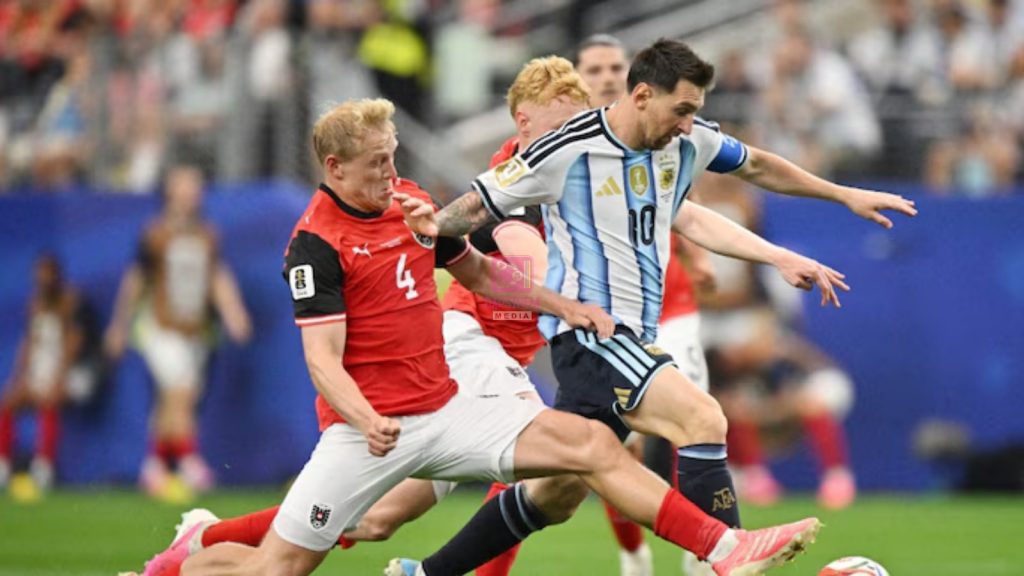
Austria defended stubbornly for much of the first half, crowding Messi whenever he touched the ball and limiting Argentina’s attacking rhythm. However, in the 38th minute, the breakthrough finally arrived.
A flowing Argentine move created space on the edge of the Austrian penalty area. Messi received the ball, shifted it onto his trusted left foot, and curled a precise finish beyond the goalkeeper. The crowd erupted as the ball hit the net.
The goal was historic.
It was Messi’s 17th World Cup goal, moving him beyond Klose’s mark of 16 and making him the highest scorer in men’s World Cup history. Some reports also noted that the strike elevated him above every scorer in both the men’s and women’s World Cups, surpassing Brazilian icon Marta’s total as well.
Austria Fight Back
Despite trailing, Austria refused to surrender. Led by experienced figures such as David Alaba, Marcel Sabitzer, and Marko Arnautović, they pushed forward in search of an equalizer.
There were moments of concern for Argentina. Austria delivered dangerous crosses into the penalty area and created several half-chances, but Emiliano Martínez and the Argentine defense remained composed. Austria’s inability to convert possession into clear scoring opportunities ultimately proved costly.
Messi’s Final Masterpiece
As the match entered stoppage time, Austria committed more players forward, leaving gaps at the back. Argentina capitalized.
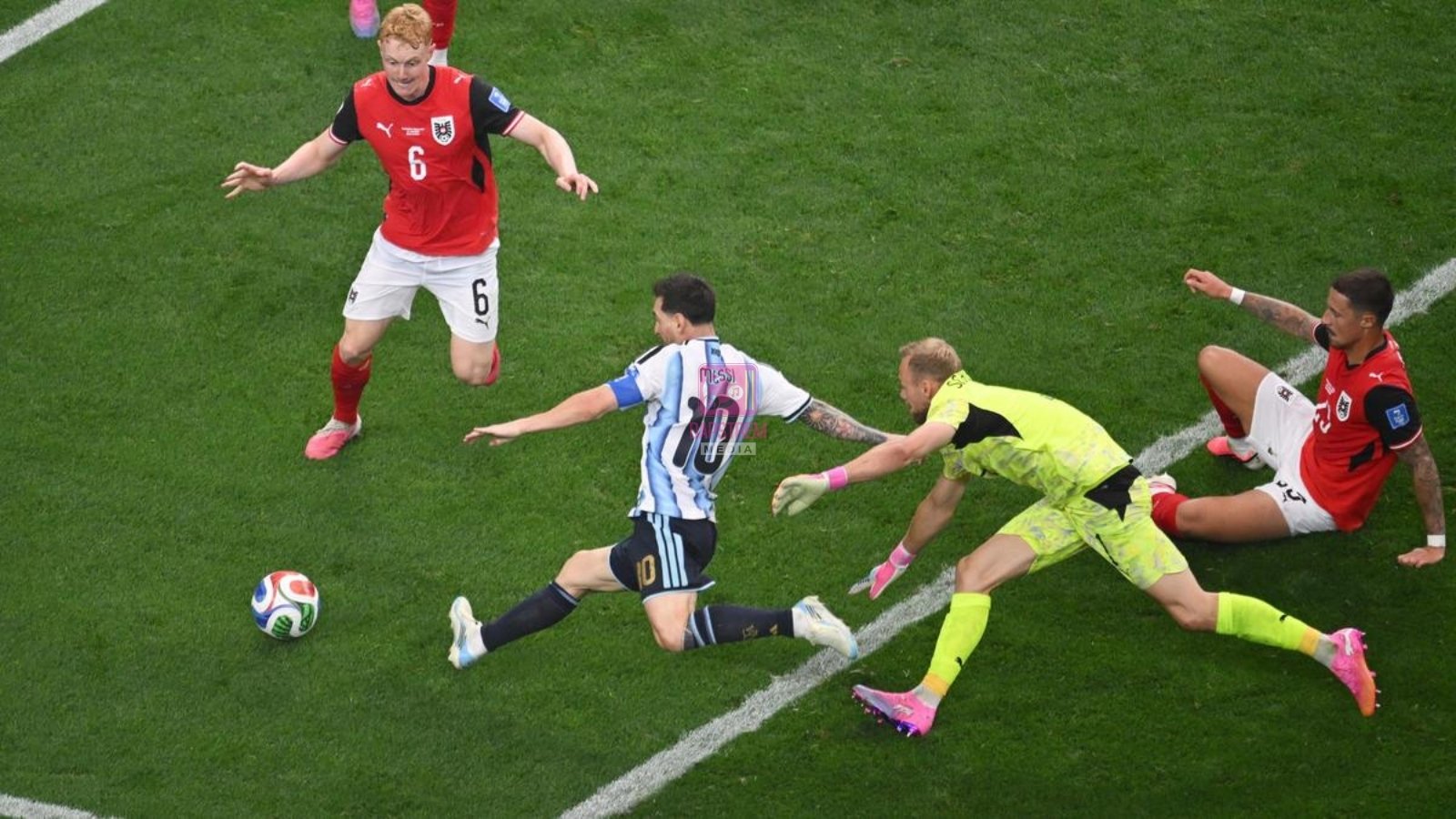
In the 95th minute, Messi launched one final attack. After a sequence involving Julián Álvarez and several blocked efforts, the ball found its way back to the captain. Surrounded by defenders, he somehow squeezed a shot through traffic and into the net.
The second goal sealed the victory and extended his all-time World Cup scoring record to 18 goals. It also gave Messi five goals in just two matches at the 2026 tournament after his opening-match hat-trick against Algeria. Remarkably, every one of Argentina’s first five goals of the competition had come from Messi’s boot.
More Than Just a Record
Statistics alone cannot fully explain the significance of Messi’s achievement.
World Cup records have been broken by legends such as Pelé, Ronaldo Nazário, Gerd Müller, and Miroslav Klose. Yet Messi’s accomplishment feels particularly special because it comes at the twilight of an extraordinary career. Twenty years after making his World Cup debut, he is still dominating football’s biggest stage.
The match against Austria also marked another milestone: Messi became only the third player in World Cup history to score in six consecutive World Cup matches, joining France’s Just Fontaine and Brazil’s Jairzinho.
Argentina’s Title Defense Gains Momentum
Beyond the individual accolades, Argentina look increasingly dangerous in their quest to retain the World Cup. Two matches, two victories, five goals scored, and none conceded suggest Lionel Scaloni’s side remain among the tournament favorites.
While Austria showed courage and organization, they simply had no answer to Messi’s genius. The football world has grown accustomed to witnessing his greatness, but nights like this still feel extraordinary.
Years from now, fans may forget many group-stage matches from World Cup 2026. They will not forget the night Argentina beat Austria 2-0 and Lionel Messi climbed to the summit of World Cup history.
Records are meant to be broken. Some, however, are broken only by legends.