Navi Pillay Wins 2026 Nobel Peace Prize for Decades of Championing Human Rights and International Justice
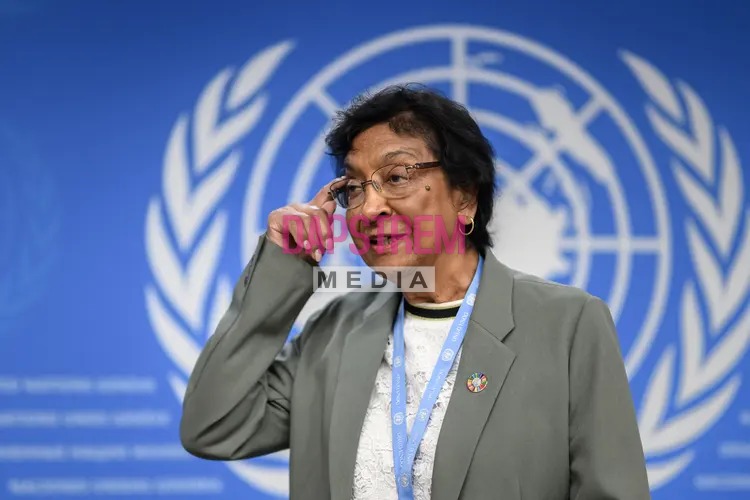
South African human rights lawyer and jurist Navanethem “Navi” Pillay has won the 2026 Nobel Peace Prize in recognition of her decades-long efforts to promote international justice, defend human rights and strengthen the rule of law.
The 85-year-old legal expert was announced as this year’s laureate on Friday, October 9, 2026, by the Norwegian Nobel Committee in Oslo, Norway. The committee recognised her contribution to ensuring that governments and powerful leaders can be held accountable for serious violations of human rights and international law.
Pillay’s award marks a significant moment in her distinguished career, which has taken her from challenging apartheid in South Africa to serving in some of the world’s most influential judicial and human rights institutions.
Her recognition also comes at a time when international conflicts continue to raise questions about the protection of civilians, the accountability of political leaders and the ability of international institutions to enforce the law.
The Nobel Committee said Pillay’s work had brought hope to victims of violence and conflict while demonstrating the importance of resolving disputes through law rather than force. It also highlighted her moral courage and commitment to justice throughout her career.
For Pillay, the award represents recognition of a lifelong commitment to the principle that no individual, government or institution should be above the law.
Her career has been shaped by the belief that peace cannot be sustained without justice and that victims of atrocities deserve more than sympathy. They also deserve accountability, protection and access to legal remedies.
The Nobel Peace Prize is widely regarded as one of the world’s most prestigious international honours. It recognises individuals and organisations whose work contributes to peace, human rights and the peaceful resolution of conflicts.
Pillay’s selection places international law and the protection of human dignity at the centre of this year’s award.
From Apartheid-Era South Africa to International Justice
Born in Durban, South Africa, in 1941, Pillay grew up under apartheid, a system of racial segregation and discrimination that denied the country’s Black majority and other non-white communities equal rights.
Her experiences during that period helped shape her commitment to human rights and the rule of law.
As a lawyer, she defended people who opposed apartheid and challenged discriminatory practices, including abuses affecting prisoners. Her legal work took place in a country where challenging the established political order could carry serious personal and professional risks.
Pillay also became one of South Africa’s pioneering women of Indian descent in the legal profession. Her career demonstrated the importance of ensuring that the law protects people regardless of their racial background, political beliefs or social position.
Her work during apartheid established a foundation for the international role she would later assume.
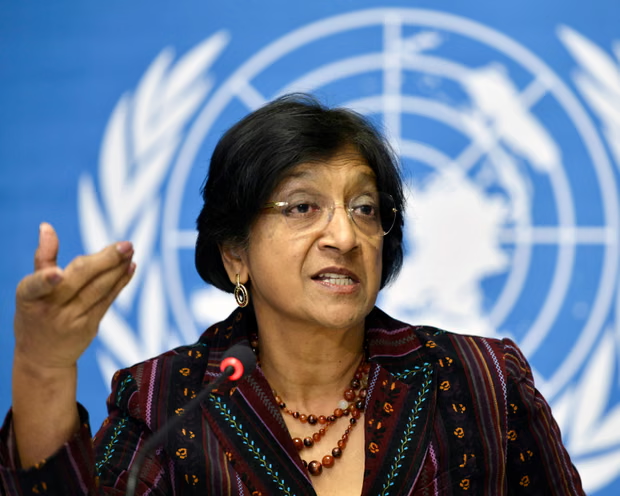
Following the end of apartheid, Pillay continued to build her career in the judiciary and international law. She became a judge at the International Criminal Tribunal for Rwanda, which was established to prosecute individuals responsible for serious crimes committed during the 1994 genocide.
Her work at the tribunal contributed to the development of international criminal law, particularly the recognition of sexual violence as a possible component of genocide and crimes against humanity.
These legal developments were important because sexual violence had often been overlooked or inadequately addressed in the prosecution of mass atrocities.
By helping establish that such crimes could form part of broader campaigns of destruction and persecution, international courts strengthened the legal framework available to prosecute perpetrators and recognise the experiences of victims.
Pillay later served as a judge at the International Criminal Court, which prosecutes individuals accused of genocide, crimes against humanity, war crimes and, under specific conditions, the crime of aggression.
Her judicial experience placed her at the centre of efforts to develop international standards for accountability and the protection of civilians.
Between 2008 and 2014, she served as the United Nations High Commissioner for Human Rights, one of the most prominent positions in the international human rights system.
In that role, she worked to promote fundamental freedoms, draw attention to human rights violations and encourage governments to fulfil their international obligations.
Her responsibilities required her to address difficult questions involving political power, armed conflict, discrimination and the treatment of vulnerable communities.
The position also placed her in a demanding environment where human rights concerns frequently intersected with diplomatic interests and national sovereignty.
Pillay’s career has therefore involved more than interpreting legal rules. It has required her to defend the principle that human rights obligations apply even when accountability is politically difficult.
That commitment has become a central part of the legacy recognised by the Nobel Committee.
A Nobel Prize at a Time of Global Conflict
Pillay’s award comes as wars and international disputes continue to test the effectiveness of the global legal system.
The Nobel Committee used the announcement to emphasise the importance of international law at a time when conflicts are increasing and institutions responsible for enforcing legal standards face political pressure.
The committee’s message was that lasting peace cannot depend entirely on military strength or political negotiations. It also requires a system in which disputes can be addressed through established legal procedures and serious violations can be investigated.
Without accountability, victims may be left without justice, while those responsible for atrocities may believe they can act without consequences.
Pillay’s work reflects the view that international justice can help prevent future abuses by establishing legal standards and demonstrating that serious crimes cannot simply be ignored.
Her recognition also highlights the role of judges, lawyers and human rights investigators who document violations, interpret international law and seek accountability for victims.
These professionals often work in challenging circumstances. Their findings can provoke criticism from governments, political leaders and other powerful actors who reject their conclusions.
Nevertheless, international justice depends on independent investigations and the ability of legal institutions to examine allegations based on evidence.
Pillay’s career has repeatedly brought her into debates about how those principles should be applied.
More recently, she chaired a United Nations commission of inquiry examining human rights violations in the occupied Palestinian territory. The commission concluded that Israel had committed genocide in Gaza, a finding Israel strongly rejected. The conclusion remains part of a highly contested international debate over the conduct of the conflict and the application of international law.
The commission’s work illustrates the politically sensitive nature of investigations into alleged international crimes.
Such findings can have significant consequences for public debate, diplomatic relations and calls for accountability. They must therefore be assessed through the evidence, applicable legal standards and relevant judicial processes.
The Nobel Committee’s recognition of Pillay does not mean every conclusion reached by a commission she has chaired is automatically accepted by all governments or courts. Rather, the award recognises her broader contribution to international justice and the rule of law.
Her work has consistently raised a fundamental question: how can the international community protect civilians and uphold human dignity when powerful actors are accused of serious wrongdoing?
For Pillay, the answer begins with the principle that the law should apply to everyone.
The Importance of International Law
International law provides rules governing relations between countries and establishes standards for the treatment of civilians, prisoners and other people affected by conflict.
It also creates mechanisms for investigating and prosecuting certain serious crimes.
However, enforcing these rules can be difficult. International institutions depend on legal mandates, cooperation from states and the willingness of governments to respect judicial processes.
Political interests can complicate investigations, while disagreements over jurisdiction and evidence can delay accountability.
Pillay’s career has been closely associated with efforts to strengthen these mechanisms and ensure that human rights remain central to international decision-making.
Her work also reflects the importance of recognising victims as individuals whose rights must be protected rather than treating their suffering as an unavoidable consequence of political conflict.
For communities affected by genocide, torture, sexual violence and other serious abuses, legal accountability can provide an official record of what happened and establish responsibility for crimes.
Justice cannot reverse the suffering caused by violence, but it can help challenge impunity and affirm the dignity of those who have suffered.
It can also contribute to reconciliation by establishing facts and making it harder for perpetrators to deny or conceal serious wrongdoing.
Pillay’s contribution to international law has helped strengthen the legal recognition of crimes that were historically ignored or inadequately prosecuted.
Her work demonstrates how individual legal decisions can influence the development of international standards far beyond the courtroom in which they are delivered.
That influence is one reason her career has attracted international recognition.
A Historic Recognition for South Africa
Pillay’s Nobel Peace Prize is also a significant moment for South Africa, a country whose modern history has been deeply shaped by the struggle against racial discrimination.
Apartheid created a system in which rights and opportunities were determined largely by racial classification. Its eventual dismantling demonstrated the importance of sustained resistance, political negotiations and international pressure.
Pillay’s career connects that history to the broader international effort to protect human rights.
Her early legal work challenged discrimination at home, while her later responsibilities took her into international courts and the United Nations system.
That journey illustrates how experiences within one country can contribute to the development of global approaches to justice.
Her recognition may also inspire young South Africans and other Africans interested in law, diplomacy, public service and human rights.
It shows that legal professionals can influence international debates and contribute to institutions responsible for addressing some of the world’s most serious challenges.
For aspiring lawyers, Pillay’s career offers an example of how legal training can be used to defend vulnerable people, challenge abuses of power and strengthen public accountability.
Her achievements also highlight the importance of representation in institutions that make decisions affecting people across different countries and communities.
Although the Nobel Prize is awarded to an individual, the work behind such achievements often depends on the contributions of colleagues, investigators, advocates and institutions.
Pillay’s career has unfolded across a network of courts and human rights bodies, reflecting the collective effort required to develop and enforce international legal standards.
The Prize and What Comes Next
The 2026 Nobel Peace Prize carries a monetary award of 12 million Swedish kronor, approximately US$1.2 million. The award ceremony is scheduled to take place in Oslo on December 10, the anniversary of Alfred Nobel’s death.
Beyond the financial award, the recognition gives renewed international attention to the work of international courts and human rights institutions.
It also brings greater visibility to the ongoing debate over how the international community should respond when governments or powerful individuals are accused of serious violations.
Pillay’s career demonstrates that legal accountability remains a difficult but essential part of efforts to establish lasting peace.
The challenge is not simply to create international rules. It is to ensure those rules are respected, investigations are credible and legal processes are allowed to operate without improper political interference.
The international community must also continue addressing the gap between the principles expressed in treaties and the realities faced by people living through conflict.
For victims and their families, promises of justice mean little if investigations are never completed or legal findings are ignored.
Pillay’s recognition therefore serves as both a celebration of her achievements and a reminder of the work that remains.
Her decades in law have been guided by the principle that justice should not depend on a person’s wealth, nationality, political connections or position of power.
That principle is central to the idea of equality before the law.
As the world responds to the news of her Nobel Peace Prize, her career offers a reminder that peace is more than the absence of fighting. It also requires institutions that protect rights, resolve disputes and provide accountability when serious crimes occur.
Pillay’s journey from apartheid-era South Africa to the highest levels of international justice reflects the lasting importance of those ideals.
Her award sends a message that the pursuit of justice remains essential in a world facing war, political division and widespread human rights concerns.
Ultimately, the significance of Pillay’s Nobel Peace Prize extends beyond her personal achievements. It highlights the role that law, accountability and human dignity must play in building a more peaceful world.
For South Africa, it is a moment of national pride. For the international legal community, it is recognition of decades of work to strengthen justice. And for victims of serious human rights violations, it reinforces the continuing importance of efforts to ensure that their suffering is acknowledged and that those responsible are held accountable under the law.