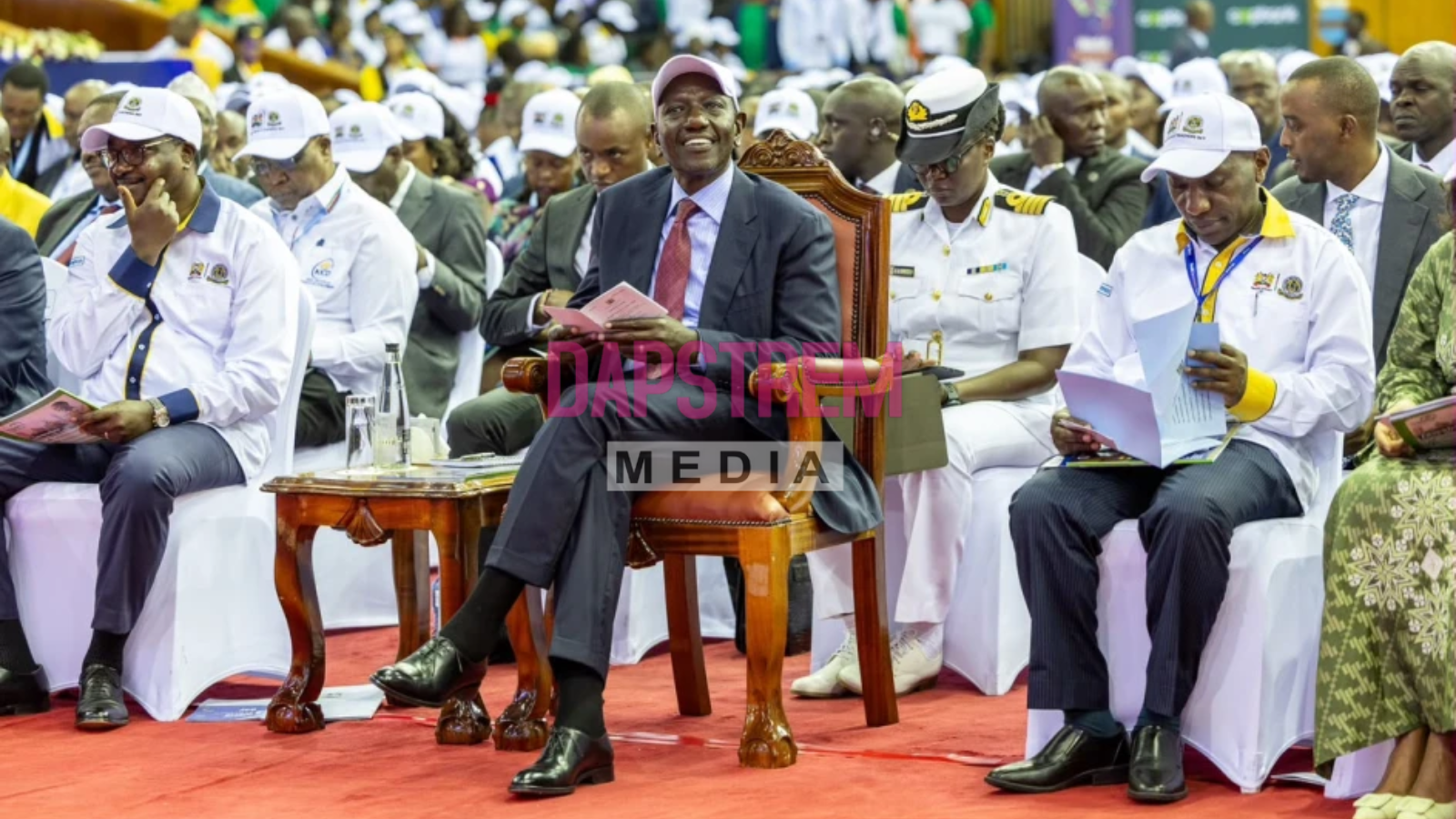
President William Ruto has renewed his commitment to teachers seeking a reduction in the Collective Bargaining Agreement (CBA) review cycle from four years to two, saying the government will revisit the issue after the current agreement expires.
Speaking during the World Teachers’ Day celebrations at Kasarani in Nairobi on Monday, Ruto told teachers that their demand remained on his agenda, while acknowledging that the current CBA is already in force.
“Because we have signed the current one, we will return to the two-year plan when it’s over,” the President said.
The promise comes more than a year after Ruto first backed the proposal during a meeting with more than 10,000 teachers at State House in September 2025. At the time, he directed the Teachers Service Commission (TSC), Ministry of Education and teachers’ unions to discuss the appropriate review period.
Current CBA remains in place
The existing CBA between the TSC and teachers’ unions covers the period 2025–2029. It was signed in July 2025 and provides for phased salary increases over the four-year period.
The first phase was implemented in July 2025, while the second phase followed in July 2026. The government has allocated an additional KSh8.1 billion in the 2026/27 financial year to keep the agreement on schedule, according to Ruto.
The President’s latest remarks therefore do not immediately change the current four-year agreement. Instead, they point to negotiations over the structure of future CBAs once the 2025–2029 deal comes to an end.
Teachers have been waiting for action
The two-year CBA proposal has remained an important issue for teachers since Ruto’s State House meeting last year.
Teachers’ unions have previously indicated that the President’s political commitment alone cannot alter the CBA, since the agreement must be negotiated between the TSC and the unions.
In September, the Daily Nation reported that the promised change to the CBA cycle had not yet been implemented, with KUPPET Secretary-General Akelo Misori saying the process still needed to be taken forward through the relevant institutions.
The renewed pledge therefore comes at a time when teachers are also pressing for progress on other employment and career concerns.
More teachers, promotions and better benefits
Ruto used the World Teachers’ Day celebrations to highlight other measures affecting the teaching profession.
He announced that the government expects to have recruited 120,000 teachers by December 2026, while 20,000 contract teachers are being converted to permanent and pensionable terms. He also said the government had increased funding for teacher promotions to KSh2 billion.
The President, however, acknowledged that the TSC has so far advertised 34,016 promotion positions for the 2026/27 financial year and urged the commission to increase the number to 50,000.
The promotion issue has previously generated disagreements between the government and teachers’ unions, with KUPPET questioning why the number of advertised positions fell short of the 50,000 target announced by the President.
Health cover also highlighted
Ruto also pointed to changes in teachers’ medical coverage under the Social Health Authority.
He said that, as of September 2026, SHA had covered 415,608 teachers and 884,392 dependants, while teachers can now access inpatient services in 3,871 facilities, compared with 900 previously.
The President presented the changes as part of broader efforts to improve teachers’ welfare alongside salaries, career progression and retirement benefits.
He said the government was also working with TSC and the National Treasury to speed up payment of retirement benefits, with a target of processing payments within 10 days of retirement once the system is fully operational.
What happens next?
For teachers, the key question will be how the two-year CBA proposal is eventually translated into a negotiated agreement.
For now, the 2025–2029 CBA remains the operative agreement, meaning its salary and employment provisions continue according to the agreed implementation schedule. Ruto’s latest commitment effectively moves the debate toward the next CBA cycle rather than changing the existing agreement immediately.
His pledge nevertheless puts the issue back at the centre of discussions between teachers, TSC and the government.
As Kenya marks World Teachers’ Day, the promise of a shorter CBA cycle joins a broader list of commitments on teacher recruitment, promotions, healthcare and retirement benefits with implementation likely to determine how the latest pledge is ultimately received by the teaching fraternity.