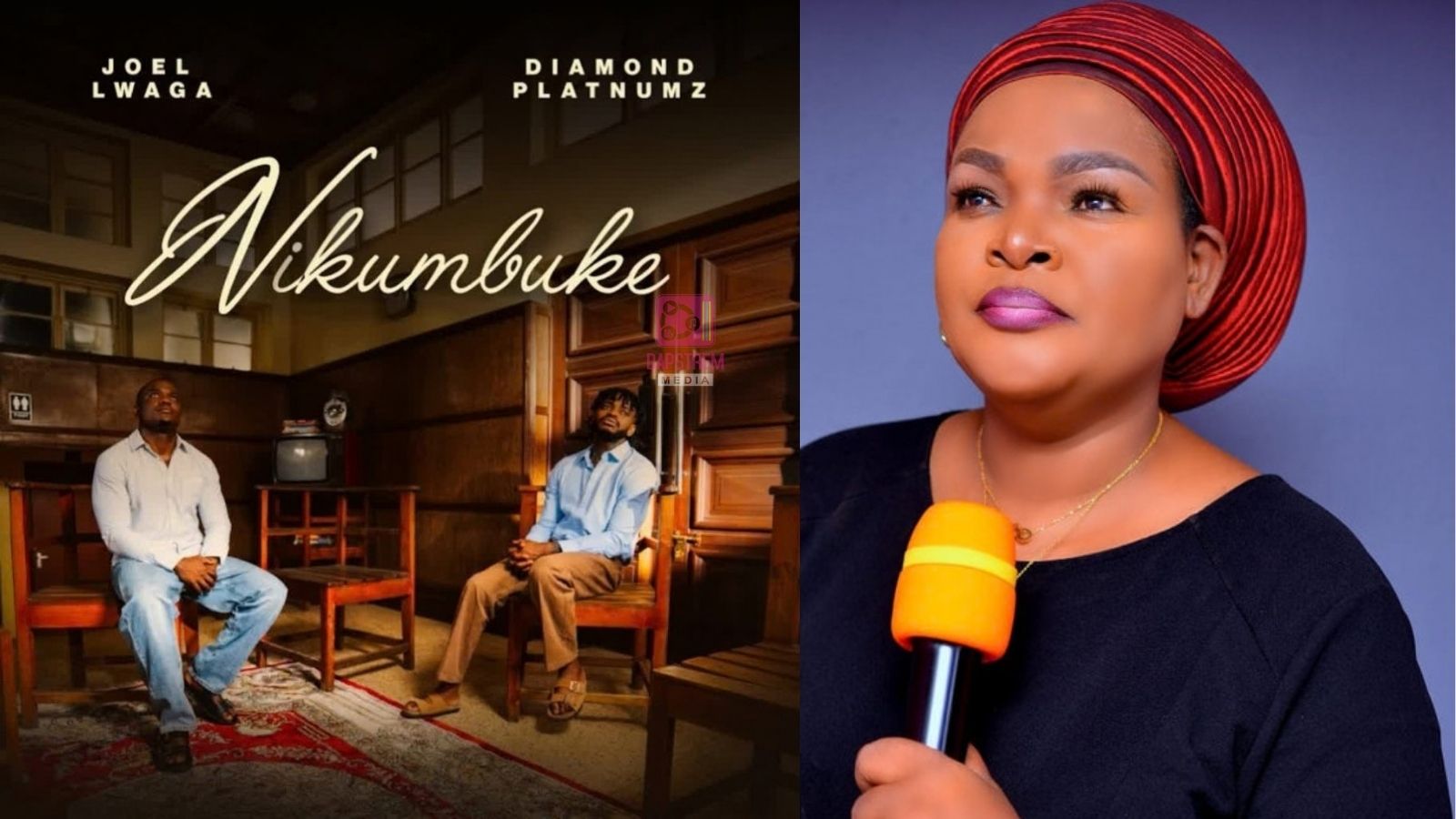
Tanzanian gospel singer Bahati Bukuku has sparked discussion after criticising the collaboration between gospel musician Joel Lwaga and Bongo Flava star Diamond Platnumz on the gospel song “Nikumbuke.”
The song, released on September 23, 2026, brings together Lwaga, who is known for gospel music, and Diamond, whose career has largely been associated with Bongo Flava and Afropop. The collaboration has attracted attention because of the different musical backgrounds of the two artists.

Bukuku shared her views during a radio interview on September 24, saying she personally could not collaborate with secular musicians because of her spiritual convictions.
Bahati Bukuku Questions Gospel and Secular Collaborations
Bahati Bukuku said she sees gospel and secular music as following different paths.
During the interview, she used the comparison of “light and darkness” to explain why she would not personally participate in such a collaboration. Her position was presented as a matter of her own spiritual beliefs rather than a demand that other musicians follow the same approach.

Bukuku also acknowledged that other artists have the freedom to make their own decisions.
She explained that her own position comes from her spiritual perspective, while other musicians may have different convictions about working across musical genres.
Her comments have therefore added a religious dimension to an ongoing conversation in Tanzania’s music industry about collaborations between gospel and mainstream artists.
Joel Lwaga and Diamond Platnumz Release “Nikumbuke”
The controversy comes shortly after Joel Lwaga and Diamond Platnumz released “Nikumbuke,” a song centred on prayer, faith, patience and waiting for God’s blessings.

The Swahili title translates to “Remember Me.” The song presents a prayer from someone asking God not to forget them while other people receive blessings and answers to their prayers.
The collaboration gives Diamond an opportunity to appear in a distinctly gospel setting alongside Lwaga.
For Lwaga, the song remains connected to his established gospel identity, while Diamond’s participation has brought additional attention from mainstream music audiences.
The release has also created a conversation about whether the message of a song should be considered separately from the musical background of the artists involved.
“Nikumbuke” Receives Strong Attention
Despite the criticism, the collaboration has also received significant attention from listeners.
Lwaga celebrated the song’s early performance on social media, saying it had reached 500,000 YouTube views in less than 24 hours. He also thanked listeners for supporting the project and credited God for the reception.

The early response demonstrates the interest generated by bringing together two artists from different parts of Tanzania’s music industry.
The song was also listed by Apple Music as a Christian release, further reflecting the gospel positioning of the project.
Bahati Bukuku Emphasises Personal Beliefs
While Bukuku’s comments have attracted attention, she did not suggest that every gospel musician must adopt her position.
Instead, she repeatedly framed her response around her own spiritual convictions.
That distinction is important because gospel music includes artists with different theological views, ministry approaches and interpretations of how music can be used to reach audiences.
Some gospel musicians may see collaborations with mainstream performers as an opportunity to share faith-based messages with wider audiences. Others may prefer to keep their musical work strictly within gospel circles.
Bukuku’s remarks represent one perspective in that broader discussion.
Debate Over Gospel and Secular Music
The Lwaga and Diamond collaboration has revived a familiar debate within East African music: whether gospel artists should work with musicians whose careers are primarily associated with secular music.
Supporters of such collaborations can point to the opportunity to reach new listeners and communicate positive or faith-based messages beyond traditional gospel audiences.
Those who oppose the approach may instead argue that gospel music should maintain clear spiritual and musical boundaries.
The disagreement is not new, but collaborations involving high-profile artists such as Diamond Platnumz tend to attract greater public attention.
In the case of “Nikumbuke,” the discussion has been particularly noticeable because the song itself is explicitly prayer-themed.
A Growing Conversation in Tanzania’s Music Scene
The response to “Nikumbuke” shows how Tanzania’s music industry continues to bring together artists from different musical backgrounds.
For Diamond, the project represents a move into a Christian-themed collaboration, while Lwaga continues to deliver music built around faith and prayer.
For Bukuku, however, her spiritual convictions lead her to maintain a different boundary.
Ultimately, the debate surrounding the song reflects differing views among artists and listeners rather than a single position shared across Tanzania’s gospel community.
As “Nikumbuke” continues to attract listeners, the conversation over gospel collaborations with secular artists is likely to remain part of the wider discussion about faith, music and artistic expression in East Africa.