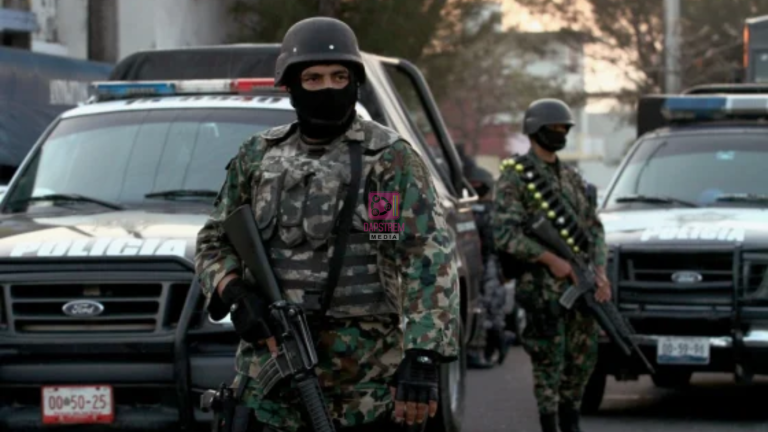
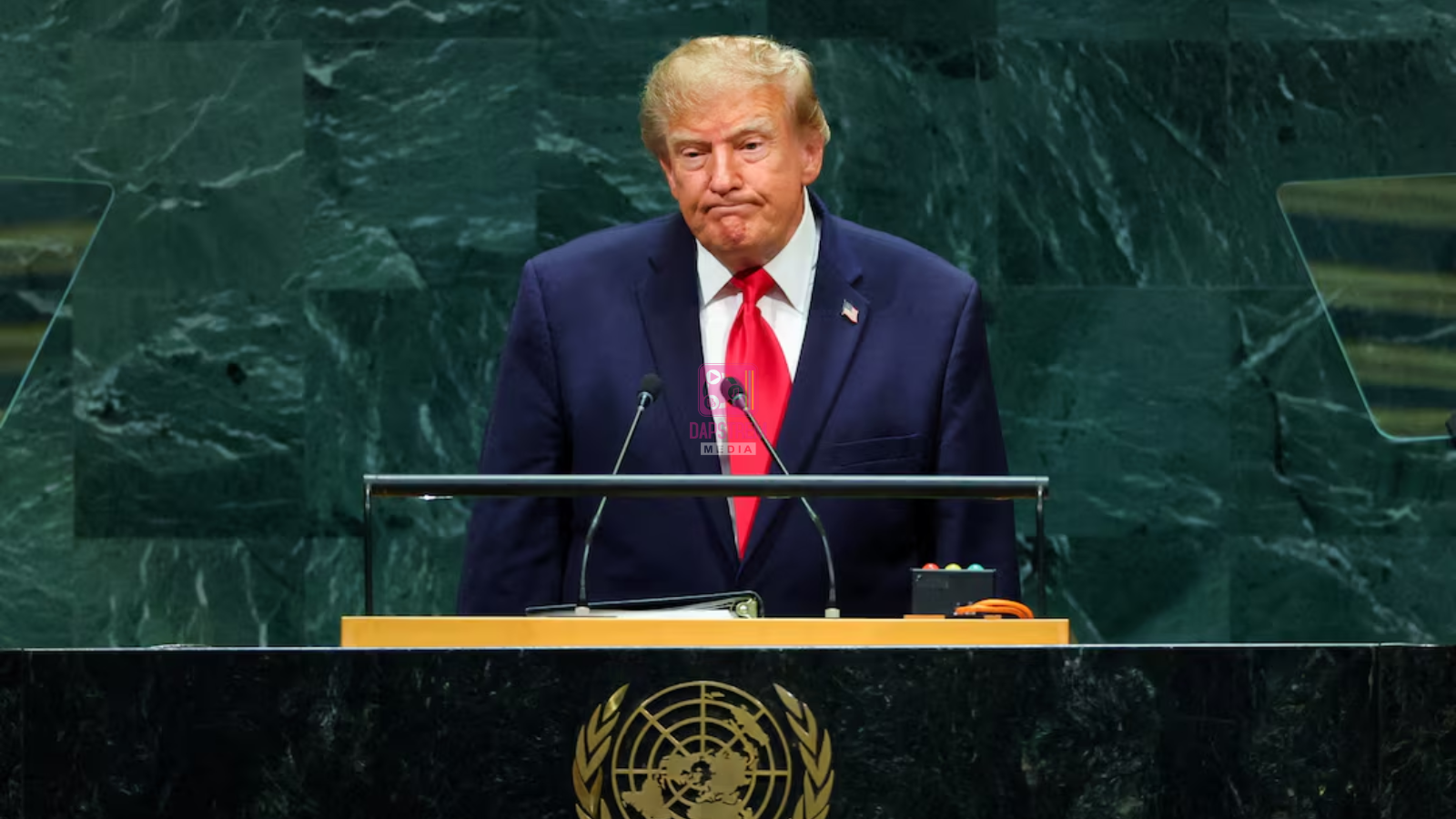
US President Donald Trump has warned that Washington is prepared to deploy its military power to protect American interests across the Western Hemisphere, using his address to the United Nations General Assembly to outline a more assertive approach to Latin America and the Caribbean.
Addressing world leaders in New York on Tuesday, Trump said the United States would no longer allow threats to establish a foothold in the Western Hemisphere and would use what he called America’s “unmatched military might” if necessary to protect US national interests.
The remarks marked one of the clearest statements yet of the Trump administration’s intention to expand Washington’s security role in Latin America, particularly in its campaign against drug-trafficking organisations.
Trump’s comments came as his administration seeks to build a regional coalition against organised crime while simultaneously asserting a broader US claim to strategic primacy in the Americas.
Cartels cast as a hemispheric security threat
A major focus of Trump’s remarks was the fight against drug cartels.
The US president described the cartels as “the ISIS of the Western Hemisphere”, arguing that transnational criminal organisations represent a threat extending beyond drug trafficking into national security.
The administration has been seeking support from governments across the region through the Shield of the Americas, a US-led coalition focused on combating organised crime and drug trafficking.
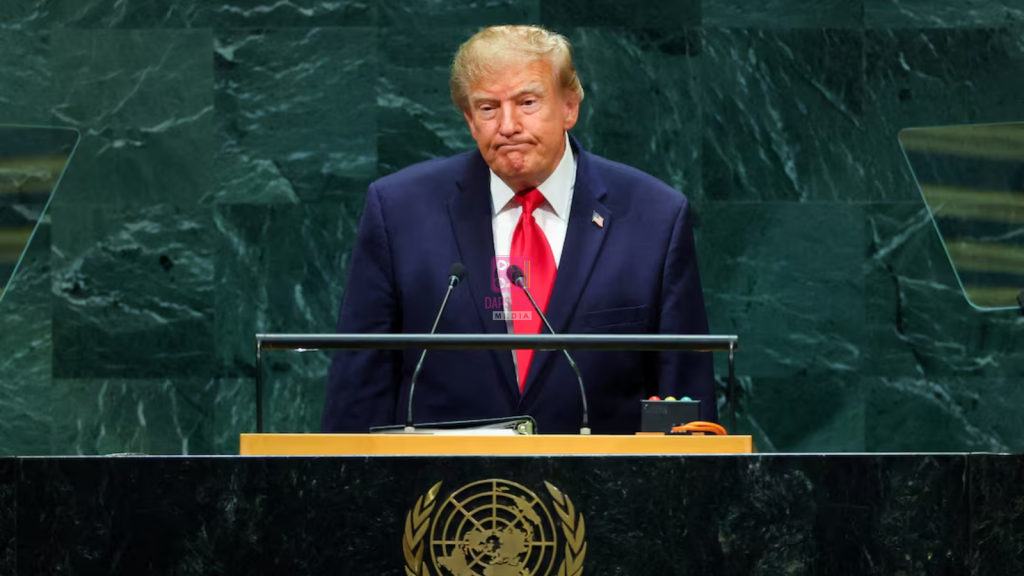
At a meeting with leaders and foreign ministers from the coalition in New York on Tuesday, Trump called on participating governments to designate criminal organisations as common threats and impose sanctions against them.
Fifteen governments subsequently issued a joint statement supporting measures including asset freezes and visa restrictions against members and supporters of targeted organisations. The groups include MS-13, Tren de Aragua, several Mexican cartels and major criminal organisations in Colombia, Brazil and Peru.
The measures, however, still have to pass through the individual countries’ domestic legal processes.
Venezuela provides the backdrop
Trump’s warning about military power was closely tied to Venezuela.
In his UN speech, the president pointed to US actions in Venezuela as evidence that Washington was prepared to use force to prevent what it regards as threats to American security from gaining a foothold in the region.
The reference comes after a dramatic change in Venezuela’s political landscape following a US military operation that removed former President Nicolás Maduro earlier this year. Maduro’s former vice president, Delcy Rodríguez, subsequently became acting president.
Trump is due to meet Rodríguez in New York during the UN General Assembly, according to the Associated Press. The two sides have also reached an agreement concerning Venezuela’s oil sector, with the US seeking a role in the country’s oil industry and economic recovery.
The Venezuelan episode has become an important demonstration of how the Trump administration views the relationship between military power, economic interests and regional security.
A return to hemispheric power politics
Trump’s language also recalls the longstanding American doctrine that Washington has a special security interest in the Western Hemisphere.
The administration’s national security strategy has called for a renewed approach to the Monroe Doctrine, the 19th-century policy under which the United States asserted opposition to European intervention in the Americas.
Trump’s current approach goes beyond traditional diplomatic pressure by explicitly linking the protection of US interests to the potential use of military force. Reuters reported that the president’s remarks reflected an effort to reassert US dominance in the Western Hemisphere.
The administration’s argument is that stronger US involvement is necessary to confront cartels, prevent hostile actors from gaining influence close to US territory and protect American security interests.
Critics of such an approach have historically argued that an expansive interpretation of US hemispheric power can lead to interventionism and undermine the sovereignty of Latin American states. Those concerns are likely to become more prominent as Washington’s anti-cartel campaign develops.
Mexico faces particular pressure
Mexico is likely to be one of the most important countries in determining how the new US strategy develops.
Washington has made combating Mexican drug cartels a major priority, while Mexico has traditionally been sensitive to any suggestion that US forces could operate independently on Mexican territory.
Trump’s broader warning did not announce a new military operation against Mexico. Rather, it established that his administration considers the possibility of military power part of its broader strategy for dealing with threats in the hemisphere.
That distinction is important: the president’s statement represents a declaration of policy and intent, not an announcement of a specific military action in Mexico.
Cuba also in Trump’s sights
Trump’s UN address went beyond the cartel issue.
The president said Cuba would “fall”, as the Cuban delegation walked out of the chamber, according to reporting on the speech.
His comments form part of a wider administration effort to increase pressure on governments Washington regards as hostile.
The White House has presented the policy as part of a broader restoration of American power and a rejection of what Trump characterises as excessive international constraints on US sovereignty. In its official account of the UN speech, the administration said the president intends to use American strength to protect US interests and confront perceived threats.
The UN setting adds significance
Trump’s warning came from the UN General Assembly, where governments are expected to resolve disputes through diplomacy and the multilateral system.
UN Secretary-General António Guterres, speaking before Trump, stressed the limits of military power as a solution to global problems. He argued that no major power can resolve today’s challenges alone and said military power by itself cannot guarantee peace.
That contrast captures a central tension surrounding Trump’s foreign-policy approach: Washington is emphasising national sovereignty, deterrence and military strength, while the UN system continues to emphasise multilateral cooperation and collective action.
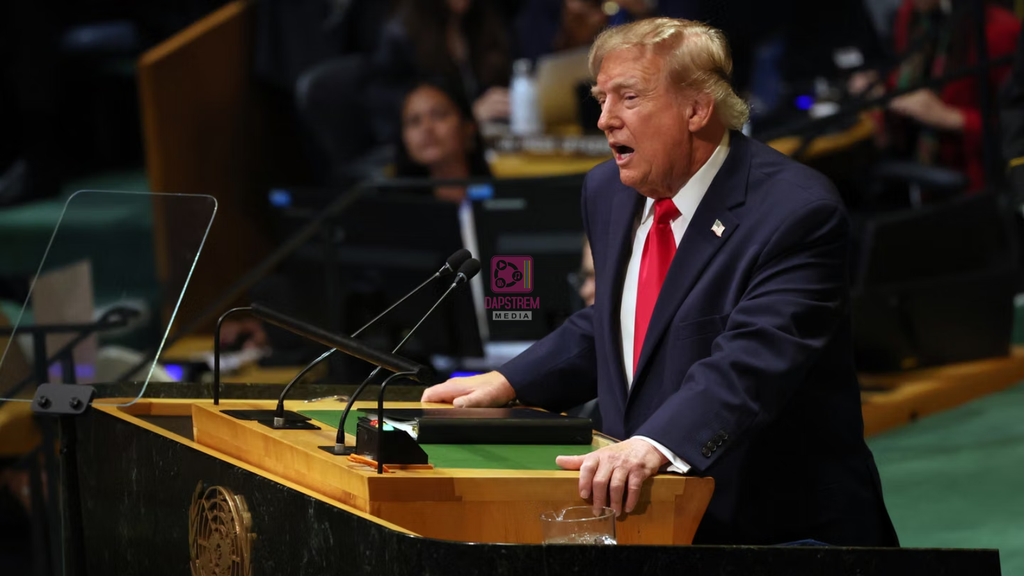
Trump’s speech also contained an unusually broad set of foreign-policy warnings. He defended the US war with Iran, threatened that Iran could face destruction if it failed to reach an agreement, criticised international institutions and highlighted US actions in Venezuela.
The immediate question is how Trump’s rhetoric will translate into policy.
The Shield of the Americas coalition provides one mechanism for doing so without relying exclusively on unilateral US action. Participating governments have agreed in principle to cooperate against criminal organisations, while Washington is pushing for coordinated sanctions and tougher measures.
At the same time, Trump’s explicit reference to military force raises questions about the circumstances in which Washington might use American troops or other military capabilities against threats in the region.
For Latin American governments, the challenge will be balancing cooperation with Washington on organised crime against concerns over sovereignty and the possibility of US military intervention.
For the United States, the administration is attempting to redefine hemispheric security around a combination of anti-cartel operations, economic leverage, military deterrence and stronger regional alliances.
Trump’s UN speech therefore amounted to more than a warning about drug trafficking. It presented a broader vision in which Washington intends to exercise greater influence over security developments across the Americas — and made clear that the administration considers military power an available instrument for protecting what it defines as vital US interests.
Whether that approach produces greater regional cooperation or generates new tensions with Latin American governments is likely to become one of the major foreign-policy questions of Trump’s current term.