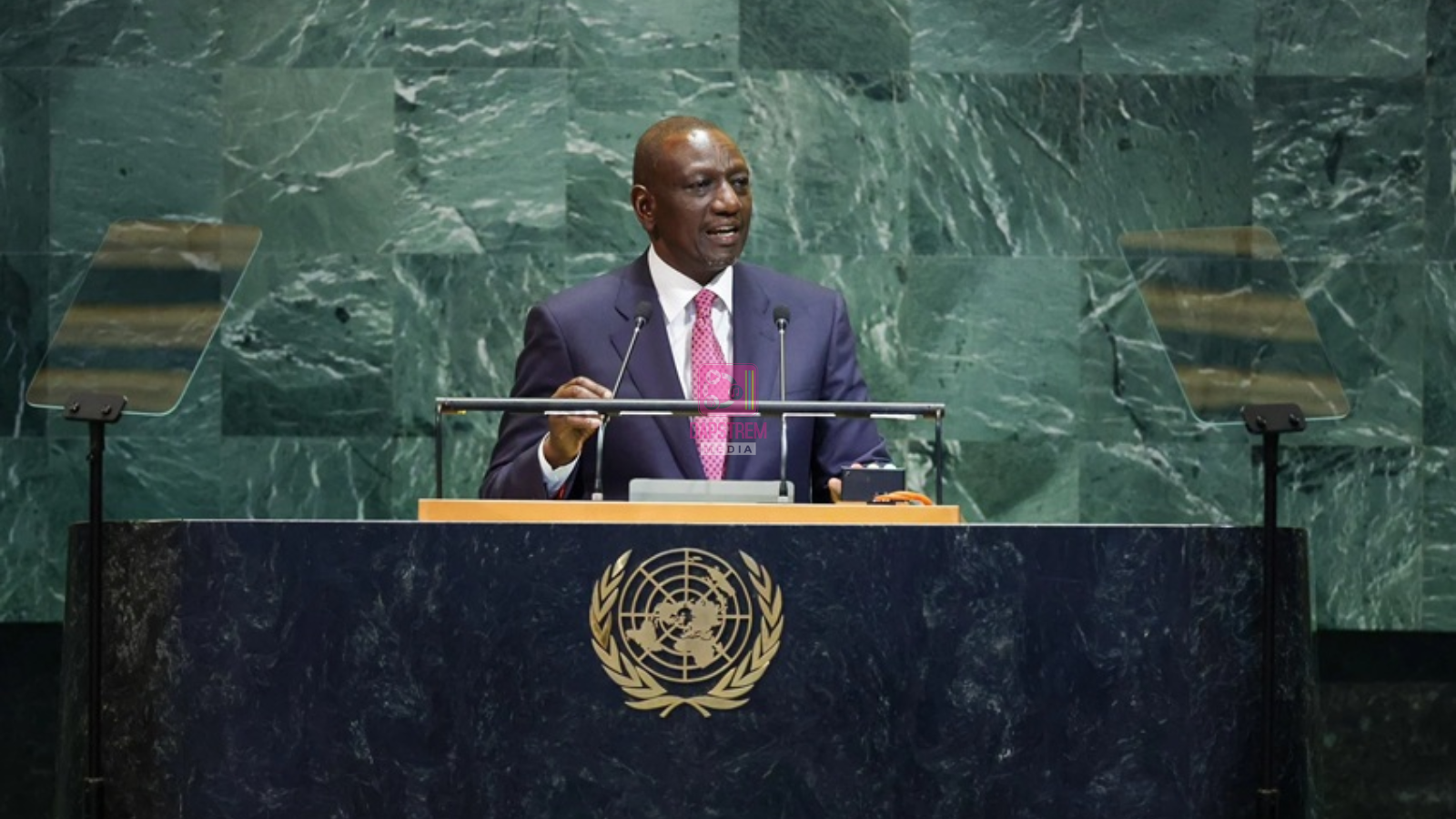
President William Ruto is set to take Kenya’s case to the global stage on Wednesday when he addresses the 81st session of the United Nations General Assembly in New York, with Africa’s place in global decision-making, international financing, climate action and technology expected to feature prominently.
Ruto is scheduled to speak during the afternoon session in New York, which will translate to Wednesday evening in Kenya. His address comes as world leaders gather for the General Debate under the theme “Restoring Trust, Managing Transformation: A United Nations That Delivers for All.” The General Debate runs from September 22 to 26 and resumes on September 28.
For Kenya, the speech provides the clearest opportunity during the high-level week to put President Ruto’s broader diplomatic and economic agenda before the international community.
A push for a bigger African voice
A central issue in Ruto’s engagements ahead of the address has been reform of global institutions, particularly the United Nations Security Council.
Speaking at the Partners for Multilateralism Summit on the sidelines of the General Assembly, Ruto argued that international institutions created decades ago have not kept pace with the contemporary world. He reiterated Kenya’s support for Security Council reform to make the body more representative and inclusive, particularly with regard to Africa.
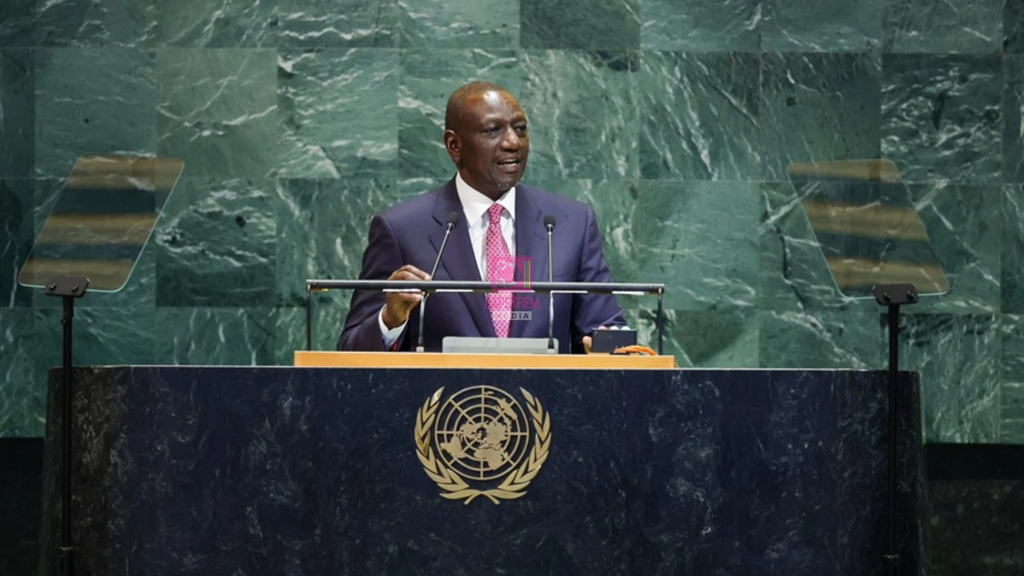
The issue is significant for Kenya because Nairobi has consistently positioned itself as an advocate of multilateralism and a stronger African voice in international affairs.
The message also fits the wider theme of this year’s General Assembly. In opening the General Debate, UN General Assembly President Khalilur Rahman called for reforms that would make the institution more representative and effective, including greater representation for underrepresented regions.
Debt and the cost of development
Before his main address, Ruto has repeatedly used the New York meetings to press for changes to the international financial system, arguing that developing countries face financing conditions that constrain investment in development.
On Tuesday, he said public debt becomes a children’s rights issue when debt-service costs crowd out spending on classrooms, healthcare, nutrition and social protection. He called for a global financial system that is fairer, more inclusive and more responsive to developing countries’ financing needs.
The Kenyan position was also outlined at a Ministry of Foreign Affairs briefing ahead of the summit. Officials identified debt sustainability, climate finance, digital trade and regional security among the issues Kenya intends to pursue during UNGA 81.
Ruto has additionally argued that Africa possesses substantial domestic savings but does not sufficiently mobilise those resources for development. At the Kenya-European Union Partnership for Multilateralism Summit, he linked this challenge to the need for reforms in global finance that would enable developing countries to mobilise more capital for their own development.
Climate finance moves up the agenda
Climate change is another area where Kenya is seeking to amplify Africa’s position.
Ruto, who chairs the Committee of African Heads of State and Government on Climate Change, convened African leaders in New York on Wednesday to advance a common position ahead of COP31 in Antalya and preparations for COP32, which is scheduled to be hosted by Ethiopia in 2027.
The discussions have focused on moving from climate commitments to implementation, with emphasis on adaptation, resilience, renewable energy, clean cooking and climate finance.
The president has argued that Africa’s climate ambitions cannot be realised without affordable financing, guarantees and risk-sharing mechanisms capable of attracting investment into renewable energy and climate-resilient infrastructure.
That argument is particularly relevant to Kenya, which has sought to position itself as a hub for renewable energy and green investment while advocating greater international financing for developing countries.
Technology and Africa’s AI ambitions
Technology is emerging as another major strand of Ruto’s UNGA message.
At an AI-focused meeting on the margins of the Assembly, the President argued that African countries should move beyond being consumers of artificial intelligence to becoming developers and owners of AI technologies.
He warned that Africa risks repeating older patterns of economic dependence if it supplies minerals, energy, data and talent to the global AI economy while importing the resulting technologies at a premium.
Ruto has therefore linked AI to questions of sovereignty, economic development and Africa’s ability to shape global technological standards.
His administration has also presented technology as an avenue for attracting investment and creating jobs, rather than simply as a regulatory issue. At the Accra Reset meeting, he called for Africa to become a builder of technologies and a contributor to the rules governing them.
Kenya’s economic pitch
Beyond the formal General Assembly debate, Ruto’s New York programme has included efforts to promote Kenya as an investment destination.
His meetings have covered trade, technology, energy, critical minerals and regional security. He also held talks with US Secretary of State Marco Rubio, with the two sides discussing opportunities around Kenya’s critical minerals and potential US investment in value addition.
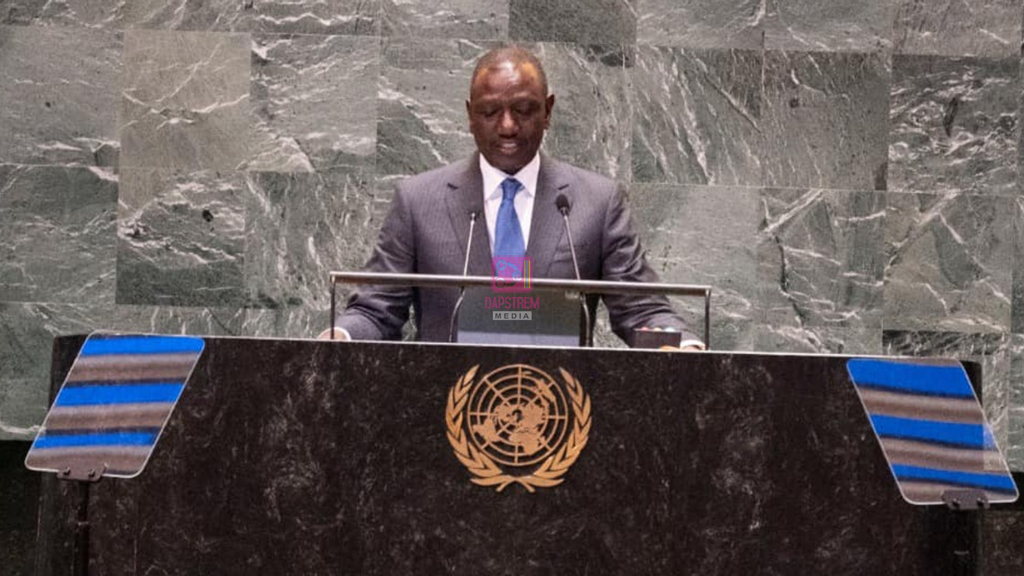
The administration is also using the UNGA platform to highlight major infrastructure and energy opportunities, including plans for the East Africa Refinery in Lamu, which Ruto has described as important for regional energy security and industrialisation.
The diplomatic activity reflects an effort to connect Kenya’s international agenda with domestic economic priorities: attracting capital, expanding trade, developing technology and positioning the country within emerging supply chains.
A continuation of Ruto’s multilateral message
Wednesday’s address is not expected to stand alone. Rather, it follows a diplomatic message Ruto has advanced throughout his presidency: that global institutions and financial systems need to adapt to the interests and realities of developing countries.
At this year’s UNGA, that argument is being made against the backdrop of a broader debate over the effectiveness of multilateral institutions.
The UN General Assembly’s official programme identifies the restoration of trust and the management of global transformation as central concerns of the 81st session. Alongside the General Debate, leaders are discussing development, climate action, sea-level rise and other global challenges.
For Kenya, Ruto’s speech therefore offers an opportunity to bring several strands of its foreign policy together: a stronger African voice in global governance, reforms to international finance, greater climate investment, technological agency and increased international investment in Kenya and Africa.
The key question will be how far the President moves from broad calls for reform to specific proposals and commitments that can attract support from other governments, international financial institutions and private investors.
His address will also come at a time when Kenya is seeking to balance its traditional role as a strong advocate of multilateral cooperation with its economic interest in attracting investment and expanding strategic partnerships.
As Ruto takes the podium, the focus will consequently be not only on what Kenya wants from the international system, but also on what it is prepared to offer as Africa seeks a greater role in shaping the rules of the global economy