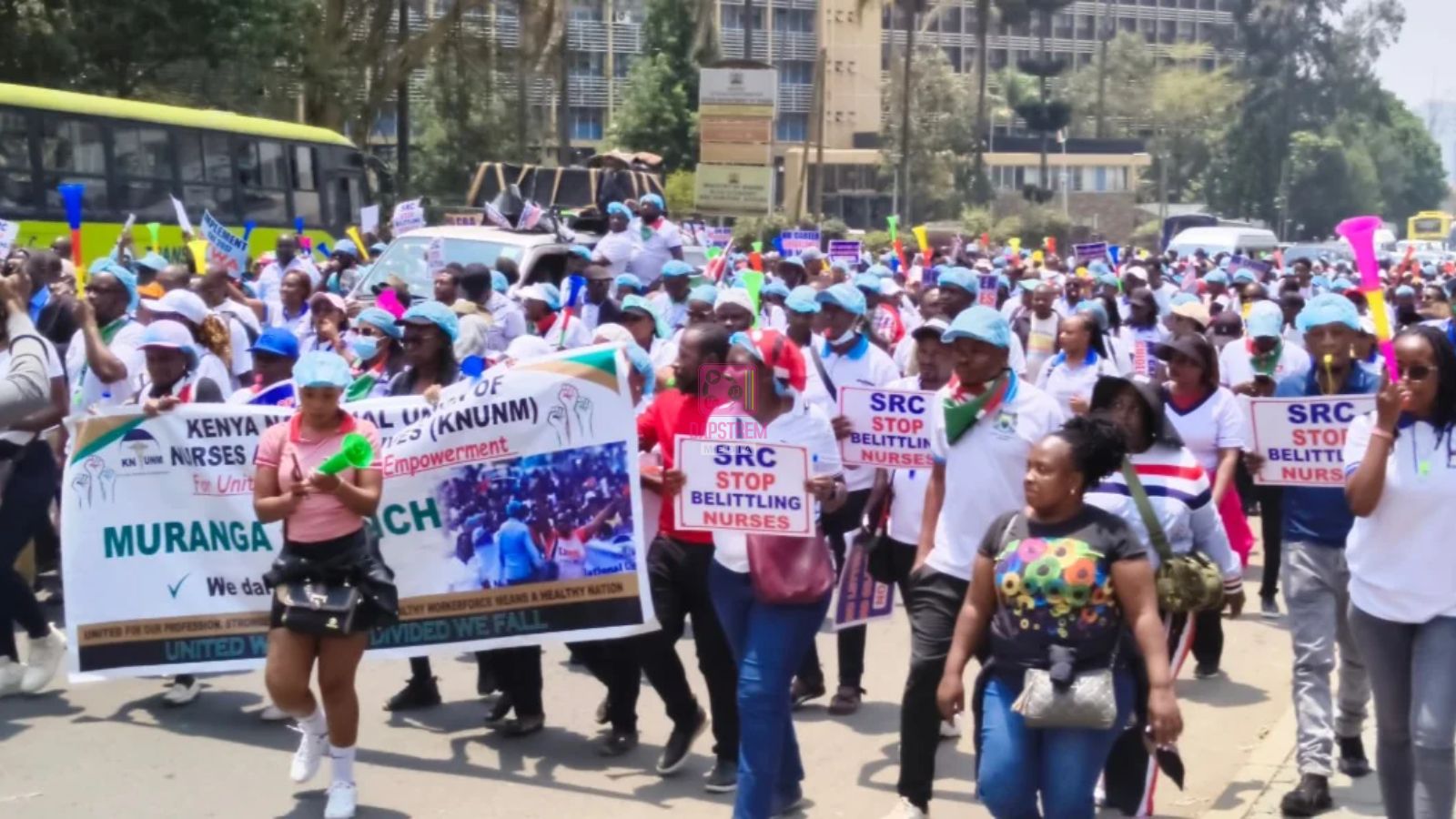
Kenya’s longest nurses’ strike in recent years has ended after a day-long meeting between the Kenya National Union of Nurses and Midwives and the Council of Governors, bringing hope of a gradual return of services in public hospitals across the country.
Kenya’s nationwide nurses’ strike has been called off after 41 days, ending a prolonged standoff that disrupted healthcare services across the country and placed growing pressure on the government to resolve longstanding grievances among frontline health workers.
The Kenya National Union of Nurses and Midwives (KNUNM) announced the immediate suspension of the strike on Wednesday, September 9, following marathon closed-door negotiations with the Council of Governors.
KNUNM Secretary-General Seth Panyako formally declared the industrial action over, saying the strike that began on July 29 had been called off with immediate effect.
The breakthrough came after weeks of failed negotiations, public demonstrations and mounting pressure from patients, health professionals and political leaders. The dispute had also threatened to widen after doctors warned that they could join the industrial action because of increased workloads in hospitals affected by the nurses’ absence.
A dispute that lasted more than a month
The strike was rooted largely in agreements that nurses say the government has failed to fully implement for years.
At the centre of the dispute was the 2017 return-to-work formula negotiated after an earlier nationwide nurses’ strike. The union has repeatedly argued that key commitments made under that agreement remain outstanding.
The nurses also demanded progress on the 2025–2029 Collective Bargaining Agreement, implementation of career progression guidelines and permanent and pensionable terms for workers employed under the Universal Health Coverage programme.
Another issue was the disparity between nurses employed by national institutions and those working under county governments.
Panyako argued that some national institutions had moved towards implementing the 2017 agreement while county-employed nurses continued to wait for similar commitments.
The disagreement was complicated by the constitutional structure of Kenya’s health system. Following devolution, county governments became responsible for most public health service delivery, meaning the Council of Governors became a central player in negotiations with the union.
Allowances emerge as part of the breakthrough
The negotiations gained momentum after the Council of Governors announced that it had reached a proposed agreement with the nurses.
Among the measures reported as part of the deal is an increase in nurses’ allowances, including an additional KSh8,000 for risk allowance and KSh5,000 for uniform allowance, representing a combined proposed increase of KSh13,000.
Council of Governors Chairperson Ahmed Abdullahi said the agreement had been reached through negotiations led by the council’s health committee.
The allowance issue has been particularly sensitive because nurses have argued that some payments promised years ago have not kept pace with their responsibilities and working conditions.
Panyako had indicated before Wednesday’s meeting that the union was prepared to negotiate and consider compromises, but insisted that any settlement had to be concrete and capable of implementation.
He specifically suggested that the 2017 return-to-work formula could potentially be implemented in phases, noting that the original agreement itself contained three phases.
That willingness to negotiate appears to have helped create the opening that eventually produced Wednesday’s breakthrough.
Patients bore the cost of the standoff
For more than five weeks, the dispute had increasingly affected public healthcare delivery.
Nurses are among the largest groups of frontline health workers in Kenya’s public health system, making their absence particularly disruptive to hospitals, maternity units, health centres and other facilities.
Reports from various counties indicated that hospitals were forced to rely on reduced staffing, redeployment of other health professionals and other emergency measures to keep essential services operating.
The consequences also generated increasingly serious warnings from health professionals and human-rights advocates.
The Kenya Medical Practitioners, Pharmacists and Dentists Union warned that doctors were already carrying additional workloads because of the strike and gave the government a seven-day ultimatum to resolve the crisis before considering industrial action of their own.
The Kenya National Commission on Human Rights also raised concerns about the impact of the prolonged dispute on the constitutional right to healthcare.
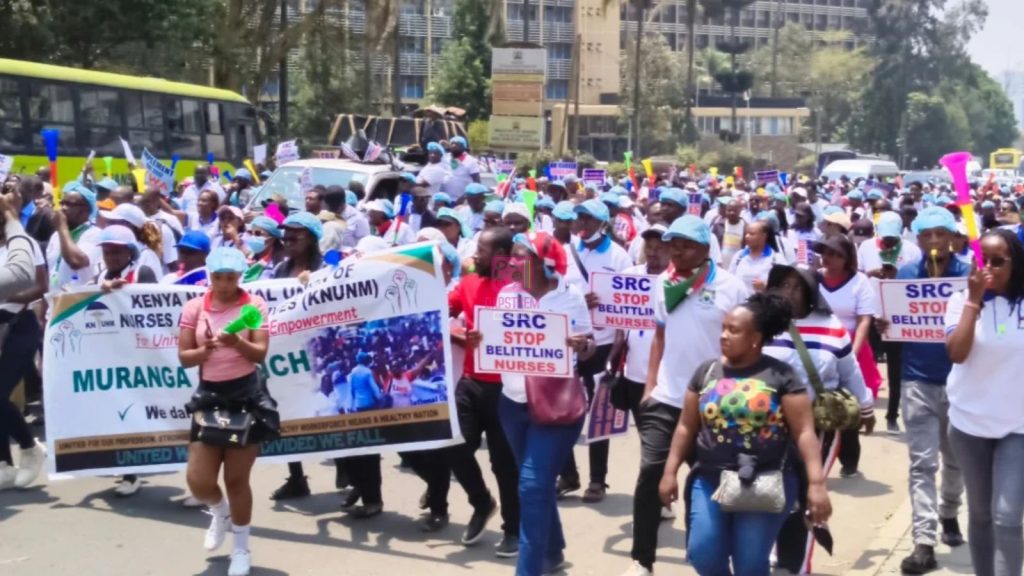
By the time the strike reached its 40th day, nurses were still demonstrating and demanding action. On Tuesday, September 8, hundreds marched to the Council of Governors’ offices, increasing pressure on county leaders to find a settlement.
What happens next?
Calling off the strike does not automatically end every disagreement between the nurses and government.
The key test will now be implementation.
The union has spent years arguing that previous promises were made but not honoured. The 2017 return-to-work formula remains particularly important because its incomplete implementation was one of the issues that helped trigger the latest dispute.
There is also the question of the current collective bargaining agreement, career progression and the employment status of UHC workers.
The history of the dispute demonstrates why implementation will be closely watched. In a 2022 judgment concerning the 2017 return-to-work agreement, the Employment and Labour Relations Court found that the negotiated agreement had not been complied with in a particular county case and ordered implementation of its terms.
That history means the end of the strike is better understood as the beginning of a new phase rather than the final resolution of every labour dispute.
For thousands of nurses, the immediate priority is returning to their workplaces.
For patients, the hope is that maternity wards, inpatient units, outpatient departments and other disrupted services will progressively return to normal.

For county governments, the challenge will be finding the resources and administrative mechanisms needed to deliver on the commitments reached at the negotiating table.
After 41 days of confrontation, Kenya’s nurses have returned to the negotiating table and, ultimately, to their patients.
The success of Wednesday’s agreement will now be judged not by the announcement that ended the strike, but by whether the promises made during the marathon negotiations are finally implemented.
For a health system that has spent more than a month under severe pressure, that implementation may prove just as important as the agreement that brought the strike to an end.