
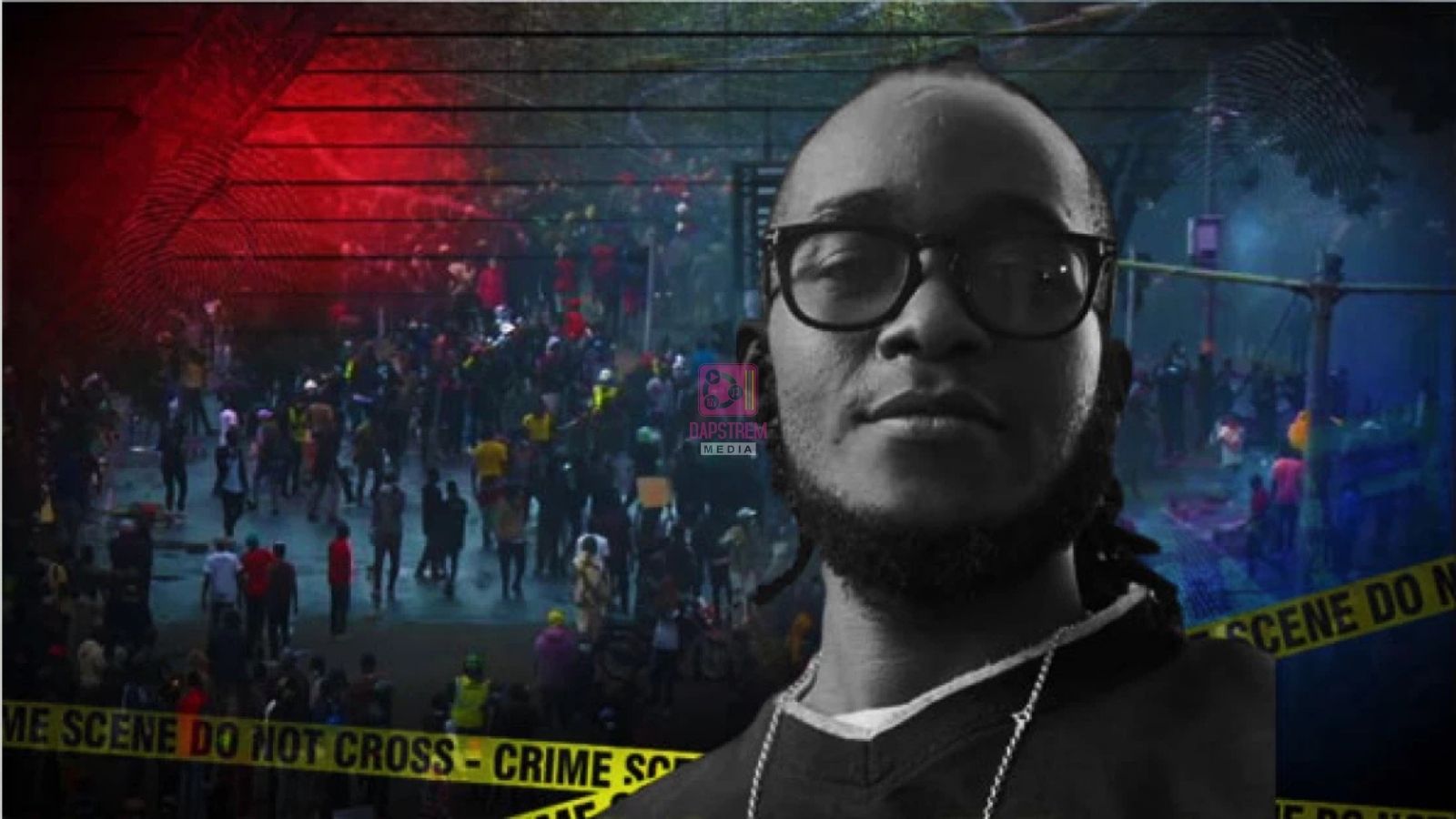
IPOA Accuses Police of Frustrating Investigations Into Rex Masai’s Fatal Shooting
The Independent Policing Oversight Authority (IPOA) has accused the National Police Service of frustrating efforts to establish the circumstances surrounding the killing of Rex Kanyike Masai during the June 2024 anti-government protests in Nairobi.
The fresh accusations emerged as the inquest into Masai’s death continued at the Milimani Law Courts, more than two years after the young Kenyan was fatally shot during demonstrations against the Finance Bill 2024.
IPOA lawyers told the court that police officers from several stations had failed to comply with an earlier court order requiring them to record statements concerning the events surrounding Masai’s death.
The stations named were Parliament Police Station, KICC Police Station, Kamukunji Police Station and Kilimani Police Station.
According to IPOA lawyer David Tenge, the officers had been directed by the court to record statements with the oversight authority but had not honoured the summons. IPOA consequently asked the court to issue another order compelling the officers to appear before the authority and provide their accounts of what happened on the day Masai was killed.
The development has once again raised serious questions about the progress of investigations into Masai’s death and whether all the relevant evidence and witnesses have been presented to the court.
It has also placed renewed attention on the relationship between the police service and the country’s independent police oversight body, particularly when allegations of police involvement in a fatal shooting are being investigated.
The latest dispute comes at a crucial stage of the inquest, with the prosecution indicating that it believes the evidence already presented before the court is sufficient to enable a determination of the matter.
IPOA, however, maintains that important witnesses and evidence are still outstanding and has opposed efforts to bring the proceedings to an end before those gaps are addressed.
How Rex Masai’s death became a symbol of the 2024 protests
Rex Masai was killed on June 20, 2024, during the demonstrations against the proposed Finance Bill 2024 in Nairobi.
His death came at a time when thousands of young Kenyans had taken to the streets to express opposition to the proposed tax measures and other grievances against the government.
The protests, which became popularly associated with the Gen Z movement, spread across different parts of the country and eventually developed into one of Kenya’s most significant waves of youth-led demonstrations in recent history.
Masai’s shooting quickly became one of the most prominent incidents of the protests.
His death generated widespread outrage, with human rights groups, activists and members of the public demanding that the authorities establish who was responsible and ensure that those found culpable were held accountable.
IPOA announced shortly after his death that it had launched investigations into the fatal shooting.
In its initial statement, the authority said Masai had allegedly been shot by a police officer dressed in civilian clothing at approximately 7:15 p.m. on June 20, 2024, in Nairobi. IPOA said it had established contact with Masai’s family and commenced investigations into the incident.
The authority subsequently undertook several investigative steps.
These included attending Masai’s post-mortem examination, recording witness statements, visiting and documenting the alleged crime scene, analysing CCTV and other video footage, obtaining police and medical documents, summoning police officers and submitting samples for forensic and ballistic examination.
However, despite those efforts, investigators have faced difficulties establishing the identity of the person who fired the fatal shot.
That failure has become one of the central issues in the ongoing inquest.
Police cooperation becomes a major point of contention
The latest court proceedings have brought the question of police cooperation back to the centre of the case.
IPOA told the court that police officers from four stations had not recorded statements despite a previous judicial directive.
The authority wants those officers to explain what they knew about the events of June 20, 2024, including issues relating to police deployment, activities in Nairobi’s central business district and the circumstances surrounding Masai’s shooting.
International Justice Mission lawyer Manasses Mwangi also told the court that none of the officers from the affected stations had recorded statements.
He asked the court to direct them to cooperate with the investigation and provide their accounts.
The National Police Service, however, offered an explanation for some of the delays.
Through lawyer Antony Mwangi, the NPS told the court that several officers who had been responsible for keeping records at the affected police stations had either been transferred or had left the service.
The police said they were in the process of collecting the required records but acknowledged that the process would take longer than initially expected.
The explanation has nevertheless left IPOA pushing for further intervention, arguing that the outstanding information is important to the process of establishing what happened to Masai.
The disagreement is significant because police records and statements can be crucial in cases involving alleged police shootings, particularly where investigators are attempting to determine which officers were deployed to a particular location at a particular time.
Without accurate deployment records, duty rosters, firearm records and statements from officers who were present, establishing individual responsibility can become considerably more difficult.
CCTV evidence provides another piece of the puzzle
The inquest has also examined CCTV footage that could help reconstruct the events surrounding Masai’s death.
During the latest proceedings, Absa Bank Head of Security Joash Owanga appeared before the court and gave evidence concerning CCTV footage recorded at one of the bank’s branches in Nairobi’s Central Business District on the evening Masai was killed.
Owanga told the court that the bank had provided the footage to IPOA after receiving a formal request from the oversight body.
However, he also revealed that he had not been questioned by the Directorate of Criminal Investigations or another investigative agency concerning the footage.
The revelation is significant because CCTV footage can potentially provide an independent visual record of what happened in an area where demonstrations, police deployments and confrontations were taking place.
Such footage could help investigators establish the movements of protesters and police officers, identify potential witnesses and determine the circumstances immediately before and after the shooting.
However, the existence of CCTV footage does not automatically resolve questions of criminal responsibility.
Investigators still need to establish what the footage shows, whether the relevant moments were captured clearly, whether the footage has remained intact and whether it can be linked to other evidence such as witness statements, medical findings and firearm records.
Earlier proceedings in the case have also exposed significant evidentiary difficulties.
In June 2026, IPOA investigator Justin Nyatete told the court that the firearm allegedly used to kill Masai, the bullet that struck him and the spent cartridge had not been recovered.
He further acknowledged that investigators had been unable to identify the police officer who fired the fatal shot.
These gaps have made the inquest particularly challenging.
The unresolved question of who shot Rex Masai
More than two years after Masai’s death, one of the most important questions remains unanswered: who fired the shot that killed him?
IPOA previously told the court that its investigation had not produced enough evidence to identify and prosecute an individual officer.
According to testimony given by investigator Nyatete, the investigative file contained witness statements, evidence and a summary of findings before it was forwarded to the Office of the Director of Public Prosecutions.
The recommendation for an inquest was made because the available evidence was considered insufficient to identify a specific officer who could be prosecuted.
The absence of the weapon and ballistic evidence has further complicated the matter.
In June, the court heard that the gun, bullet and spent cartridge linked to Masai’s death had not been recovered.
That means investigators have had to rely heavily on other forms of evidence, including witness accounts, video footage, police documentation and forensic findings.
The challenge is particularly important in a case involving allegations of police shooting because identifying the individual officer requires more than establishing that police officers were present at the scene.
Investigators must establish who had access to firearms, which officers were deployed to the area, what weapons they carried and whether the available evidence can connect a particular officer to the fatal shooting.
This is why IPOA has continued to insist that outstanding police witnesses and records should be made available.
A wider debate over police accountability
The Rex Masai case has become part of a broader national debate over police accountability in Kenya.
The 2024 demonstrations resulted in numerous allegations of excessive use of force, unlawful arrests, abductions and deaths.
For families of people who died during the protests, investigations and accountability have remained important demands.
Masai’s case has therefore attracted attention beyond his immediate family.
His death has become one of the incidents frequently cited in discussions about the conduct of security agencies during the Gen Z protests.
The difficulty in identifying the officer responsible has also raised concerns about whether institutional practices within the police service make it difficult to investigate allegations against police officers.
IPOA’s own records show that the authority has previously complained about difficulties obtaining information from police officers in investigations involving alleged police misconduct.
The authority’s mandate is particularly important in such cases because it provides an independent mechanism for investigating deaths and serious injuries allegedly caused by police action.
The 2024 investigation into Masai’s death was launched under IPOA’s statutory mandate to monitor and investigate policing operations affecting members of the public.
For the Masai family, however, the central issue remains simple: they want to know how their loved one died and who should be held responsible.
Inquest faces pressure over whether to proceed
The latest disagreement has also raised questions about the future of the inquest itself.
The prosecution told the court that it believes the evidence already presented is sufficient to enable the court to make a determination.
Prosecutor Jalson Makori said only one witness remained, and that witness was expected to appear primarily to produce a certificate.
IPOA has taken a different position.
The oversight authority argues that the court should not close the proceedings before outstanding police officers have been brought forward and the necessary records have been presented.
This disagreement means the court must now weigh whether the outstanding evidence is essential to determining the circumstances of Masai’s death or whether the material already presented is sufficient.
The answer could have major implications for the family and for the wider debate over accountability for deaths during the 2024 demonstrations.
An inquest is not the same as a criminal trial. Its purpose is to establish facts surrounding a death, including how, when and in what circumstances a person died, and it can help identify issues that may warrant further action.
In Masai’s case, establishing the circumstances surrounding his death could potentially provide a basis for further legal or investigative action if sufficient evidence emerges.
That is why the question of whether all relevant witnesses have been heard remains so important.
The search for answers continues
The latest developments have once again placed Rex Masai’s name at the centre of a national conversation about justice, police accountability and the events surrounding Kenya’s 2024 protests.
More than two years after his death, the case remains unresolved in one crucial respect: the identity of the person who fired the fatal shot has not been established.
IPOA says police cooperation has been inadequate and wants officers from Parliament, KICC, Kamukunji and Kilimani police stations to record statements despite an earlier court order.
The National Police Service says some of the officers who maintained relevant records have since been transferred or left the service and that efforts to compile the information are continuing.
Meanwhile, evidence from CCTV footage and testimony from witnesses continues to form part of the court record.
The competing positions presented before the court illustrate the difficulties that have surrounded the case from the beginning.
On one side is an oversight authority insisting that more evidence and witnesses are required before the inquest can be concluded.
On the other is the police service, which says it is working to retrieve records and has attributed some of the delays to changes in personnel.
The prosecution, meanwhile, maintains that the evidence already placed before the court is sufficient for a determination.
For Masai’s family, the hope remains that the proceedings will eventually provide clear answers.
His death occurred during a period of intense political and social unrest in Kenya, but behind the wider statistics and national debate was an individual whose life ended abruptly during a protest.
The continuing inquest is therefore not merely about establishing a historical record of the 2024 demonstrations.
It is also about determining whether the circumstances surrounding the death of Rex Masai can be fully established and whether those responsible, if identified, can be held accountable.
As the court prepares to continue hearing the matter, attention will remain focused on the outstanding police witnesses, the available CCTV evidence and the question of whether investigators can finally bridge the evidentiary gaps that have kept the identity of Masai’s alleged shooter unresolved.
For now, the case remains open, and the search for answers continues.