More Than 160 Dead as Devastating Nepal Flash Floods Leave Hundreds Missing
A devastating natural disaster has struck the Himalayan region after catastrophic flash floods swept through parts of Nepal and neighbouring Tibet, killing more than 160 people and leaving hundreds of others missing, including a large number of foreign tourists and pilgrims.
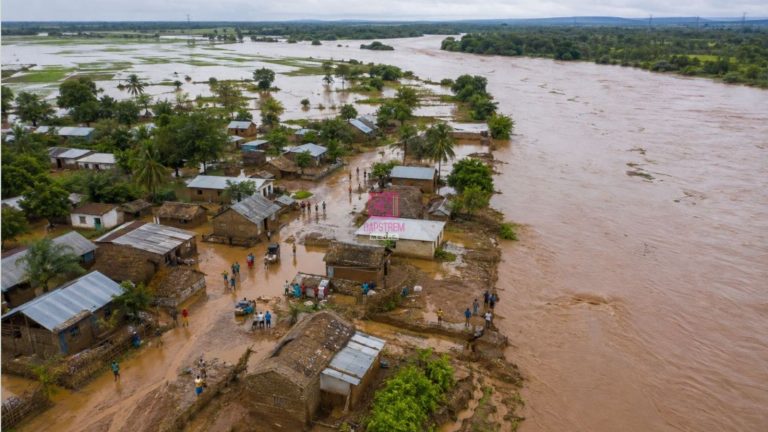
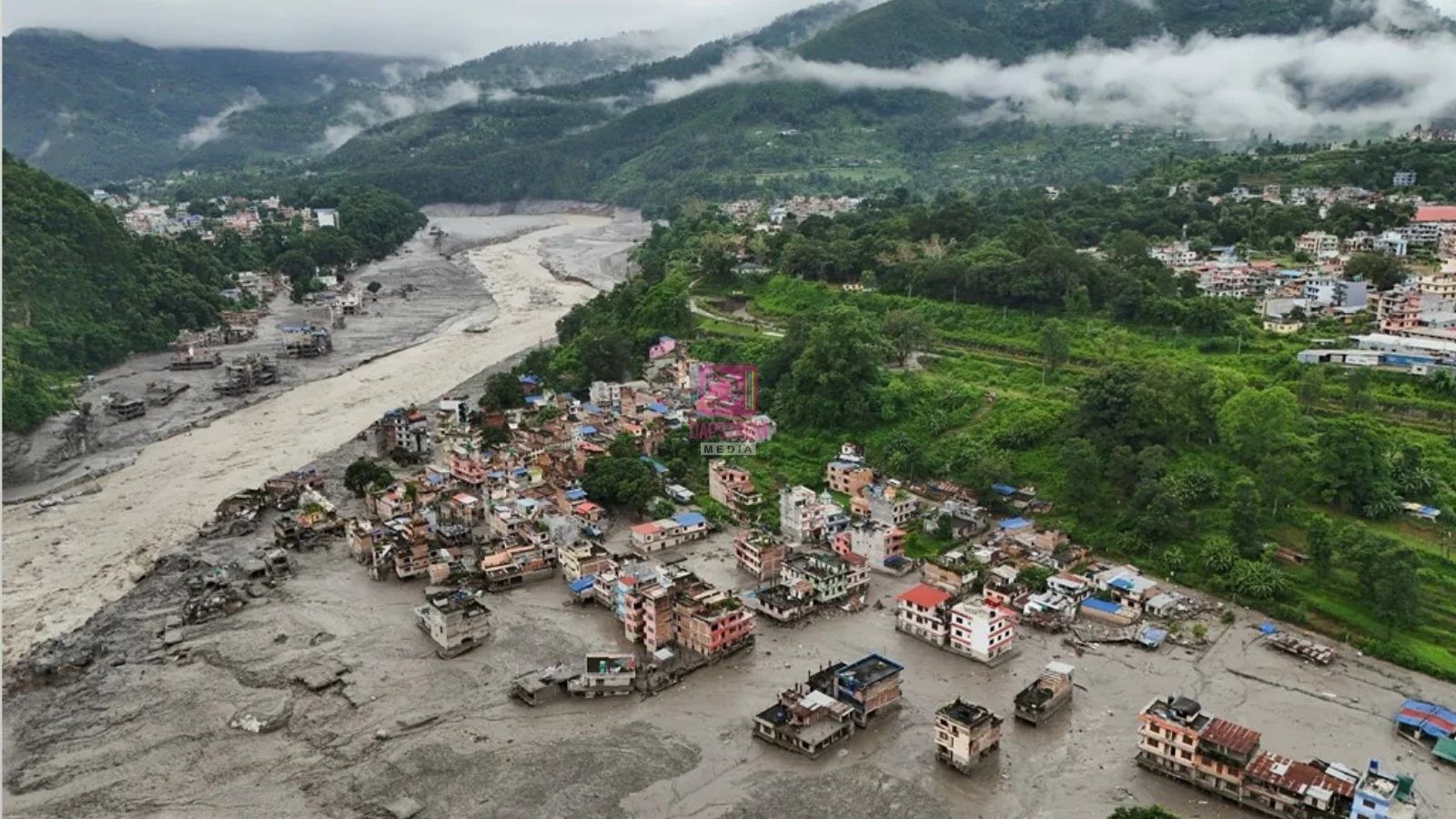
The disaster struck on Wednesday, August 26, after a massive collapse of ice and rock in the high Himalayas triggered an extraordinary surge of water, mud and debris through valleys along the Nepal-China border. Entire settlements were affected, while homes, roads, bridges, vehicles and other critical infrastructure were swept away or buried under thick layers of mud.
The scale of the disaster has continued to emerge as rescue teams gain access to areas that were initially cut off. Nepal’s authorities have reported at least 157 deaths, while three additional deaths were reported on the Tibetan side of the border, putting the combined death toll at more than 160. At the same time, hundreds of people remain unaccounted for, making it increasingly likely that the final number of casualties could rise.
The disaster has been particularly devastating because it struck suddenly, giving residents, workers and visitors little time to escape. Reports indicate that the flooding was not preceded by significant rainfall at the affected locations, adding to the shock experienced by communities that found themselves facing a massive wall of water, rocks and mud.
Among those missing are foreign nationals from several countries, including India, the United States, Australia, the United Kingdom, Canada, Malaysia and South Korea. Many of the foreign nationals were tourists or pilgrims travelling through the region, including people heading towards the sacred Mount Kailash area in Tibet.
A Sudden Disaster in the Himalayas
The floods affected mountainous areas around the Nepal-Tibet border, with some of the worst destruction reported in Nepal’s Rasuwa district.
The initial torrent moved through the Lhende Khola river valley before feeding into the Bhote Koshi and later the Trishuli River. The powerful surge carried enormous amounts of mud, rocks and other debris downstream, devastating communities along its path. Authorities reported that at least 19 bridges and approximately 40 kilometres of roads were destroyed or washed away.
The Trishuli River, one of Nepal’s major waterways, experienced an extraordinary rise in water levels, with reports indicating that the river rose by several metres within a very short period.
Such a rapid rise left people with little opportunity to move to safety.
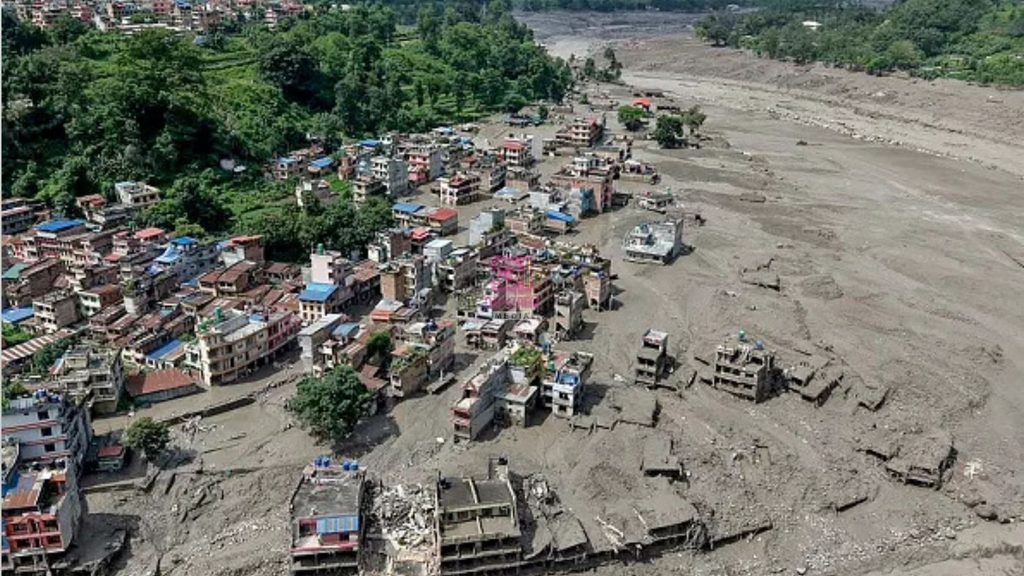
Images and videos from the affected areas showed an extraordinary level of destruction. Buildings were surrounded by mud, vehicles were swept away and roads that normally connect communities were rendered unusable.
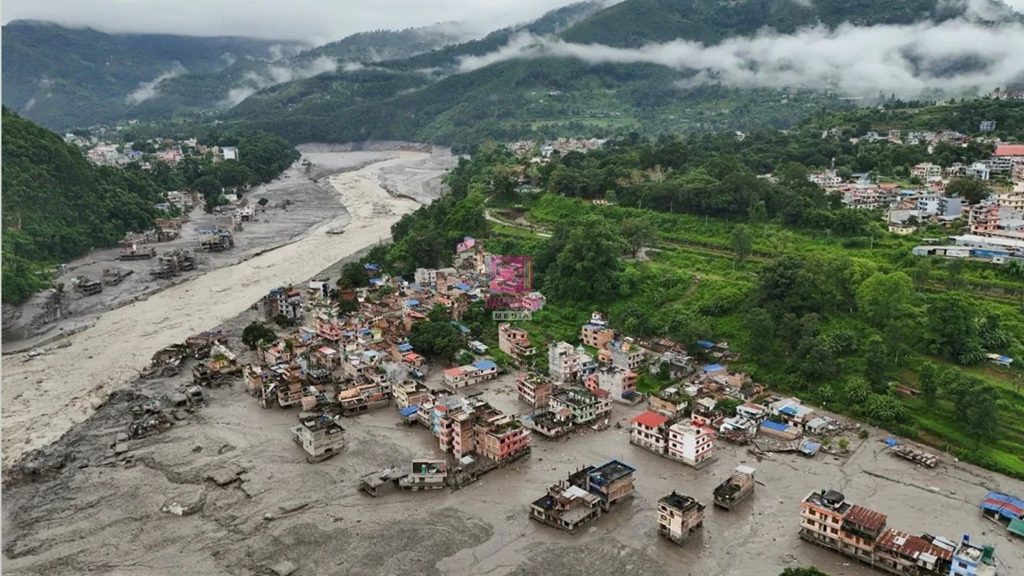
In some locations, the floodwaters carried so much debris that the landscape was transformed almost completely.
Local residents described scenes of devastation as the flood swept through areas where people had been going about their normal activities.
The disaster also affected businesses, construction and hydropower projects in the region, while communication and electricity infrastructure was damaged.
What Caused the Catastrophic Floods?
Initial reports suggested that an earthquake could have triggered the disaster, but subsequent analysis indicated that the event was more closely linked to a massive collapse of ice and rock in the Himalayas.
Satellite imagery and geological analysis indicated that part of a glacier collapsed at an altitude of approximately 5,200 metres. The enormous mass of ice and rock then fell thousands of metres, gathering additional debris as it moved down the mountain.
The resulting avalanche struck a river and temporarily blocked its flow. When that natural blockage gave way, a huge volume of water and debris was released downstream, producing the devastating flash flood.
The United States Geological Survey initially detected what appeared to be a seismic event. Further analysis indicated that the seismic signal was generated by the landslide itself rather than by a conventional earthquake. The event was eventually measured as a magnitude 5.2 seismic signal associated with the landslide.
The circumstances demonstrate how quickly hazards in mountainous environments can develop.
A collapse high above a populated valley can create a chain reaction in which ice, rocks, water and mud combine into a destructive force capable of travelling considerable distances within minutes.
Hundreds of Tourists and Pilgrims Missing
One of the most worrying aspects of the disaster is the large number of foreign visitors who remain unaccounted for.
Nepal authorities have reported hundreds of people missing, including foreign tourists and pilgrims who were travelling through the affected region. The exact figure has continued to change as authorities receive new information and begin reconciling missing-person reports with those who have been rescued or who have managed to contact their families.
Many of the missing foreigners were travelling towards Mount Kailash, one of the most sacred destinations in the Hindu, Buddhist, Jain and Bon traditions.
The region attracts thousands of pilgrims and tourists, particularly during pilgrimage seasons. Others were visiting popular trekking destinations around northern Nepal.
Among the nationalities reported missing are large numbers of Indian nationals, alongside citizens of the United States, Australia, Britain, Canada, Malaysia, South Korea and several other countries.
For families outside Nepal, the disaster has created an agonising wait.
Relatives are relying on governments, embassies, tour operators and rescue agencies for information about their loved ones. In many cases, the destruction of telecommunications infrastructure has made it difficult to establish contact.
Some families have reportedly spent hours waiting for calls or messages confirming that their relatives are safe.
The uncertainty is likely to continue until rescue teams reach more isolated areas and authorities are able to establish comprehensive lists of survivors and victims.
Rescue Operations Face Major Challenges
Nepal has deployed security personnel and emergency teams to assist with the rescue and recovery operation.
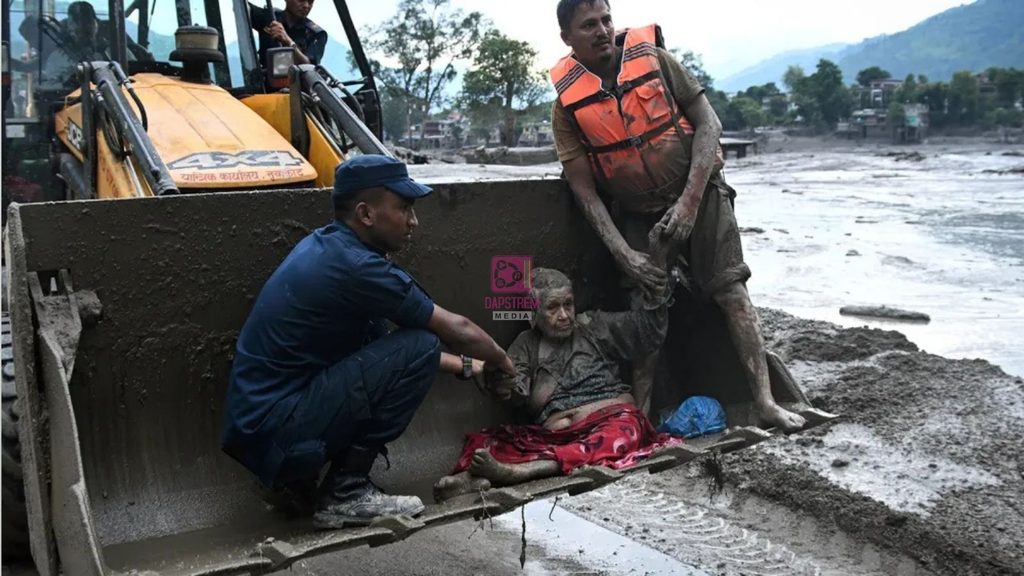
Helicopters, drones, search teams and rescue dogs have been used to locate survivors and assess the extent of the damage. Some survivors from badly affected areas have been airlifted to safety and transported to hospitals, including medical facilities in Kathmandu.
However, rescue operations have been extremely difficult.
The mountainous terrain makes access challenging under normal circumstances, and the destruction of roads and bridges has made the situation even more complicated.
Some areas can only be reached by helicopter, while mud and debris continue to obstruct ground operations.
Rescuers must also deal with the possibility of additional landslides and flooding.
This means emergency teams cannot simply move into every affected area immediately. They have to assess the stability of the terrain and ensure that rescue workers themselves are not placed in unnecessary danger.
The destruction of communication and electricity infrastructure has added another obstacle.
When phone networks and power supplies are disrupted, authorities may struggle to communicate with remote communities, while families may have difficulty contacting relatives.
Communities Left Devastated
For people living in the affected valleys, the disaster has destroyed more than buildings and infrastructure.
Homes have been lost, businesses have been damaged and families have been separated.
Some communities have effectively been cut off from the rest of the country because roads and bridges have disappeared beneath the floodwaters.
The loss of infrastructure could make recovery particularly difficult.
Roads are essential for bringing food, medicine and emergency equipment into remote Himalayan settlements. Bridges provide connections between villages and towns. Power infrastructure supports homes, hospitals, businesses and industries.
When all these systems are damaged simultaneously, recovery becomes a much larger undertaking.
The immediate priority is finding survivors and providing medical treatment, food, water and shelter.
But once the rescue operation is completed, authorities will face the enormous task of rebuilding damaged communities.
The Human Cost Continues to Grow
The official death toll is expected to change as rescue teams reach previously inaccessible locations.
Major natural disasters often produce uncertain casualty figures during the first few days because bodies can be buried beneath mud, swept downstream or remain in areas that rescuers cannot immediately reach.
At the same time, missing-person figures can fluctuate as survivors make contact with their families or authorities establish that some people listed as missing were never in the affected areas.
For that reason, officials have warned that current figures should not necessarily be considered final.
What is already clear, however, is that the disaster has caused enormous loss of life.
More than 160 people have been confirmed dead across Nepal and Tibet, while hundreds remain missing.
Hospitals have also received injured survivors, placing additional pressure on medical facilities.
Emergency workers must now treat physical injuries while communities begin dealing with the psychological impact of witnessing such a sudden disaster.
A Major Blow to Nepal’s Tourism Industry
Tourism is one of Nepal’s most important economic sectors, with the country’s mountains, trekking routes, temples and pilgrimage destinations attracting visitors from around the world.
The disaster could therefore have consequences for the country’s tourism industry beyond the immediate loss of life.
The affected region is used by tourists, trekkers and pilgrims travelling towards destinations in the Himalayas and Tibet.
The disappearance of roads and bridges, combined with continuing safety concerns, is likely to disrupt travel arrangements in the short term.
Tour operators may be forced to suspend or alter trips, while travellers already in Nepal could face delays as authorities assess which routes remain safe.
The presence of hundreds of foreign tourists among those reported missing has also brought international attention to the disaster.
Governments are now working with Nepali authorities to establish the whereabouts of their citizens.
For Nepal, the challenge will be balancing the need to support its tourism-dependent communities with the responsibility to ensure that travellers are not exposed to unnecessary risks.
Concerns About Climate Change and Himalayan Risks
The disaster has also renewed attention on the growing environmental risks facing the Himalayas.
Scientists have warned that rising temperatures are accelerating the melting and retreat of glaciers in the region. As glaciers become smaller and mountain environments become warmer, some areas can become increasingly unstable.
Researchers have particularly focused on the dangers posed by melting glaciers, unstable slopes and glacial lakes.
The collapse that contributed to the latest disaster demonstrates how interconnected these hazards can be.
A collapse high in the mountains can trigger flooding far downstream, affecting communities that may have no idea that a dangerous event is developing hundreds of kilometres away.
Experts have increasingly called for stronger monitoring systems in vulnerable Himalayan regions, including improved satellite observation, early-warning systems and communication networks.
The aim is not necessarily to prevent every natural disaster—something that may be impossible—but to provide communities with enough warning to move out of danger.
A Disaster That Crosses Borders
The floods have affected both Nepal and China’s Tibet region, making the disaster an international emergency.
On the Chinese side, authorities reported deaths and hundreds of people missing in Gyirong County, an area close to the Nepal border.
The disaster has therefore required cooperation between authorities on both sides of the frontier.
India has also been monitoring developments because the rivers affected by the disaster eventually flow into India. The scale of the flooding has raised concerns about downstream impacts and prompted authorities to remain alert in areas along connected river systems.
The cross-border nature of the disaster highlights the importance of regional cooperation when dealing with Himalayan environmental risks.
Water does not recognise political boundaries.
A landslide or glacial collapse in one country can produce flooding in another, making information sharing and coordinated emergency planning essential.
International Support and Concern
The international community has responded with concern as the scale of the disaster has become clearer.
Foreign governments have been working to establish the whereabouts of their citizens, particularly those listed as missing.
The United Nations and other international organisations have also expressed solidarity with Nepal and offered assistance.
For countries with nationals among the missing, the immediate priority is obtaining reliable information and supporting rescue operations.
Families around the world are anxiously awaiting updates.
The international response is likely to become even more significant as Nepal moves from emergency rescue to long-term recovery.
Rebuilding roads, bridges, homes and other infrastructure in mountainous areas will require substantial resources.
A Long Road to Recovery
Even after the floodwaters recede, the consequences of the disaster will remain for years.
Communities will need to rebuild homes and businesses. Roads and bridges will have to be reconstructed. Damaged electricity and communication networks will need to be restored.
Families who have lost loved ones will face a much more personal and painful recovery.
For those whose relatives remain missing, the uncertainty could continue until search teams have completed their work.
The government will also need to examine whether existing early-warning systems were adequate and whether more could have been done to identify the threat before the flood occurred.
The fact that the disaster developed so rapidly makes early warning particularly important.
A Warning From the Himalayas
The tragedy in Nepal is more than a story about a single flood.
It is a reminder of the extraordinary forces that can develop in the Himalayan environment and the vulnerability of communities living along mountain rivers.
The combination of glaciers, steep slopes, unstable rock formations and rapidly flowing rivers creates unique risks.
As climate change alters the Himalayan environment, those risks could become increasingly difficult to predict.
The latest disaster therefore presents an opportunity for Nepal and its neighbours to strengthen disaster preparedness, improve monitoring and invest in systems capable of warning people before catastrophic events occur.
For now, however, the priority remains the search for survivors.
Rescue teams continue to work through mud, debris and damaged infrastructure in an attempt to reach people who may still be alive.
More than 160 people have already lost their lives, while hundreds of families are still waiting for news about missing relatives.
The coming days will be crucial as rescuers reach more isolated communities and authorities establish the full scale of the devastation.
For Nepal, the disaster represents one of the country’s most painful emergencies in recent years. For the families of those missing and those who have died, it is a tragedy that cannot be measured simply by statistics.
And for the international community, the catastrophe is another powerful reminder that the world’s mountain environments are changing—and that communities living in vulnerable regions need stronger warning systems, better preparedness and greater cooperation to confront the dangers ahead.