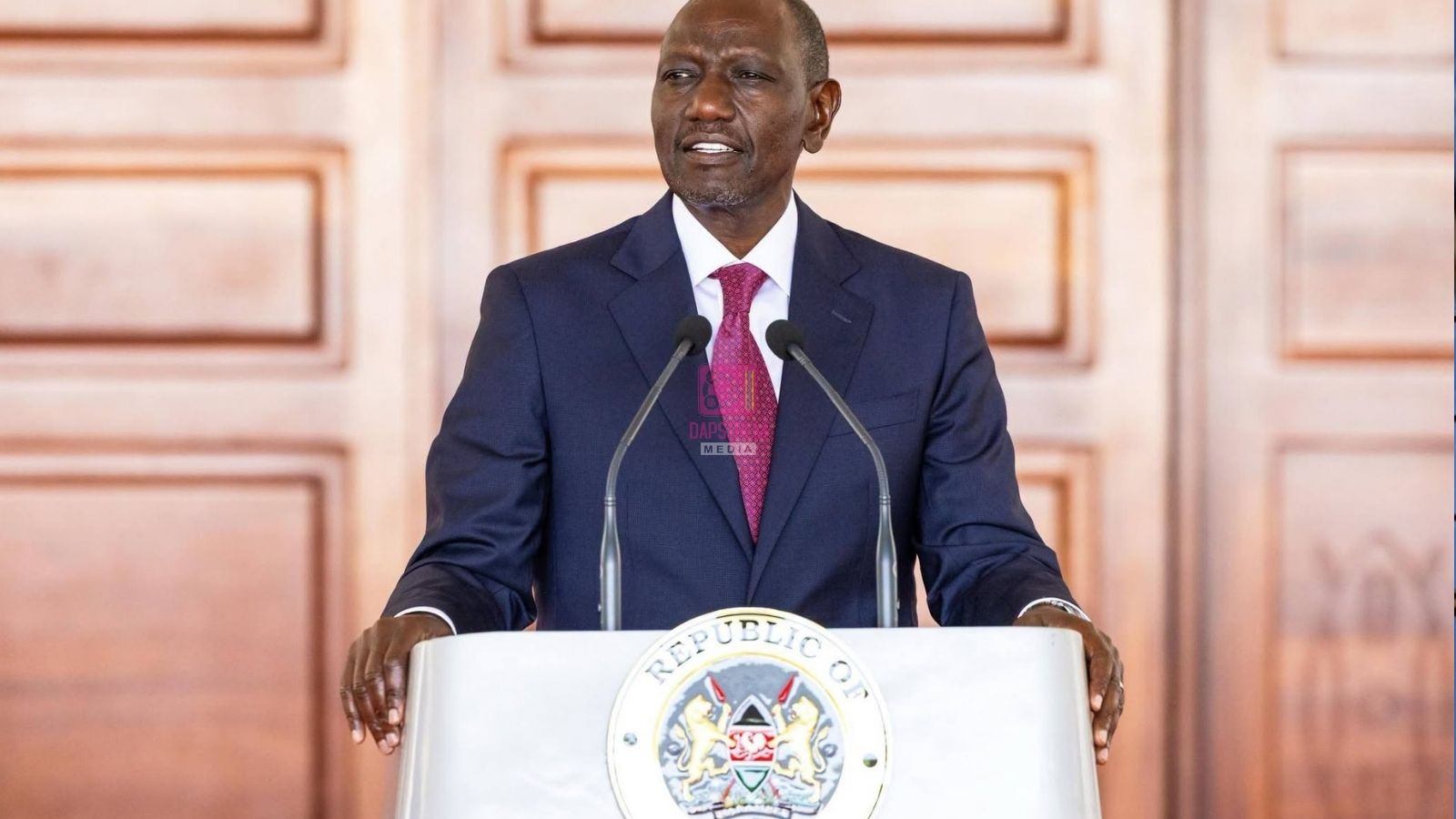
President William Ruto Announces Full Government Funding for All Students Admitted to Universities and Colleges
President William Ruto has announced a major policy shift in Kenya’s higher education sector, declaring that all students who qualify for admission to universities and colleges will henceforth receive full government funding for their studies. The announcement is expected to transform access to higher education by easing the financial burden on thousands of families while reaffirming the government’s commitment to investing in education as a driver of national development.
The declaration has been welcomed by many students, parents, education stakeholders, and policy analysts, who view it as one of the most significant commitments to higher education in recent years. If fully implemented, the policy could ensure that no qualified student is denied the opportunity to pursue university or college education because of financial constraints.
Education has long been regarded as one of the most effective tools for economic empowerment, poverty reduction, and social mobility. For decades, many Kenyan families have made enormous sacrifices to ensure their children complete secondary school and transition to institutions of higher learning. However, the cost of tuition, accommodation, books, transport, and other educational expenses has remained a major obstacle for thousands of deserving students.
Every year, the Kenya Universities and Colleges Central Placement Service (KUCCPS) places thousands of students into public and private universities, national polytechnics, technical and vocational education and training (TVET) institutions, and teacher training colleges. While admission represents a major achievement for students, many have struggled to raise the resources needed to begin or complete their studies.
Financial difficulties have often forced some students to defer admission, postpone academic programs, seek part-time employment, or depend heavily on family members and well-wishers. Others have relied on government scholarships, Higher Education Loans Board (HELB) loans, bursaries from county governments, Constituency Development Funds (CDF), religious organizations, and charitable foundations to remain in school.
President Ruto’s latest announcement seeks to address these long-standing challenges by assuring every qualified student of government support throughout their higher education journey. According to the President, the objective is to ensure that academic potential—not financial ability—determines whether a student accesses tertiary education.
The announcement reflects the government’s broader agenda of strengthening human capital development. Around the world, countries that prioritize investment in education generally experience improved workforce productivity, technological innovation, entrepreneurship, research capacity, and long-term economic growth. Kenya has similarly identified education as one of the pillars supporting its development ambitions under Vision 2030 and other national planning frameworks.
Supporters of the policy argue that expanding access to higher education will contribute significantly to reducing inequality. Students from low-income households, rural communities, marginalized regions, and vulnerable backgrounds often face the greatest financial barriers despite demonstrating strong academic performance. Removing those obstacles could create more equal opportunities for talented young people regardless of their socioeconomic circumstances.
The announcement is also expected to benefit Technical and Vocational Education and Training (TVET) institutions, which continue playing an increasingly important role in equipping young people with practical skills demanded by the labor market. The government has consistently emphasized the importance of vocational training in supporting industrialization, manufacturing, infrastructure development, and entrepreneurship.
Strengthening funding for TVET students could encourage more young Kenyans to pursue technical careers in engineering, construction, information technology, hospitality, agriculture, healthcare, automotive technology, and other sectors experiencing growing demand for skilled workers.
Public universities are likewise expected to benefit if funding reaches institutions in a timely and predictable manner. Over recent years, several universities have experienced financial challenges arising from declining revenues, delayed government disbursements, increasing operational costs, and growing student populations. Stable funding arrangements could improve institutional planning, enhance service delivery, support infrastructure development, and strengthen academic programs.
Education experts note that improving access alone is not sufficient. Increased enrollment must be accompanied by continued investment in lecture halls, laboratories, libraries, digital learning platforms, student accommodation, research facilities, and qualified teaching staff to maintain academic quality as student numbers grow.
The policy announcement has also renewed discussions surrounding Kenya’s higher education financing model. In recent years, the government introduced reforms intended to allocate financial support based on students’ individual levels of need rather than applying a uniform funding formula. Those reforms generated considerable public debate, legal challenges, and calls for further review.
President Ruto’s latest commitment signals a renewed emphasis on ensuring that financial barriers do not prevent qualified learners from accessing tertiary education. Details regarding implementation mechanisms, eligibility criteria, funding sources, and administrative procedures are expected to become clearer as the government rolls out the policy.
For many parents, the announcement offers hope at a time when the cost of living continues to place pressure on household budgets. Paying university fees often requires families to sell assets, borrow money, or postpone other important financial commitments. A comprehensive government funding program could significantly reduce these burdens while allowing parents to focus on supporting their children’s overall well-being.
Students themselves have welcomed the prospect of studying without constant anxiety over tuition balances or fee arrears. Financial insecurity has often disrupted learning, leading to delayed graduations, interrupted academic calendars, and increased stress among learners. Greater certainty regarding educational funding may allow students to concentrate more fully on their academic and professional development.
Employers and industry leaders also recognize the importance of expanding access to quality higher education. Kenya’s economy increasingly requires graduates equipped with advanced knowledge, technical skills, digital competencies, creativity, and critical thinking abilities capable of driving innovation and competitiveness in a rapidly changing global economy.
Investment in higher education also strengthens research and innovation. Universities play a vital role in generating solutions to national challenges in healthcare, agriculture, climate change, technology, manufacturing, energy, and public policy. Supporting more students to complete higher education ultimately expands the country’s capacity to produce skilled professionals and researchers capable of addressing these challenges.
However, policy analysts caution that successful implementation will require substantial financial planning. Funding every qualified university and college student represents a significant budgetary commitment, making sustainable financing essential. Government agencies responsible for education financing will need efficient systems to ensure funds reach institutions promptly while maintaining transparency and accountability.
Education stakeholders are also likely to seek clarification regarding how the policy will interact with existing programs such as HELB loans, scholarships, bursaries, and institutional financial aid. Clear guidelines will be necessary to ensure that students understand the nature of government support and the responsibilities attached to it.
The announcement may also encourage more secondary school students to work harder academically, knowing that financial barriers may no longer prevent them from pursuing higher education. Increased confidence in post-secondary opportunities can positively influence school completion rates and motivate learners to perform better in national examinations.
Across Kenya, many communities have celebrated children becoming the first in their families to attend university. Such achievements often transform entire households by creating opportunities for improved employment, higher incomes, and enhanced social mobility. Expanding government support has the potential to multiply these success stories across the country.
The policy also reflects a broader recognition that education remains one of the most valuable long-term investments any nation can make. Countries with highly educated populations generally enjoy stronger institutions, greater economic resilience, improved healthcare outcomes, higher productivity, and increased innovation. By investing in students today, governments lay the foundation for future national prosperity.
As implementation plans unfold, universities, colleges, students, parents, education experts, and policymakers will closely monitor how the initiative is operationalized. Effective coordination among government agencies, higher learning institutions, and financial administrators will be essential to ensuring the policy achieves its intended objectives.
Ultimately, President William Ruto’s announcement that all students who qualify for admission to universities and colleges will receive full government funding represents a potentially transformative moment for Kenya’s education sector. If successfully implemented, the policy could expand educational access, reduce financial inequality, strengthen the country’s skilled workforce, and open new opportunities for thousands of young Kenyans whose dreams of higher education have previously been limited by economic hardship.
For countless students preparing to begin the next chapter of their academic journey, the announcement offers renewed hope that talent, determination, and hard work—not financial circumstances—will increasingly determine their path to higher education and future success.