
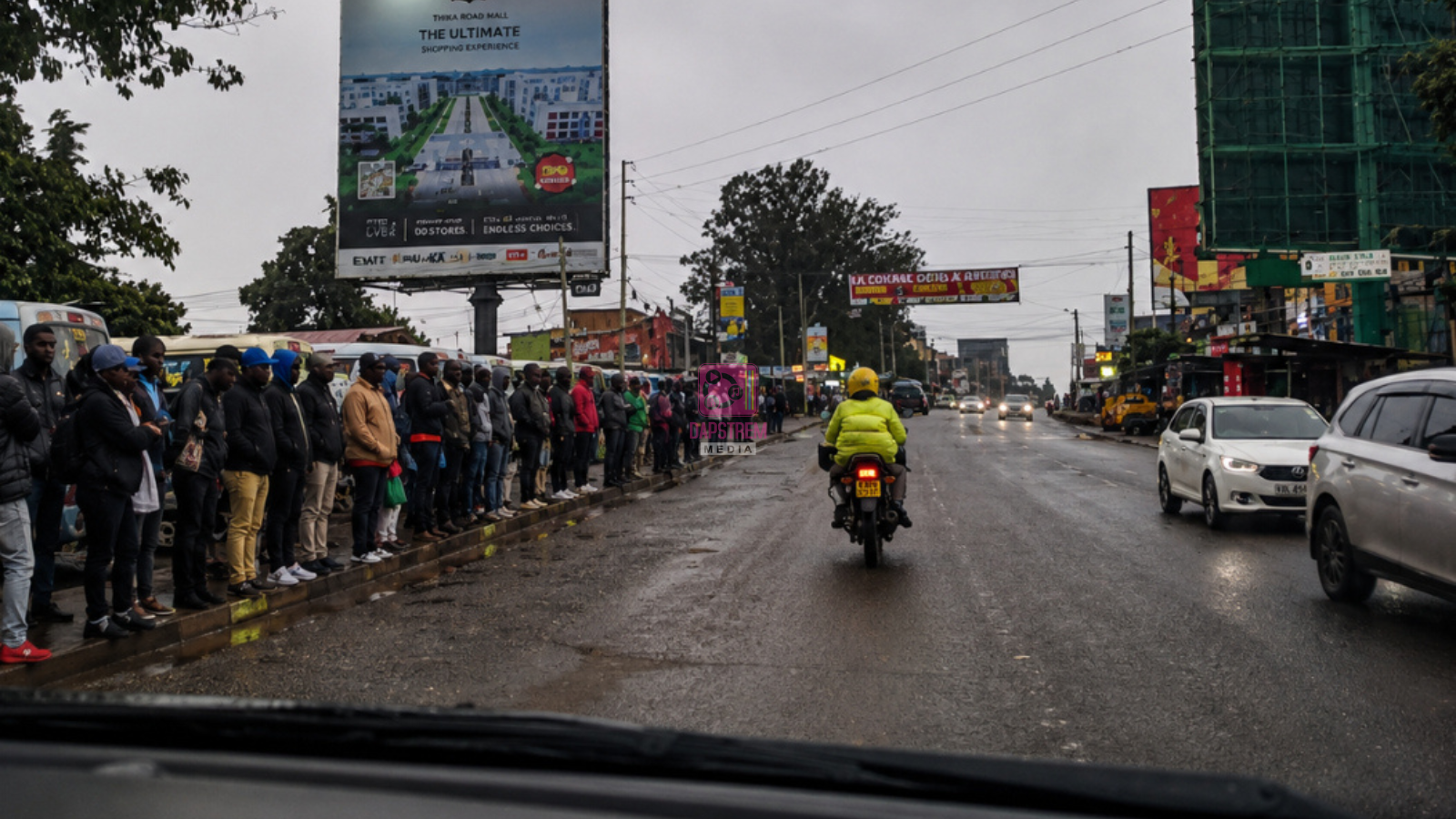
Hundreds of commuters were left stranded across major towns and cities as matatu operators launched a nationwide strike over the rising fuel prices and soaring operational costs.
Thousands of Kenyans woke up to chaos on Monday morning after a nationwide matatu strike brought transport services to a standstill across major towns and cities, leaving commuters stranded, businesses disrupted, and roads blocked in several areas. The strike, organized by the Transport Sector Alliance, was triggered by the latest fuel price hike announced by the Energy and Petroleum Regulatory Authority (EPRA), a move that transport operators say has made it impossible for them to continue operating normally.
In Nairobi, scenes of frustration and confusion were witnessed as thousands of workers, students, and traders struggled to find alternative means of transport. Long queues formed at bus stages as desperate commuters searched for any available vehicle willing to operate despite the shutdown. Many were forced to walk long distances to work and school after most matatus remained parked in depots overnight.
The disruption was not limited to Nairobi alone. Reports indicated that transport operations were severely affected in Kiambu, Machakos, Mombasa, Kisumu, Kajiado, Embu, Murang’a, and Makueni counties. Major highways and roads including Thika Road, Magadi Road, the Nairobi-Nakuru highway, North Airport Road, and sections of the Meru-Nairobi highway experienced heavy disruptions as protesters barricaded roads using stones and burning tyres.
The strike followed a joint statement issued by the Transport Sector Alliance on Sunday evening announcing a complete nationwide shutdown beginning at midnight. The alliance, which brings together matatu operators, truck owners, taxi associations, and boda boda groups, accused the government of ignoring the suffering of transport operators and ordinary Kenyans amid the rising cost of fuel and the increasing cost of living.
Transport operators argued that the latest fuel prices had pushed operational costs to unbearable levels. According to industry players, many matatu owners are already struggling with expensive spare parts, increased insurance costs, high taxation, and reduced passenger numbers caused by the difficult economic situation in the country. The increase in fuel prices, they say, was the final blow.
As early as dawn, several areas around Nairobi had already descended into confusion. In Roysambu along Thika Road, protesters blocked sections of the highway, forcing motorists to make U-turns and causing massive traffic jams. Videos circulating online showed commuters trekking for kilometers while others stood helplessly at bus stops hoping the situation would normalize.
Private taxi drivers and boda boda operators who remained on the roads took advantage of the shortage of public transport to increase fares sharply. Some commuters reported paying double or even triple the normal fare to reach their workplaces. Others simply gave up and returned home after waiting for hours.
The National Police Service confirmed that security had been heightened across the country following the strike. Police officers were deployed in several hotspots to prevent destruction of property and maintain order. Authorities warned demonstrators against engaging in unlawful activities even as tensions continued to rise in several towns.

The current crisis comes at a time when many Kenyans are already grappling with harsh economic conditions. The country has been experiencing a sustained increase in the cost of basic commodities, electricity, transport, and housing. Although Kenya’s economy has shown signs of stability in recent months, many households continue to struggle with unemployment, stagnant wages, and rising living expenses.
The fuel price hike that triggered the strike has been linked to several global and local factors. Kenya relies heavily on imported petroleum products, meaning international oil market changes have a direct effect on local fuel prices. Recent tensions and instability in the Middle East, where much of Kenya’s fuel originates, have disrupted global oil supply chains and pushed international crude oil prices upward.
In addition to global factors, the weakening of the Kenyan shilling against the US dollar has made fuel imports more expensive. Since petroleum products are purchased in dollars, any depreciation of the local currency increases import costs, which are eventually passed on to consumers. Industry experts have also blamed high taxes and levies imposed on petroleum products for worsening the burden on motorists and transport operators.
Transport stakeholders insist that unless the government intervenes urgently, the cost of transport and prices of basic goods will continue rising. Truck operators participating in the strike warned that the fuel hike would eventually affect food prices and supply chains across the country because transportation costs are directly tied to the movement of goods from farms and ports to markets.
The strike has already begun affecting businesses across urban centers. Many workers arrived late at their workplaces while others failed to report entirely. Traders in markets and shopping centers complained of reduced customer traffic as movement became difficult. Parents also faced challenges taking children to school as some institutions reported delayed attendance due to transport difficulties.
The ongoing heavy rains being experienced in several parts of the country have worsened the situation for stranded commuters. Weather forecasts indicate that Nairobi and other regions are expected to continue receiving showers and thunderstorms, exposing commuters walking long distances to harsh weather conditions.
Analysts now warn that if the strike continues for several days, the country could face severe economic disruption. Public transport is the backbone of movement in Kenya’s urban centers, particularly in Nairobi where millions rely on matatus daily. A prolonged shutdown could slow down business operations, affect school programs, disrupt supply chains, and increase public frustration over the rising cost of living.
For many ordinary Kenyans, the strike is yet another reminder of the difficult economic reality facing the country. With food prices remaining high, unemployment still affecting many young people, and transport costs continuing to rise, frustrations among citizens have been growing steadily over recent months.
Despite the disruption, transport operators maintain that the strike is necessary to force the government to address their concerns. They argue that continuing operations under the current fuel prices would only drive many operators out of business while leaving commuters to shoulder even heavier transport fares.
As the country waits to see whether negotiations between the government and transport stakeholders will take place, millions of Kenyans remain uncertain about how they will commute in the coming days. By Monday afternoon, many roads remained blocked, matatu stages deserted, and thousands of commuters continued trekking on foot under cloudy skies as the nationwide shutdown entered full force.