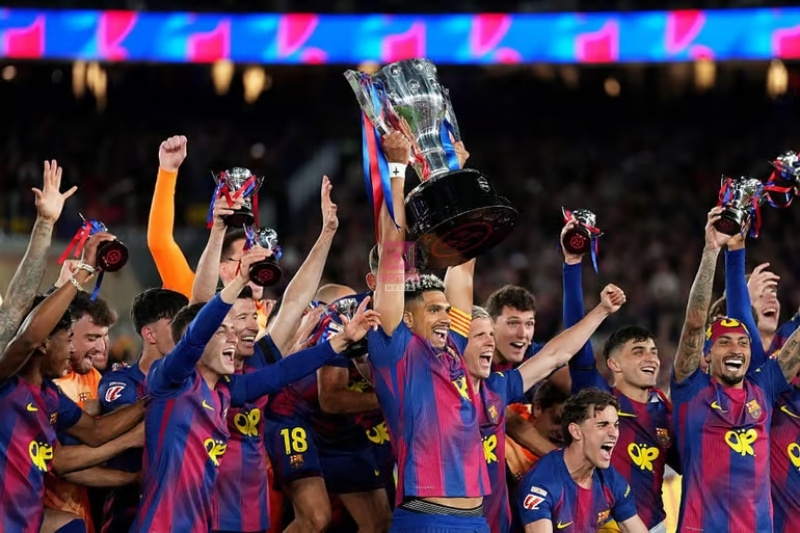
Barcelona Seal the Title in Historic Fashion
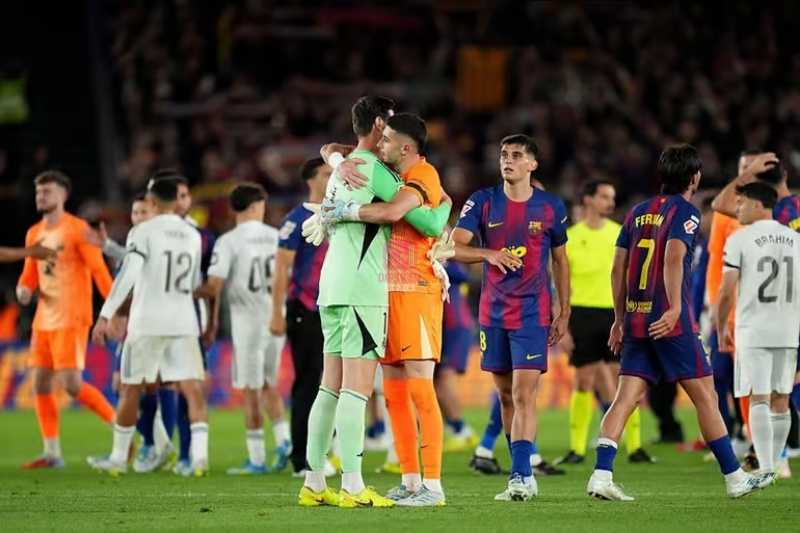
Barcelona secured the La Liga title in the most dramatic way possible after defeating Real Madrid 2-0 at home in El Clasico. As a result, the Catalan giants clinched the championship in front of their own supporters, against their fiercest rivals, and with a commanding 14-point lead at the top of the table.
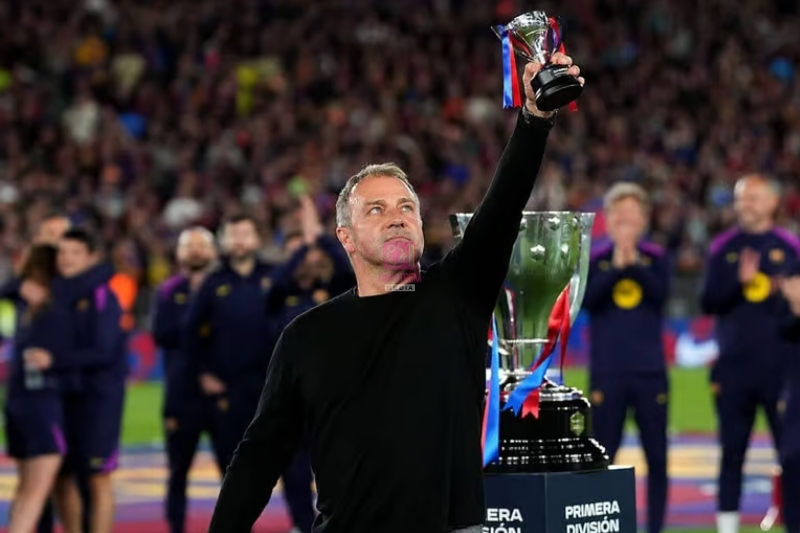
Moreover, Sunday’s El Clasico became the first match in nearly a century to directly decide the La Liga title. Under the leadership of Hansi Flick, Barcelona have now won the league in both of his seasons in charge.
Since February, Flick’s side have maintained unstoppable momentum. They have won 11 consecutive league matches, lost only four La Liga games all season, and preserved a perfect home record in the competition.
Although Barcelona suffered disappointment after exiting the Copa del Rey semi-finals and the Champions League quarter-finals, they never surrendered control of the domestic title race. Across all competitions, Barca have won 42 of their 53 matches this season, giving them a remarkable 79% win rate. Among clubs in Europe’s top five leagues, only Bayern Munich have achieved a better percentage.
In addition, Barcelona rank among Europe’s most prolific attacking teams, trailing only Bayern in total goals scored across league and cup competitions.
Flick Transforms Barcelona’s Identity
When Flick arrived in May 2024, Barcelona faced enormous pressure. At the time, Real Madrid had just won both La Liga and the Champions League while also adding Kylian Mbappe to an already world-class squad.
Nevertheless, Flick quickly reshaped Barcelona’s identity. He introduced stricter discipline, increased the squad’s physical intensity, and restored a direct attacking style that aligned with the club’s traditional philosophy inspired by Johan Cruyff and Pep Guardiola.
At the same time, a new generation from La Masia emerged. Most notably, Lamine Yamal became the symbol of Barcelona’s evolution. Flick placed enormous trust in the teenager and built tactical systems that maximized his dribbling, creativity, and attacking freedom.
Even when defenders double-mark him, Yamal consistently changes matches with his pace and flair. Consequently, Barcelona’s right flank has become the most dangerous attacking outlet in Spanish football. Despite missing time through injury, the 18-year-old has still scored 24 goals in 45 appearances this season.
Furthermore, Flick successfully integrated other academy talents such as Pau Cubarsi and Fermin Lopez into his demanding high-intensity system.
Key Players Thrive in Flick’s System
Several senior players also elevated their performances under Flick’s management. For example, Raphinha became a far more consistent and decisive attacker. Flick increased the Brazilian’s responsibility in transition and encouraged quicker decision-making, which perfectly suited his strengths.
Meanwhile, Pedri continued to control Barcelona’s midfield in a system designed for rapid progression and fluid movement.
In attack, Robert Lewandowski rediscovered his clinical edge. Thanks to improved service and more organized attacking patterns, the 37-year-old striker once again delivered decisive performances, even as uncertainty remains over his future with his contract expiring in June.
Additionally, Eric Garcia emerged as one of Barcelona’s most versatile and valuable players by excelling in multiple positions. Likewise, Gerard Martin exceeded expectations after stepping into a crucial defensive role.
Flick also earned praise for trusting squad players and rotating effectively throughout a demanding season. One important example involved Marcus Rashford, who made a strong impact despite not always starting matches.
Statistically, Rashford ranked among the most productive forwards across Barcelona, Real Madrid, and Atletico Madrid when measuring goals and assists per minute in La Liga. Most importantly, he scored a stunning free-kick in Sunday’s El Clasico to open the scoring — arguably the most significant goal of his Barcelona career so far.
Barcelona could still sign Rashford permanently for 35 million euros (£30m), although the club has yet to make a final decision.
Beyond tactics, Flick also demonstrated strong man-management skills. In December, he allowed Ronald Araujo to take leave in order to prioritize his mental health while respectfully protecting the defender’s privacy.
Real Madrid Collapse as Barcelona Stay Resilient
While Barcelona accelerated, Real Madrid steadily lost momentum. Costly draws against Elche, Rayo Vallecano, and Girona weakened Madrid’s title challenge and eventually damaged Xabi Alonso’s position as manager.
Shortly after losing to Barcelona in the Spanish Super Cup, Alonso departed in January with Madrid sitting four points behind their rivals. However, the situation worsened under his successor Alvaro Arbeloa, as the gap eventually expanded to 14 points.
Furthermore, Madrid endured dressing-room tensions, disciplinary issues, injuries, and inconsistency throughout the season. Those problems repeatedly surfaced in major matches and ultimately derailed their campaign.
In contrast, Barcelona consistently responded positively to setbacks. After losses against Girona and Real Madrid in October, Flick’s side immediately launched new winning streaks instead of allowing poor results to affect morale.
Most importantly, Barcelona maintained unity despite injuries and constant squad reshuffling. Flick preserved the team’s intensity, structure, and confidence regardless of which players were available.
Although Barcelona fell short in Europe after Atletico Madrid eliminated them in the Champions League quarter-finals, their domestic dominance signals a bright future. With elite young talent already flourishing and Flick continuing to shape the squad, Barcelona appear well-positioned to remain Spain’s dominant force for years to come.