
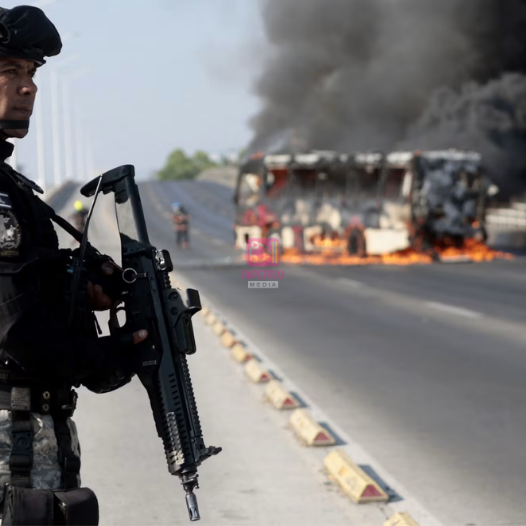
Mexico reels as cartels launch fiery reprisals after El Mencho’s killing.
The killing of Nemesio Oseguera Cervantes, widely known as El Mencho, has triggered a wave of violent reprisals across several Mexican cities, with cartel gunmen torching vehicles, blocking highways, and unleashing coordinated attacks in what authorities describe as an attempt to paralyze key regions and project strength after the fall of one of the country’s most feared drug lords.
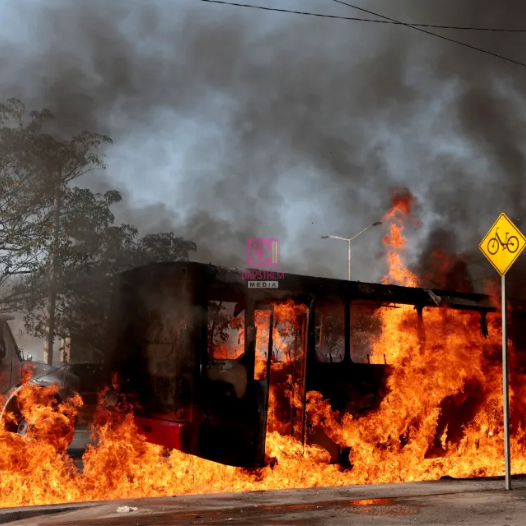
For years, El Mencho stood at the helm of the powerful Jalisco New Generation Cartel (CJNG), transforming it from a regional criminal faction into a transnational trafficking empire. His reported death at the hands of Mexican military forces marks a turning point in Mexico’s long-running war against organized crime — but it also underscores the persistent cycle of violence that often follows the removal of cartel kingpins.
In the hours following confirmation that El Mencho had been killed during a high-intensity military operation, chaos spread across parts of western and central Mexico. Armed men hijacked trucks and buses, set them ablaze, and used the flaming wreckage to barricade major highways. Commuters were stranded. Businesses shut down early. Schools dismissed students. Videos circulating on social media showed thick plumes of black smoke rising above city skylines as gunmen fired into the air to intimidate residents and security forces alike.
Security analysts say the retaliatory attacks were not random acts of rage but carefully orchestrated displays of force. Cartels in Mexico have long used such tactics — known locally as “narcobloqueos” — to overwhelm authorities, stretch security resources thin, and send a message that even the death of a leader does not dismantle their operational capacity. The coordinated nature of the roadblocks suggests that CJNG commanders on the ground moved swiftly to assert control and prevent rival factions from exploiting the sudden leadership vacuum.
El Mencho rose to become one of the world’s most wanted fugitives during one of the most turbulent chapters in Mexico’s criminal history. Born in rural Jalisco in the 1960s, Nemesio Oseguera Cervantes reportedly migrated to the United States as a young man, where he became involved in drug distribution networks. After serving time in a U.S. prison on drug-related charges, U.S. authorities deported him to Mexico. There, he joined the ranks of organized crime during a period when powerful cartels were splintering under pressure from federal crackdowns.
The CJNG emerged in the early 2010s, initially positioning itself as a vigilante group fighting against rival organizations. However, it quickly evolved into one of the most aggressive and expansionist cartels in the country. Under El Mencho’s leadership, the group built a reputation for extreme violence, sophisticated weaponry, and bold confrontations with the Mexican state. CJNG operatives shot down a military helicopter in 2015, carried out high-profile assassinations, and expanded into human trafficking, fuel theft, extortion, and synthetic drug production — particularly fentanyl and methamphetamine destined for U.S. markets.
As his power grew, so did the international hunt for him. The United States government designated CJNG as a major transnational criminal organization and placed multimillion-dollar rewards on El Mencho’s capture. Yet he remained elusive for years, reportedly moving between safe houses in mountainous terrain, protected by loyal bodyguards and local support networks. His mystique — reinforced by corridos and cartel propaganda videos — elevated him to near-mythical status among some criminal circles.
According to Mexican defense officials, the operation that led to his death was the result of months of intelligence gathering, electronic surveillance, and coordination between the military and federal authorities. Troops reportedly surrounded a fortified compound in a rural area believed to be one of his hideouts. When security forces moved in, they were met with heavy gunfire from cartel gunmen. The firefight lasted several hours. Military helicopters provided aerial support while ground units advanced under intense resistance. Authorities say El Mencho was killed during the exchange of fire, though official details remain tightly controlled to prevent further unrest.
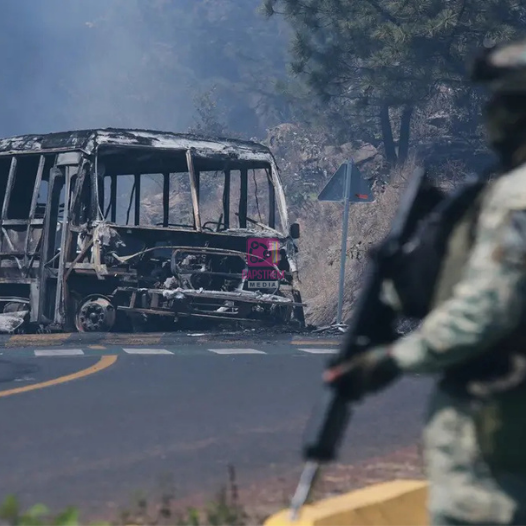
The Mexican military, operating under directives from the federal government, has increasingly taken the lead in confronting high-value cartel targets. While past strategies have focused on capturing kingpins alive, officials have acknowledged that heavily armed confrontations often turn deadly. In this case, authorities framed the operation as a decisive blow against organized crime, emphasizing that removing a leader of El Mencho’s stature weakens command structures and disrupts financial networks.
Yet history offers a cautionary tale. Previous arrests or killings of cartel leaders have frequently triggered internal power struggles, splinter groups, and surges in violence. The so-called “kingpin strategy” has produced mixed results, sometimes fracturing cartels into smaller, more unpredictable factions. Analysts warn that CJNG could now face a succession battle, potentially between senior lieutenants or family members with deep ties to the organization.
The immediate retaliation — burning vehicles, highway blockades, and gun battles — reflects both anger and strategic signaling. By plunging cities into fear, cartel operatives demonstrate that they retain operational control and the capacity to challenge state authority. It also serves as a warning to rivals who might attempt to seize territory during this vulnerable moment.
Residents in affected areas described scenes of panic. Drivers abandoned cars and fled on foot. Parents rushed to retrieve children from schools. Shop owners pulled down metal shutters as rumors of gunmen spread. In some districts, local authorities urged people to stay indoors until security forces cleared the roads. The economic disruption was immediate, with transport routes halted and supply chains temporarily frozen.
Internationally, the killing of El Mencho carries significant implications. The CJNG has been a major player in trafficking synthetic opioids, fueling the fentanyl crisis in North America. U.S. officials have long pressured Mexico to intensify efforts against such groups. While his death may disrupt some trafficking channels in the short term, experts caution that demand-driven markets tend to adapt quickly, with new leaders stepping in to maintain supply.
Politically, the moment is delicate. Mexican administrations have oscillated between aggressive militarized crackdowns and more nuanced approaches aimed at addressing the social roots of crime. The dramatic nature of this operation — and the fiery backlash that followed — revives debate over whether force alone can dismantle entrenched criminal enterprises that generate billions of dollars annually.
For many ordinary Mexicans, the fall of El Mencho evokes mixed emotions: relief that a notorious figure is gone, anxiety about what comes next, and weary skepticism shaped by decades of cartel violence. The torched vehicles and smoke-filled highways serve as a stark reminder that in Mexico’s complex security landscape, the removal of one powerful figure does not automatically bring peace.
As authorities work to stabilize the affected cities, attention now turns to who will rise within the CJNG ranks and whether the organization will fracture or consolidate under new leadership. The coming weeks will likely determine whether El Mencho’s death represents a meaningful turning point in the fight against organized crime — or simply another chapter in a conflict that has reshaped entire communities.
What remains clear is that his story — from rural beginnings to commanding one of the most formidable criminal organizations in the Western Hemisphere — reflects the deep structural challenges facing Mexico. And the violent retaliation following his death underscores how deeply embedded and resilient these networks remain, even in the face of decisive military action.