The 2026/27 UEFA Nations League has produced compelling football across Europe, but the opening international window has also left a growing list of clubs waiting anxiously for medical assessments on key players.
The unusually long international period has intensified the concern. National teams are playing four matches across an extended three-week window rather than the traditional two-game international break, increasing the workload on players at a time when the domestic season has only recently begun.
Among the most prominent casualties so far are Cody Gakpo, Alexander Isak, Kai Havertz, Jamal Musiala, Kylian Mbappé, Brian Brobbey, Dan Ballard and Patrick Dorgu, while Manchester United captain Bruno Fernandes has also been managing an injury picked up before joining Portugal.
For their clubs, the concern is not simply about losing players for international matches. The bigger question is how long those players will be unavailable when domestic football resumes.
Liverpool face a double injury concern
Liverpool have been particularly affected.
Alexander Isak withdrew from Sweden’s squad after suffering a minor thigh problem. The striker had played the full 90 minutes and scored in Sweden’s 2-1 Nations League victory over Romania, but subsequently returned to Liverpool for further assessment.
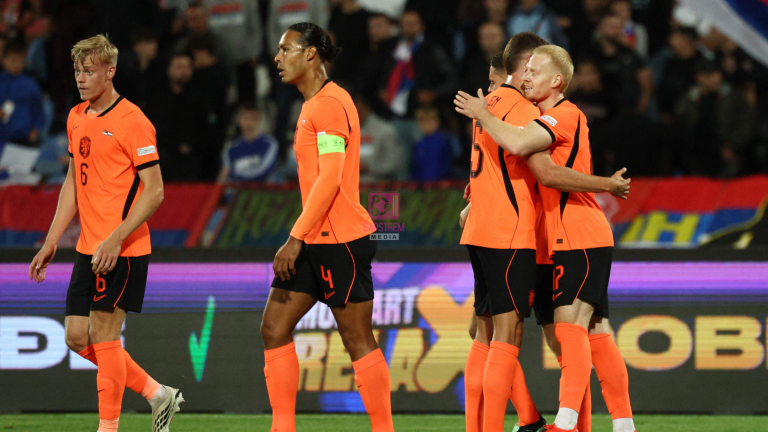
Liverpool then suffered another blow when Cody Gakpo was forced off after only 17 minutes of the Netherlands’ 2-1 victory over Serbia.
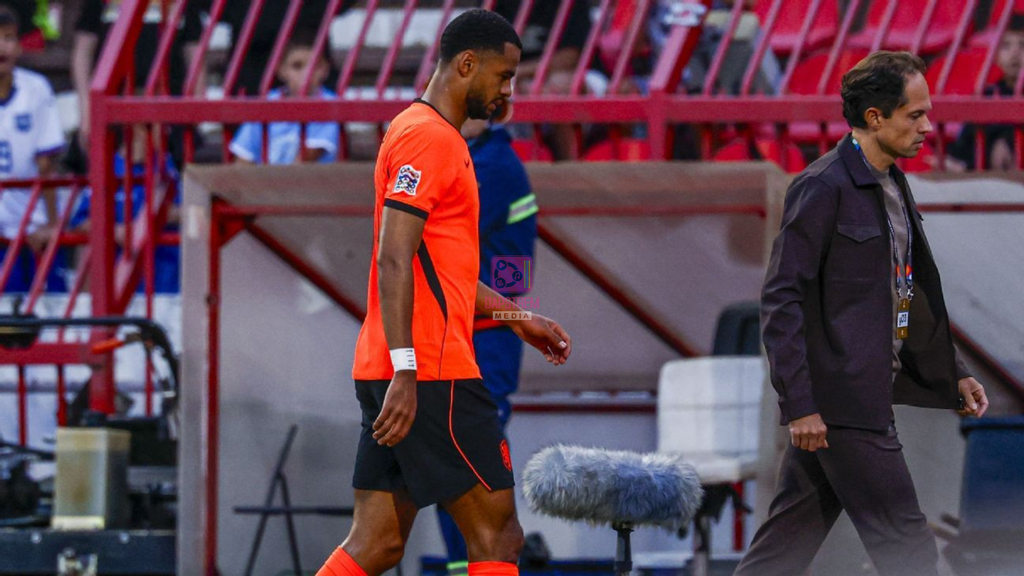
Gakpo appeared to sustain an ankle injury and was seen holding the lower part of his right leg before being substituted. Netherlands coach Xavi Hernández said after the match that Gakpo would undergo a scan, adding that he knew only that the problem involved the ankle.
The timing is particularly significant for Liverpool.
Gakpo had made a strong start to the campaign, registering two goals and four assists in six appearances across all competitions before joining the Netherlands. Isak had also begun the season among the Premier League’s leading scorers.
Liverpool must therefore wait for the medical reports before knowing whether either forward will miss club fixtures.
Germany lose Musiala and Havertz
Germany have suffered two significant setbacks.
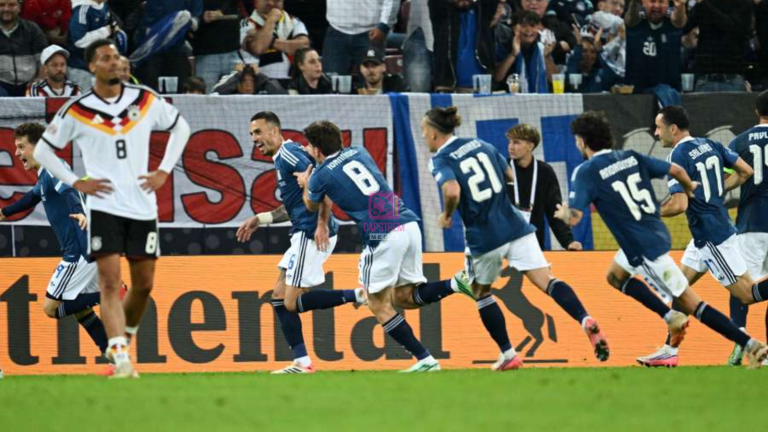
Bayern Munich midfielder Jamal Musiala injured his right thigh during the warm-up before Germany’s opening Nations League match against the Netherlands.
An MRI scan confirmed a tear in the thigh, forcing Musiala to leave the Germany camp.
Arsenal forward Kai Havertz then suffered a muscular injury during the 1-1 draw with the Netherlands. He was substituted in the 30th minute and subsequently returned to Arsenal for treatment.
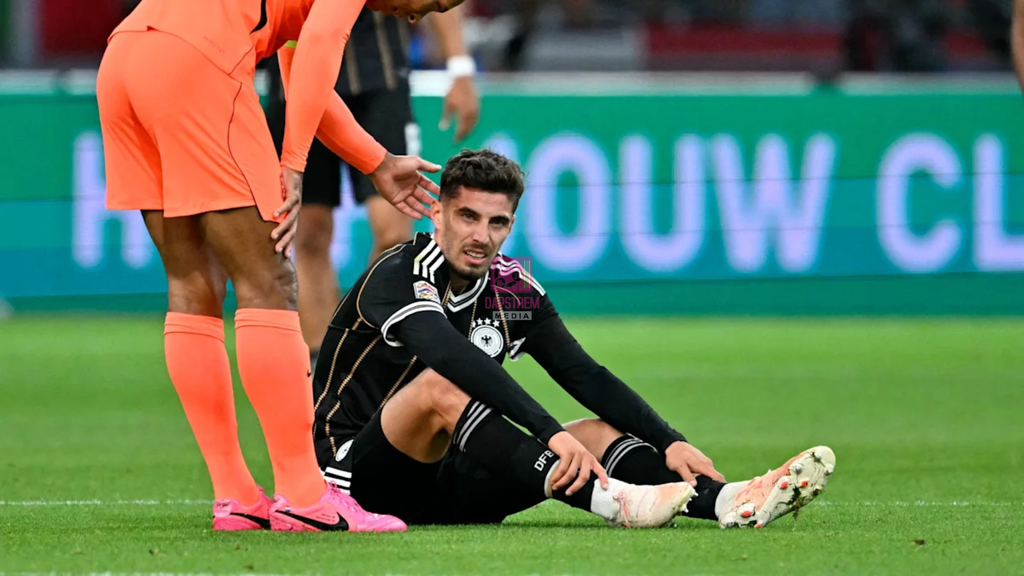
The consequences are particularly relevant to Arsenal because Havertz had been selected ahead of fellow striker Viktor Gyökeres at the beginning of the season. The Premier League also confirmed that Havertz returned to London following the injury.
For Germany, the injuries meant that Jürgen Klopp had to alter his attacking options almost immediately in his first international window as head coach.
Florian Wirtz and Jonathan Burkardt were brought into the squad as replacements for Musiala and Havertz.
Real Madrid concerned about Mbappé
Real Madrid are also monitoring the condition of Kylian Mbappé.
The France captain injured his knee after scoring the winner against Türkiye. Although Mbappé had just extended his national-team scoring record to 67 goals, he was visibly limping and was substituted shortly afterwards. Reports subsequently indicated that he would miss at least two weeks.
For Real Madrid, any extended absence would represent a significant loss.
Mbappé is central to the club’s attacking plans, and the injury comes during the early stages of a season in which domestic and European fixtures will quickly accumulate.
The situation also illustrates one of the difficult realities of international football: clubs invest heavily in their players, but national teams have access to them during international windows and can be left responsible for returning them in full fitness.
Manchester United face concerns over Fernandes and Dorgu
Manchester United have two players on the injury list.
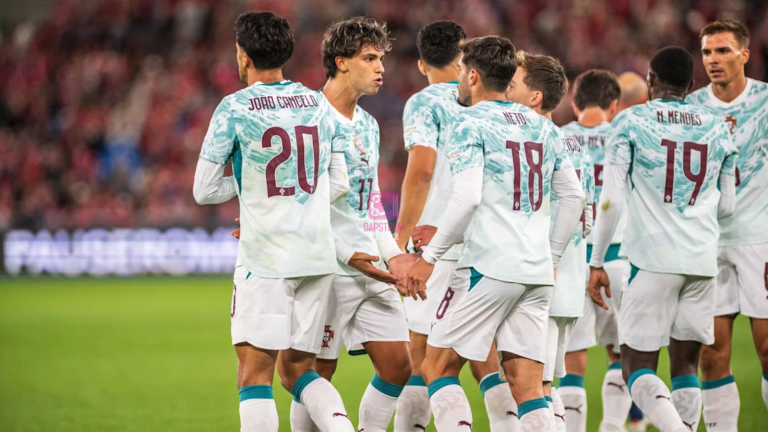
Bruno Fernandes was omitted from Portugal’s squad for the 2-1 victory over Norway after playing in the team’s opening Nations League match against Wales.
Portugal coach Jorge Jesus said Fernandes had played through an injury he had brought from Manchester United and had not been at his usual level.
That decision prevented the midfielder from playing the second match, but also highlighted the balancing act between club and country.
Manchester United then received another concern when Patrick Dorgu was forced off after 30 minutes of Denmark’s 2-0 victory over Wales. The defender limped from the field, adding another fitness question for his club.
The two cases are different: Fernandes was already carrying a problem into international duty, while Dorgu suffered his setback while playing for Denmark.
Both nevertheless leave United waiting for further assessments.
Sunderland hit by Brobbey and Ballard injuries
Sunderland have also been affected twice.
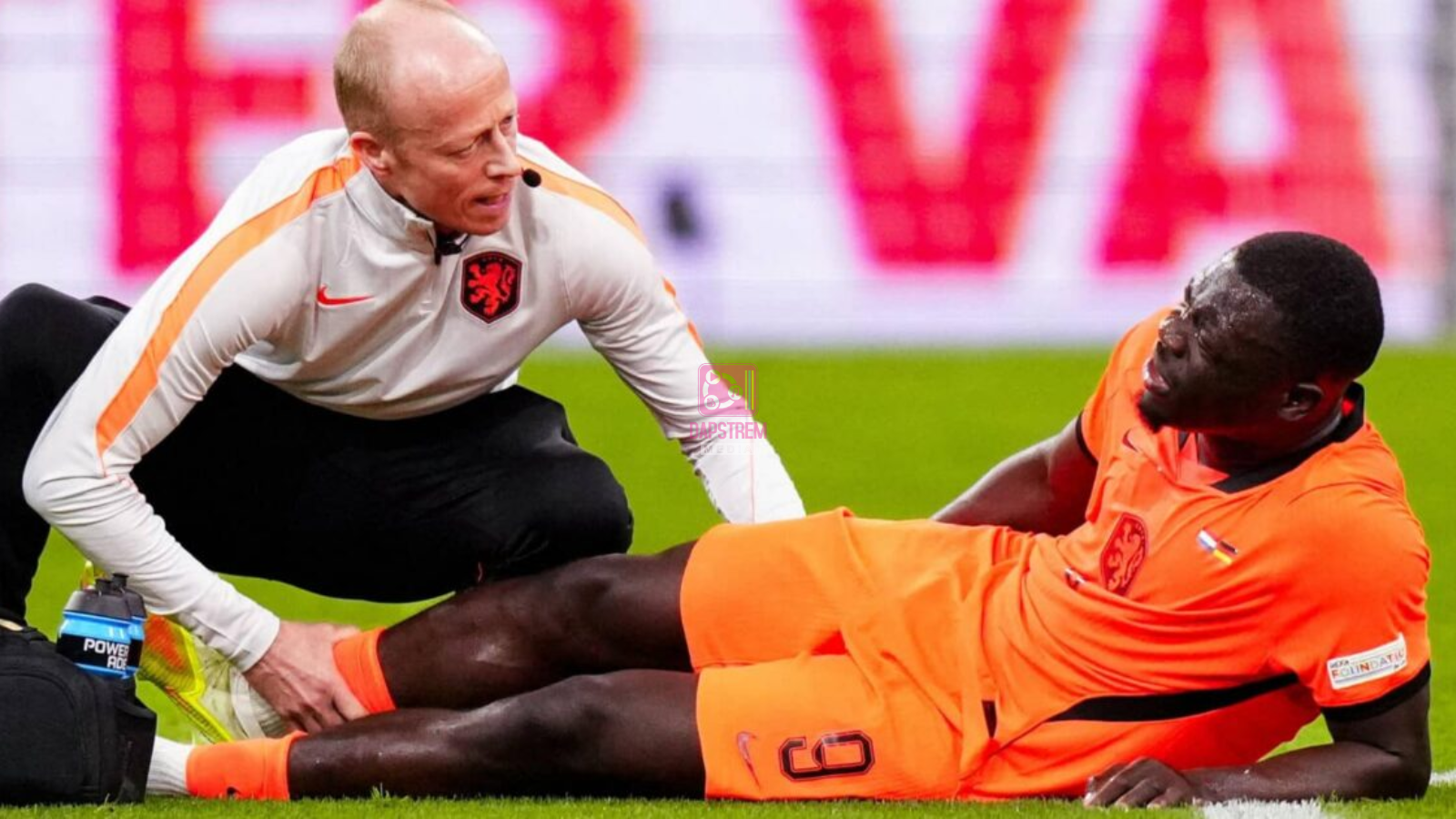
Brian Brobbey suffered what appeared to be a hamstring problem during the Netherlands’ 1-1 draw with Germany. He was forced off five minutes after Havertz in a match that proved particularly costly from an injury perspective.
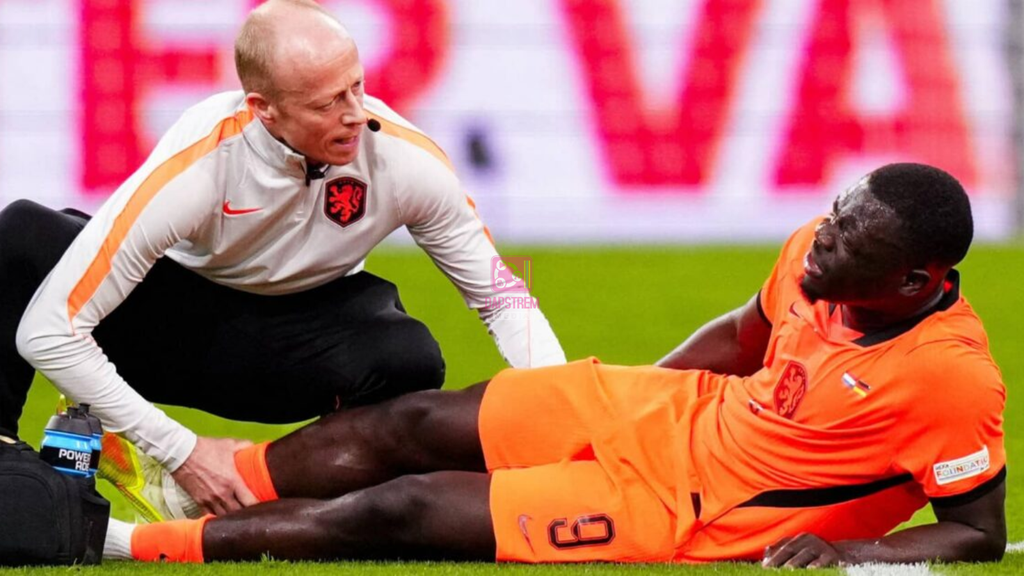
Sunderland also lost defender Dan Ballard while he was representing Northern Ireland.
Ballard suffered a hamstring injury late in Northern Ireland’s 1-0 victory over Georgia. Northern Ireland manager Michael O’Neill subsequently confirmed that the defender would miss the country’s remaining matches during the international window.
The injuries could have a direct impact on Sunderland’s defensive and attacking options when club football resumes, although the precise recovery periods remain dependent on further medical examinations.
The growing list
The current international-break injury picture includes several high-profile players:
| Player | Club | Country | Injury concern |
|---|---|---|---|
| Cody Gakpo | Liverpool | Netherlands | Ankle/lower-leg injury |
| Alexander Isak | Liverpool | Sweden | Minor thigh injury |
| Kai Havertz | Arsenal | Germany | Muscular injury |
| Jamal Musiala | Bayern Munich | Germany | Right-thigh tear |
| Kylian Mbappé | Real Madrid | France | Knee injury |
| Brian Brobbey | Sunderland | Netherlands | Hamstring/muscle injury |
| Dan Ballard | Sunderland | Northern Ireland | Hamstring injury |
| Patrick Dorgu | Manchester United | Denmark | Injury after 30 minutes |
| Bruno Fernandes | Manchester United | Portugal | Existing injury; missed second match |
The list is not necessarily exhaustive, and the status of several players remains subject to club examinations. Injury reports can also change rapidly once players return to their domestic teams.
Why the international window matters to clubs
The latest injuries have revived a familiar tension between club and international football.
National teams need their best players for competitive fixtures, while clubs depend on those same players for domestic league, cup and European matches.
That tension becomes more pronounced during an extended international window.
The 2026/27 Nations League schedule has expanded the workload during this period, with players potentially involved in four international matches rather than the usual two. That means clubs could lose important players for longer periods if injuries occur early in the window.
The issue is particularly important at the start of the European season.
Players have already been involved in several weeks of domestic competition before reporting for international duty. Once they return, clubs face another congested schedule meaning an injury can remove a player not just from one match but potentially from a sequence of league and European fixtures.
Clubs must now wait
For Liverpool, Arsenal, Bayern Munich, Real Madrid, Manchester United and Sunderland, the immediate priority is no longer what happened in the Nations League but what the medical examinations reveal.
Some of the reported injuries may prove relatively short-term. Others, such as Musiala’s confirmed thigh tear, are already more clearly defined.
That uncertainty is what makes the final days of the international window particularly important for clubs.
The Nations League will continue to provide competitive football and opportunities for players to represent their countries. But every additional fixture also carries the possibility of another injury.
For clubs competing across multiple competitions, the cost can be substantial.