
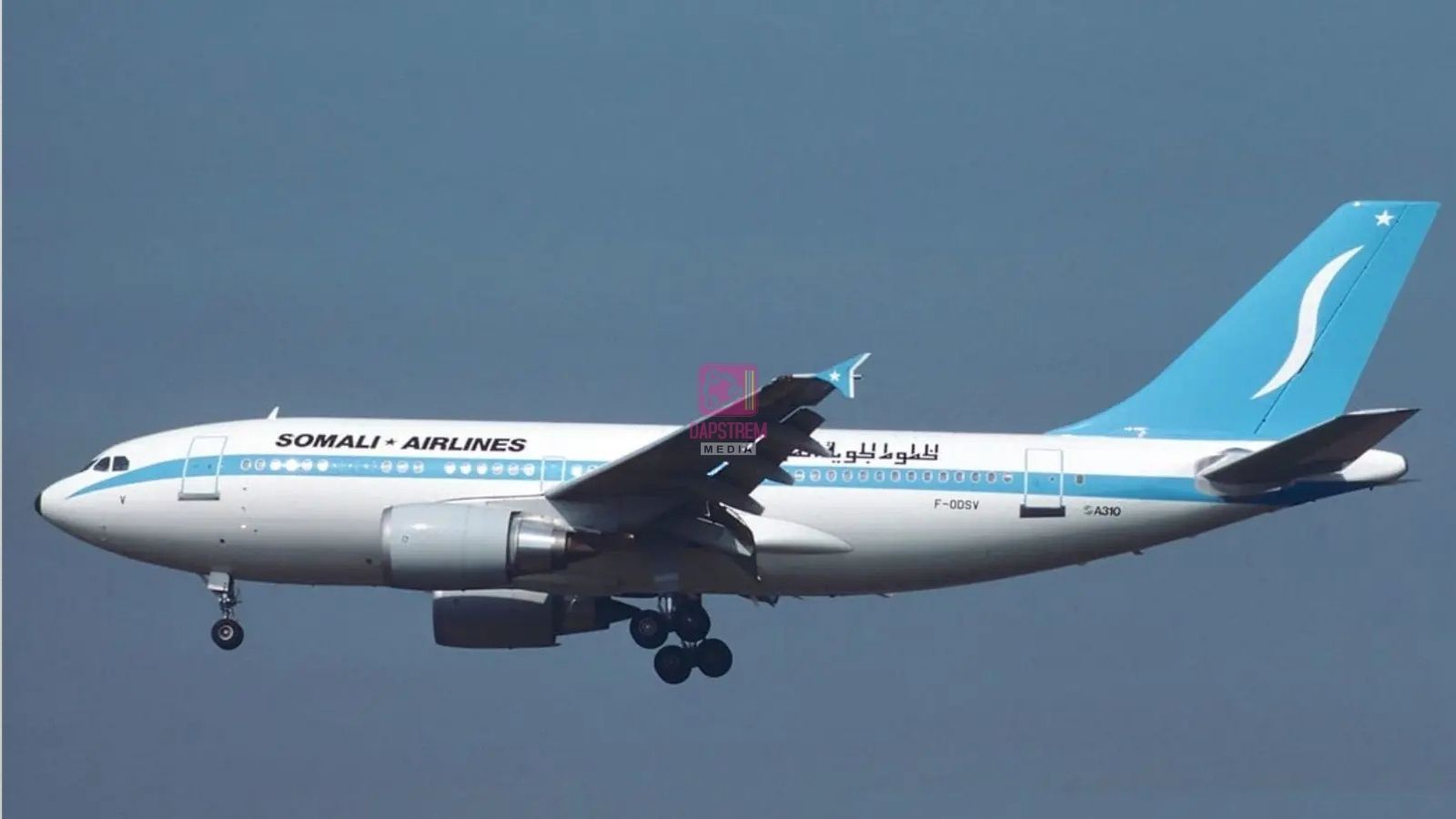
Somali Airlines Set for Historic Comeback After More Than Three Decades Out of the Skies
Somalia is edging closer to a major milestone in its aviation history, with Somali Airlines expected to resume scheduled flights in September 2026, more than three decades after the country’s national carrier was forced to suspend operations.
According to Somalia’s Civil Aviation Authority, preparations for the airline’s return have reached the final stages, with the first flight expected around mid-September. If the planned launch goes ahead, it will mark the end of a more than 35-year period during which Somalia has operated without an active national flag carrier.
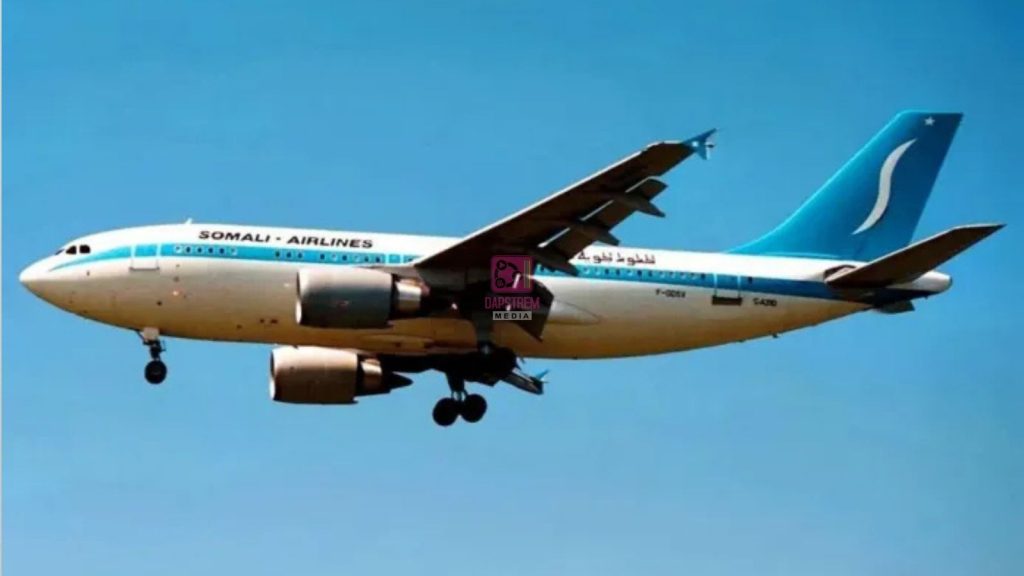
The anticipated comeback is being viewed as more than the return of an airline. For Somalia, Somali Airlines carries considerable historical and national significance. The carrier was once an important link between Somalia and the rest of the world, connecting the country to regional and international destinations before the collapse of the state and the outbreak of civil war disrupted its operations in 1991.
Its return would therefore symbolize another stage in Somalia’s broader efforts to rebuild national institutions and strengthen its economic and transport infrastructure.
The latest announcement comes after several previous attempts to revive the airline failed to translate into commercial flights. Somali authorities have announced relaunch plans at different points in recent years, but deadlines passed without the carrier returning to the skies. The latest September target is consequently being watched with considerable interest by Somalis at home and in the diaspora.
Civil Aviation Authority Director Ahmed Ma’allin said the airline is now in its final stages of preparation and that the first flight could take place around the middle of September.
That announcement has renewed hopes that the long-awaited revival could finally become a reality.
A Long-Awaited Return
Somali Airlines was established in 1964 and became Somalia’s national flag carrier, operating domestic and international services during its years of activity. The airline eventually developed connections beyond Somalia and became an important symbol of the country’s participation in international aviation.
However, the outbreak of the Somali civil war in 1991 brought the airline’s operations to an end. For more than three decades, Somalia’s aviation market has consequently been served primarily by foreign and privately operated carriers.
The absence of a national airline created a significant gap in Somalia’s aviation sector. While private airlines continued providing important connections, the country lacked a flag carrier capable of representing Somalia internationally and pursuing a long-term national aviation strategy.
The proposed revival is intended to fill that gap.
The government formally revived Somali Airlines in 2025 as part of a broader effort to rebuild the country’s aviation industry. In July 2025, authorities announced an agreement involving two Airbus A320 aircraft, which were presented as the foundation of the airline’s new fleet.
The plan was not simply to bring back the airline’s name and branding. Authorities have been working to establish the institutional and regulatory framework required for a functioning modern carrier.
That includes building management structures, securing aircraft, preparing personnel, developing routes and ensuring that the airline meets the necessary aviation requirements.
The government has also previously indicated that additional aircraft would be added as the airline develops. The intention is to begin operations on a manageable scale before expanding the fleet and route network over time.
This phased approach could be important because rebuilding an airline after more than three decades is a complex undertaking.
An airline requires much more than aircraft. It needs qualified pilots, cabin crew, engineers, maintenance systems, safety procedures, airport arrangements, ticketing systems, insurance, regulatory approvals and international aviation partnerships.
It also needs a commercially sustainable business model capable of competing with established airlines that already serve Somali destinations.
The September target therefore represents the culmination of years of planning and preparation.
Why the Revival Matters to Somalia
The return of Somali Airlines could have significant implications for the country’s economy and connectivity.
Air transport is particularly important for Somalia because of its large diaspora. Millions of Somalis live outside the country, including communities across East Africa, the Middle East, Europe, North America and other parts of the world.
A national carrier could eventually provide additional travel options for Somalis living abroad and those travelling to Somalia for family, business, tourism or other purposes.
The airline could also strengthen connections between Somalia and other African countries. Regional connectivity is particularly important for trade, investment and movement of people across the Horn of Africa.
If Somali Airlines establishes routes to major regional hubs, it could make it easier for passengers to travel between Somalia and neighbouring countries without relying entirely on foreign carriers.
The airline could also play a role in supporting Somalia’s growing business sector. Entrepreneurs, investors and professionals depend on reliable transport links to move between markets.
Better connectivity could encourage business activity and make Somalia more accessible to international investors.
Tourism could also benefit over the longer term.
Somalia possesses a long coastline, historic cities and a distinctive cultural heritage, although security concerns have limited the development of international tourism. Improved air connectivity could become one component of efforts to gradually develop the country’s tourism industry as conditions permit.
A functioning national carrier could therefore contribute to the broader economic development agenda.
Rebuilding Somalia’s Aviation Industry
The revival of Somali Airlines is also closely connected to Somalia’s efforts to rebuild control and capacity within its aviation sector.
One of the most important developments in recent years was the restoration of Somalia’s aviation infrastructure and management capabilities. In January 2023, Somalia’s airspace was upgraded to Class A, with the Somali Civil Aviation Authority taking on greater responsibility for managing the country’s airspace.
That development was significant because the country had experienced decades of disruption to its aviation administration.
Rebuilding the aviation sector has therefore required authorities to strengthen not only airlines but also the regulatory and technical institutions responsible for ensuring safe air travel.
For Somali Airlines to succeed, the national carrier will need to operate within that regulatory framework and maintain international aviation standards.
Safety will be one of the most important considerations.
Passengers choosing Somali Airlines will expect the same fundamental standards of safety, reliability and professionalism associated with established international carriers. Meeting those expectations will be essential for building confidence in the revived airline.
The government will consequently face the challenge of ensuring that political enthusiasm for the airline’s return is matched by strong technical and commercial management.
The Challenge of Competing With Established Airlines
While the return of Somali Airlines is widely viewed positively, the airline will face significant competition.
Several private and foreign airlines already serve Somalia, meaning passengers have established alternatives. A revived national carrier will therefore have to compete on factors such as ticket prices, schedules, reliability, customer service, route availability and convenience.
The airline’s management will need to carefully study the market and identify routes where it can operate sustainably.
Starting with regional routes could provide a practical foundation. Once the airline establishes itself and gains operational experience, it could gradually expand into longer-distance international services.
Officials have previously indicated that the initial fleet would be expanded as the airline grows, with additional aircraft expected to support the expansion of its network.
Such gradual growth could help reduce the risks associated with attempting to launch too many routes at once.
For an airline returning after decades, financial discipline will be particularly important.
The history of the global aviation industry is filled with carriers that struggled because of high operating costs, poor management, insufficient passenger demand or rapid expansion. Somali Airlines will need to avoid those challenges by establishing strong corporate governance and a commercially sustainable strategy.
The airline’s ability to maintain reliable services will also be crucial.
Passengers may be willing to try a newly revived national carrier because of national pride, but long-term loyalty will ultimately depend on the quality of service.
If Somali Airlines can offer competitive fares, dependable schedules and convenient connections, it could gradually establish a strong position in the market.
A Symbol of National Recovery
For many Somalis, however, the significance of the airline goes beyond economics.
Somali Airlines represents a period when Somalia had a functioning national carrier connecting its people to the wider world. Its return could therefore carry powerful symbolic meaning.
The airline disappeared during one of the most difficult periods in Somalia’s modern history. Its planned return comes as the country continues efforts to rebuild institutions and restore confidence in its national infrastructure.
An aircraft carrying the Somali flag back into international airports could become a powerful image of national recovery.
It could also provide employment opportunities for Somali professionals.
A functioning airline requires pilots, engineers, cabin crew, airport staff, administrators, customer service representatives, accountants, technology specialists and many other professionals.
The government has previously taken steps to train Somali aviation personnel, including sending pilot trainees abroad for advanced qualifications.
The revival could therefore contribute to the development of a new generation of Somali aviation professionals.
For young Somalis, the airline could provide career opportunities in an industry that has been largely dominated by foreign operators within the country.
The September Target
The latest September announcement is particularly significant because previous relaunch deadlines have passed without flights taking off.
Authorities have therefore been careful to describe the current stage as the final phase of preparations rather than presenting the return as already completed.
According to the Civil Aviation Authority, the first flight is expected around mid-September 2026.
If that happens, Somali Airlines will have completed one of the most remarkable comebacks in African aviation.
But the first flight will only be the beginning.
The real test will be whether the airline can maintain regular services, expand responsibly and establish itself as a sustainable national carrier.
Somalia will need to ensure that the airline is professionally managed and protected from the challenges that can undermine state-owned enterprises. Strong governance, transparent financial management and competent leadership will be essential.
The airline will also need to maintain close cooperation with Somalia’s Civil Aviation Authority and other aviation stakeholders.
What the Return Could Mean for the Region
The revival of Somali Airlines could also have implications for East Africa and the wider Horn of Africa.
Somalia occupies a strategically important position along the Gulf of Aden and Indian Ocean, placing it near major international aviation and maritime routes.
A stronger Somali aviation sector could contribute to greater regional integration and create additional links between East Africa, the Middle East and other parts of the world.
The airline could eventually become an important regional player if it develops an effective network connecting Mogadishu with major African and Middle Eastern cities.
That would require careful expansion, but the potential is significant.
A successful Somali Airlines could also strengthen Somalia’s international image. Airlines often serve as unofficial ambassadors for their countries, carrying national branding and identity into foreign markets.
The return of Somali Airlines could therefore help communicate a broader message that Somalia is rebuilding and seeking greater participation in the international economy.
After more than three decades away from the skies, that would be a remarkable transformation.
A New Chapter for Somali Aviation
The possibility of Somali Airlines resuming flights in September has generated excitement because it represents the potential end of a long aviation hiatus.
The airline that once connected Somalia to the world was grounded in 1991, but the government’s latest efforts suggest that its return may finally be within reach. With preparations reportedly in their final stages and an initial fleet that includes Airbus A320 aircraft, authorities are now working toward the planned mid-September launch.
The journey ahead will not be easy. Somali Airlines will have to compete with established carriers, maintain strict safety standards, develop a sustainable business model and gradually expand its operations.
But if it succeeds, the benefits could extend far beyond the aviation industry.
The revived carrier could improve connectivity, support trade and investment, create jobs, strengthen the Somali diaspora’s links with home and provide a powerful symbol of national recovery.
For a country that has spent decades rebuilding after conflict and institutional collapse, the sight of a Somali Airlines aircraft once again taking off from Mogadishu would carry enormous historical significance.
It would represent not merely the return of an airline, but the reopening of a chapter in Somalia’s national story.
After more than 35 years on the ground, Somali Airlines could finally be preparing to take to the skies again in September 2026. The planned first flight will be watched closely, not only by aviation enthusiasts but by millions of Somalis who have waited for the national carrier to return.
If the government delivers on its latest timetable, September could become a landmark month for Somalia—marking the moment its flag carrier returns to the skies and begins a new journey into the country’s aviation future.