DCP Moves to Vet UDA Defectors as Party Strengthens Its Political Base Ahead of 2027
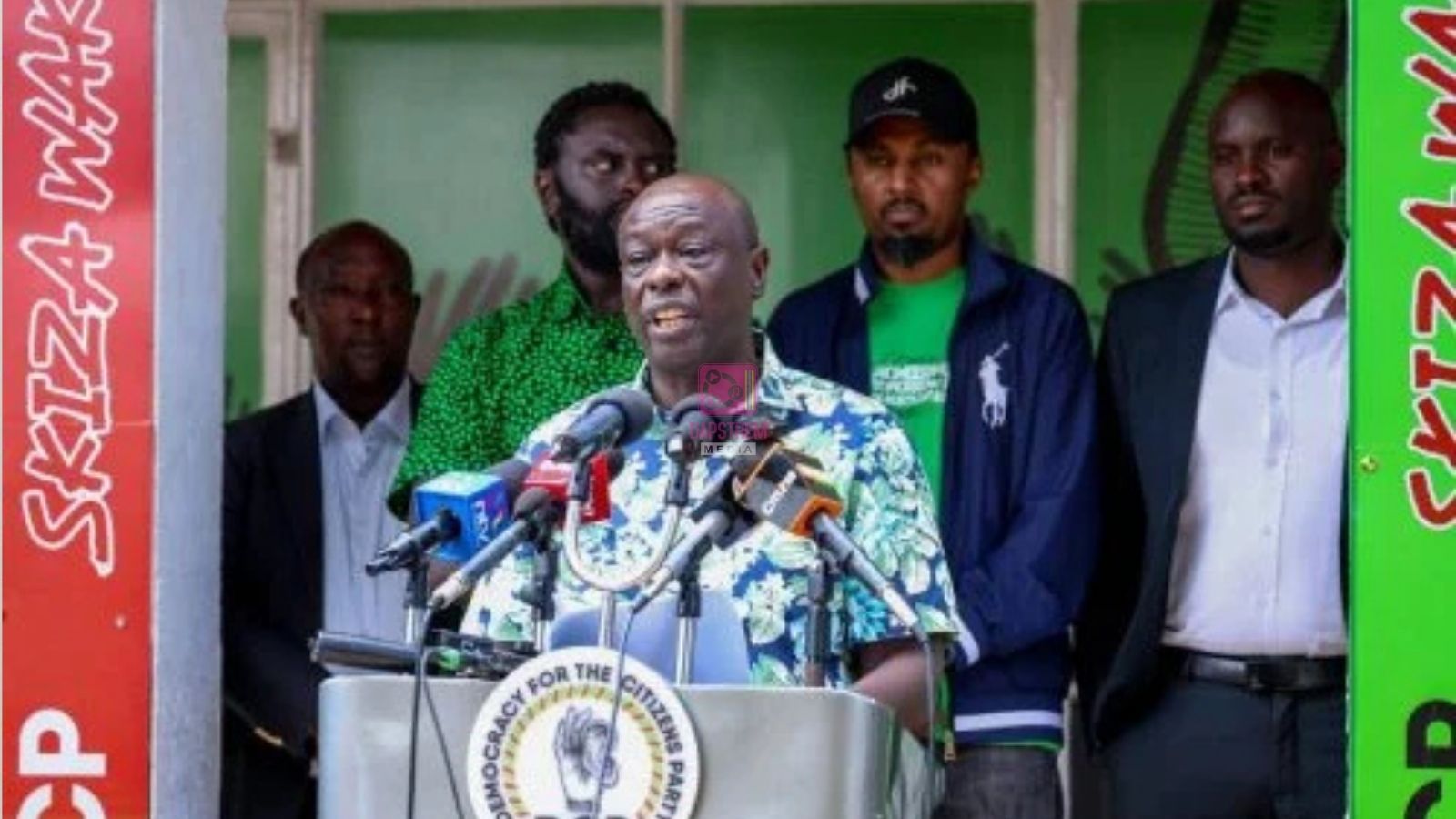
The Democratic Congress Party (DCP) has established a special committee to vet politicians and other political figures defecting from the United Democratic Alliance (UDA), in a move that signals the party’s growing interest in managing its expanding political base ahead of the 2027 General Election.
The committee will be chaired by John Methu, with its primary responsibility being to assess individuals seeking to join the DCP and determine whether they meet the party’s requirements before being formally admitted.
The move comes at a time when Kenya’s political landscape is undergoing significant realignment, with politicians increasingly moving between parties as they position themselves ahead of the next General Election.
The formation of the vetting team indicates that the DCP does not want to accept every politician who expresses an interest in joining without first examining their political background, reputation and suitability for the party.
For a party seeking to expand its influence, the decision could prove important in ensuring that rapid growth does not come at the expense of internal cohesion and public confidence.
The vetting process is expected to provide the party with an opportunity to examine prospective defectors before they are welcomed into its ranks. This could include assessing their political history, previous party affiliations, public conduct and the circumstances surrounding their decision to leave UDA.
The committee’s work could therefore become an important part of the DCP’s strategy as political parties begin preparing more aggressively for the 2027 polls.
Managing an Increasing Wave of Political Realignment
Kenyan politics has traditionally been characterised by shifting alliances and party movements, particularly in the period leading up to General Elections.
Politicians often reassess their political positions as elections approach, with some leaving parties where they previously held senior positions and joining formations they believe offer stronger opportunities for their political ambitions.
The current political environment is no different.
With the 2027 election approaching, parties are attempting to strengthen their grassroots networks and attract influential politicians who can help them expand their support across different regions.
The DCP’s decision to establish a dedicated vetting committee suggests that the party expects more politicians to seek admission.
Rather than treating defections simply as political numbers, the party appears determined to establish a structured process for determining who qualifies to join.
John Methu’s appointment as chairperson places him at the centre of this process.
The committee will have to balance the political advantages of attracting experienced politicians with the need to protect the party’s identity and values.
That balance will not always be easy.
A politician with a strong grassroots following can immediately increase a party’s visibility and electoral strength. At the same time, bringing in politicians with competing political interests can create internal disagreements if their expectations are not properly managed.
The vetting process could therefore help the DCP identify potential areas of conflict before new members are admitted.
Why the Vetting Process Matters
Political parties are not simply electoral vehicles. They are organisations with ideologies, structures, leadership systems and membership requirements.
When a party grows rapidly through defections, it can face challenges in maintaining a common political direction.
Politicians joining from different parties may arrive with their own networks, supporters and political ambitions. Some may expect positions within the party or seek influence over its decision-making structures.

Without proper coordination, such an influx can create tensions between existing members and newcomers.
The DCP’s vetting committee could help address this problem by ensuring that prospective members understand the party’s expectations before joining.
The process could also give the party an opportunity to distinguish between politicians who genuinely support its political agenda and those who may simply be seeking a new platform ahead of the election.
This distinction is particularly important in Kenya, where political defections can sometimes be driven by electoral calculations rather than ideological considerations.
For the DCP, admitting politicians who are not committed to its long-term objectives could create difficulties later, particularly during the nomination process.
The party will therefore need to examine not only where prospective members are coming from but also what they hope to achieve within the DCP.
The UDA Connection
The focus on UDA defectors is particularly significant because UDA is the ruling party associated with President William Ruto.
The movement of politicians away from the ruling party can attract considerable political attention, especially if the defectors are influential figures with strong support in their constituencies.
However, defections do not automatically translate into votes for the receiving party.
A politician may leave one party and join another, but their supporters may not necessarily follow them. This means the DCP will need to assess the actual political value of each prospective defector rather than relying solely on their public profile.
The party could consider factors such as grassroots networks, previous electoral performance, local popularity and relationships with community leaders.
Such information would help the party determine where a new member could strengthen its political presence.
At the same time, the vetting process could help prevent the party from becoming overly dependent on individuals.
A strong political organisation needs structures that can survive beyond individual politicians.
The DCP will therefore have to combine the experience and networks of incoming members with its existing structures and leadership.
John Methu’s Role
As chairperson of the committee, John Methu will have an important responsibility in overseeing the vetting process.
The committee will likely need to establish clear criteria for evaluating prospective members and ensure that the process is applied consistently.
Transparency will also be important.
If some politicians are accepted while others are rejected, the party may be expected to explain the principles guiding those decisions.
A credible vetting system should therefore avoid appearing to favour certain politicians based solely on their electoral value or political connections.
Instead, prospective members should be assessed against clearly established requirements.
The committee could also help the party address potential disputes involving political histories, past statements and previous party affiliations.
Kenyan politics is highly competitive, and politicians sometimes make strong statements against parties or leaders before later joining them.
Such history can create questions among existing members and supporters.
The vetting process provides an opportunity to address those issues before admission.
Preparing for the 2027 General Election
The formation of the committee is likely to be viewed within the broader preparations for the 2027 General Election.
Political parties are already beginning to assess their strengths and weaknesses, identify potential candidates and build alliances.
For smaller and emerging parties, attracting established politicians can provide an opportunity to increase their visibility and compete in constituencies where they previously had limited influence.
The DCP’s strategy could therefore be aimed at expanding its political footprint ahead of the election.
However, attracting defectors is only one part of the process.
The party will eventually have to translate new memberships into an effective campaign structure.
That means developing grassroots branches, mobilising supporters, recruiting agents and identifying credible candidates.
The party will also have to establish how newcomers will fit into its existing structures.
If defectors arrive expecting immediate control of local party structures, they could encounter resistance from long-standing members who have spent years building the organisation.
Managing those relationships will be one of the most important challenges facing the DCP.
Defections and the Kenyan Political Culture
Political defections have become a familiar feature of Kenyan elections.
In the months and years preceding major elections, politicians often change parties in response to shifting alliances, nomination calculations and changes in public opinion.
Some defectors move because they believe their previous parties no longer represent their interests. Others seek stronger platforms from which to contest elections.
Political parties therefore have to distinguish between genuine political realignment and opportunistic movement.
For voters, repeated defections can sometimes create frustration.
Citizens may question whether politicians are moving because of ideology and policy or simply because they believe another party offers better electoral prospects.
The DCP’s vetting process could therefore help demonstrate that the party intends to take membership seriously.
If conducted transparently, it could also improve the credibility of the party by showing that political recruitment is guided by defined standards rather than numbers alone.
Balancing Expansion With Party Identity
Rapid growth can be both an opportunity and a challenge.
A party that attracts large numbers of politicians can quickly increase its visibility and bargaining power.
But if those politicians do not share a common political direction, internal disagreements can emerge.
The DCP will therefore need to ensure that incoming UDA defectors understand and accept its political principles.
Party leadership will also need to communicate clearly that joining the DCP does not automatically guarantee nominations or leadership positions.
This could become particularly important as the 2027 elections draw closer.
Competition for party tickets is often intense, especially in constituencies where several influential politicians want to contest the same seat.
If the party accepts multiple powerful politicians from the same area, it could eventually find itself managing internal nomination disputes.
A strong vetting and integration process could help reduce those risks.
What the Move Means for UDA
The DCP’s decision to establish a committee specifically to vet UDA defectors could also attract attention within the ruling party.
Political defections are often interpreted as indicators of changing political loyalties, although their actual electoral impact varies from one constituency to another.
If prominent UDA politicians begin joining opposition or alternative parties in significant numbers, the ruling party could face pressure to strengthen its grassroots mobilisation.
At the same time, UDA remains a major political organisation with a national network and significant influence.
The movement of a few politicians away from the party should therefore not automatically be interpreted as evidence of widespread dissatisfaction.
The real significance will depend on the identities of the defectors, the constituencies they represent and whether they can successfully transfer their political support to their new party.
A Test of Political Organisation
For the DCP, the vetting committee will ultimately be judged by the quality of the political organisation it helps build.
The party has an opportunity to use the current period of political realignment to strengthen itself before the 2027 elections.
But growth must be carefully managed.
A party that admits members simply because they are prominent could end up with an organisation full of competing interests.
Conversely, a party that develops a credible recruitment process can use defections to strengthen its structures while maintaining its political identity.
The committee chaired by John Methu therefore has a potentially important role to play.
Its decisions could influence not only who joins the DCP but also how the party prepares for future electoral contests.
The process will likely attract attention from politicians considering their next political moves.
Those seeking to leave UDA or other parties may now have to demonstrate that they can fit into the DCP’s political programme before receiving formal admission.
Looking Ahead to 2027
As the 2027 General Election approaches, Kenya’s political landscape is likely to become even more fluid.
New alliances will emerge, parties will negotiate partnerships and politicians will continue reassessing their political options.
The DCP’s decision to establish a vetting committee suggests that the party is preparing for an environment where political recruitment could accelerate.
For John Methu and his committee, the task will be to ensure that the process is credible, transparent and consistent.
For prospective defectors, the message is equally clear: joining the DCP may require more than simply announcing a political departure from another party.
For the DCP leadership, meanwhile, the challenge will be to turn new political arrivals into a cohesive organisation capable of competing effectively at the ballot box.
The success of the strategy will ultimately depend on whether the party can balance expansion with discipline, political ambition with organisational stability, and the interests of new members with those of its existing supporters.
As Kenya moves closer to another highly competitive election, political parties are likely to continue seeking influential politicians who can expand their reach.
The DCP’s vetting committee, chaired by John Methu, is now positioned to play a central role in determining who becomes part of that political journey.
If managed effectively, the initiative could help the party build a stronger and more organised political base ahead of 2027. If poorly handled, however, the influx of politicians from rival parties could create internal divisions that undermine the very growth the party is seeking.
For now, the formation of the committee signals that the DCP is taking political recruitment seriously—and that the next phase of Kenya’s political realignment is already underway.