
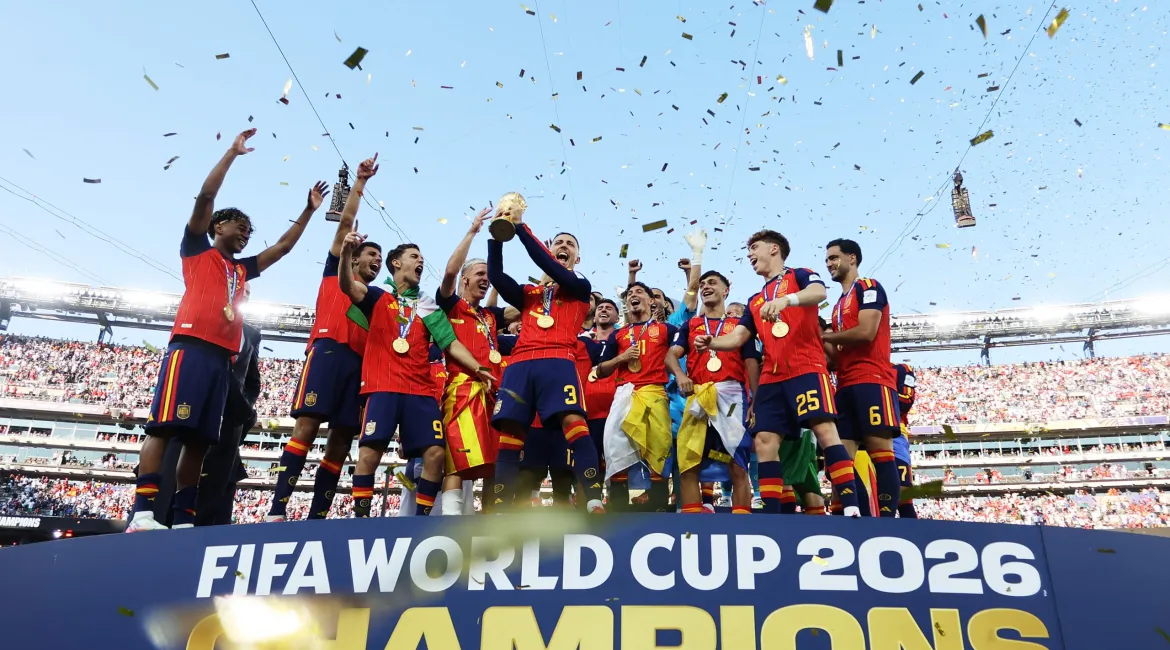
Spain Win the 2026 FIFA World Cup After Edging Argentina in Extra Time to Lift Second Global Crown
Spain have been crowned 2026 FIFA World Cup champions after defeating defending champions Argentina in a thrilling final that required extra time to separate the two football giants. In a match that lived up to its billing as one of the biggest spectacles in world football, La Roja held their nerve to secure a dramatic victory, capturing their second FIFA World Cup title and writing another unforgettable chapter in the nation’s rich football history.
The victory ends Spain’s long wait for another world title since their historic triumph in South Africa in 2010 and reaffirms the country’s status as one of international football’s greatest powers. Against an Argentine side determined to defend its crown, Spain displayed remarkable composure, tactical intelligence, resilience, and attacking quality to emerge victorious after 120 minutes of captivating football.
The final attracted millions of viewers across the globe, with football fans eagerly anticipating a clash between two of the sport’s most technically gifted nations. Spain entered the contest having impressed throughout the tournament with their possession-based football, disciplined defensive organization, and fluid attacking play. Argentina, meanwhile, arrived in the final carrying the confidence of reigning world champions after another outstanding campaign that showcased their trademark fighting spirit and technical brilliance.
From the opening whistle, the encounter delivered everything supporters had hoped for. Both teams approached the game positively, creating chances and refusing to sit back despite the enormous pressure associated with a World Cup final. The intensity was evident in every challenge, every attack, and every defensive intervention as neither side wanted to surrender control of the match.
Spain sought to dominate possession through their trademark short-passing game, patiently building attacks from the back while stretching Argentina’s defensive structure. Their midfield dictated the tempo for long periods, moving the ball with precision and forcing Argentina to remain disciplined without possession.
Argentina responded with their own moments of brilliance, combining quick transitions with creative movement in the final third. The South Americans repeatedly threatened through their dynamic attack, testing Spain’s defense with pace, intelligent passing, and clinical finishing whenever opportunities arose.
The tactical battle between the two coaching staffs added another fascinating dimension to the contest. Every substitution, positional adjustment, and formation change reflected the fine margins that often determine the outcome of football’s biggest matches. Both managers demonstrated why they had successfully guided their teams through a demanding World Cup campaign.
As the match progressed, the physical demands became increasingly apparent. Players from both sides continued running relentlessly despite fatigue, demonstrating the extraordinary determination required to compete at the highest level. Every loose ball became fiercely contested, while goalkeepers produced crucial saves to keep their respective teams alive.
With neither side able to secure victory during normal time, the final moved into extra time, adding even greater drama to an already unforgettable contest. Extra time has often produced some of the World Cup’s most iconic moments, and this final proved no different.
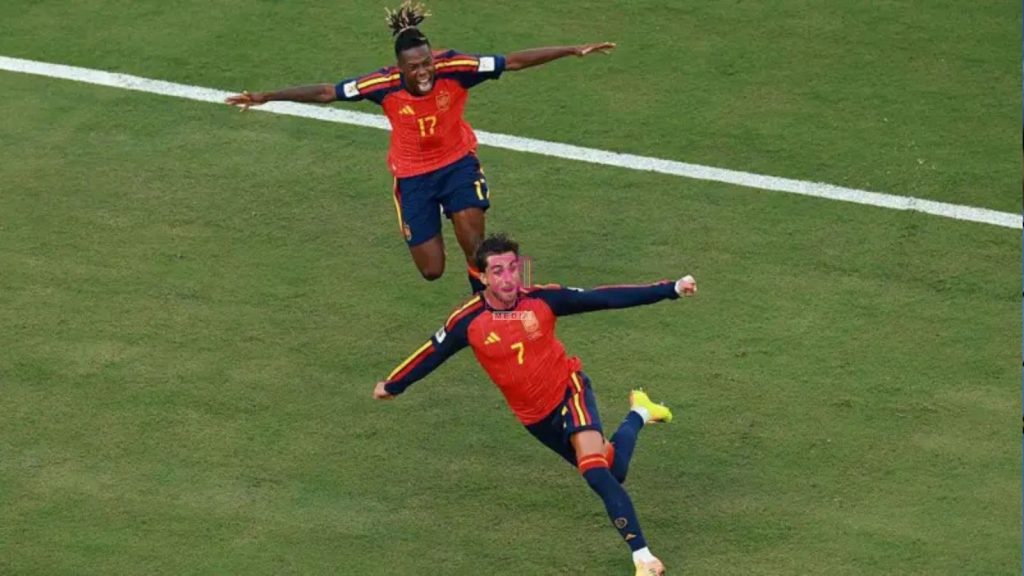
Spain eventually found the decisive breakthrough during the additional thirty minutes, sparking celebrations among thousands of Spanish supporters inside the stadium and millions watching around the world. The winning goal rewarded Spain’s persistence and composure after a contest in which both teams had demonstrated exceptional quality.
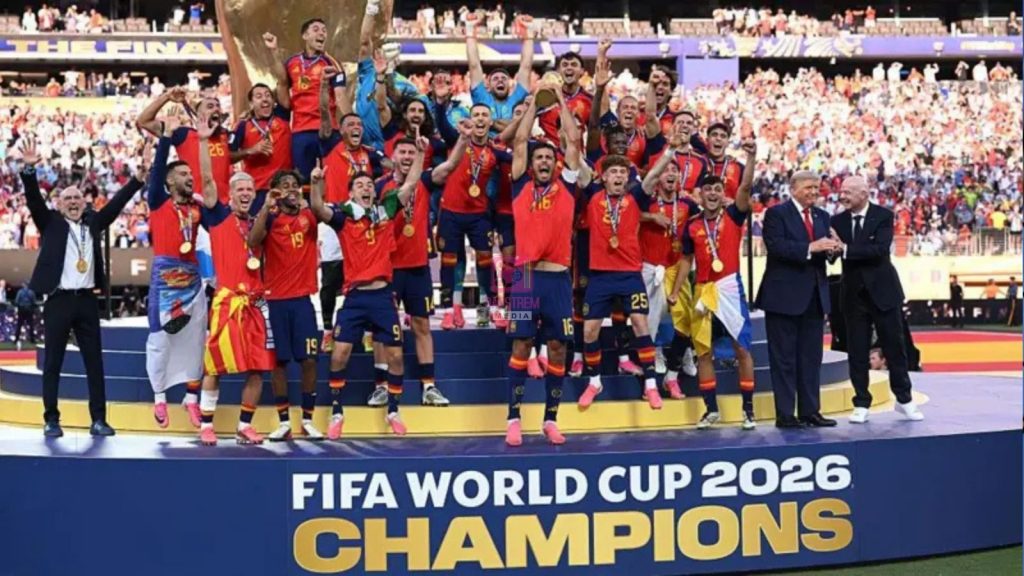
Once the final whistle sounded, scenes of jubilation erupted among the Spanish players, coaching staff, and supporters. Players embraced each other in emotional celebrations, many falling to the ground in tears after realizing they had achieved football’s greatest prize. The victory represented years of dedication, sacrifice, and preparation by a generation determined to restore Spain to the summit of world football.
For Argentina, the defeat marked a heartbreaking conclusion to another impressive tournament. The defending champions fought courageously throughout the final and once again demonstrated why they remain among international football’s elite nations. Although they fell just short of retaining the trophy, their journey to another World Cup final reinforced the country’s remarkable consistency on football’s biggest stage.
Spain’s path to the championship reflected the qualities that have defined their footballing philosophy for decades. Throughout the tournament, they combined technical excellence with tactical discipline, intelligent pressing, and outstanding teamwork. Rather than relying solely on individual brilliance, Spain consistently emphasized collective responsibility, with every player contributing both offensively and defensively.
Their midfield once again proved to be the heartbeat of the team. Accurate passing, intelligent movement, and excellent decision-making enabled Spain to control matches against some of the strongest national teams in the world. The ability to retain possession under pressure frustrated opponents while allowing La Roja to dictate the rhythm of games.
Defensively, Spain displayed remarkable organization throughout the tournament. Their back line remained composed even when facing high-pressure situations, while the goalkeeper delivered several outstanding performances that proved decisive during the knockout rounds. Together, they formed one of the tournament’s most reliable defensive units.
The attacking players also rose to the occasion whenever the team required inspiration. Quick combination play, intelligent movement inside the penalty area, and clinical finishing ensured Spain consistently converted opportunities into goals. Their ability to score from different situations made them unpredictable and difficult for opponents to contain.
Football analysts have praised Spain’s commitment to their footballing identity despite evolving tactical trends in the modern game. While adapting to contemporary demands such as high pressing and rapid transitions, the team retained the technical qualities that have long distinguished Spanish football from many of its rivals.
Winning the World Cup represents the ultimate achievement for any football nation, and Spain’s latest triumph is expected to inspire a new generation of young players across the country. Youth academies throughout Spain have consistently produced technically gifted footballers, and this success is likely to encourage even greater investment in grassroots development.
The victory also highlights the effectiveness of Spain’s long-term football development model. For years, the country’s clubs and football federation have prioritized technical education, tactical awareness, and player development from an early age. Those investments continue to produce world-class talent capable of competing at the highest international level.
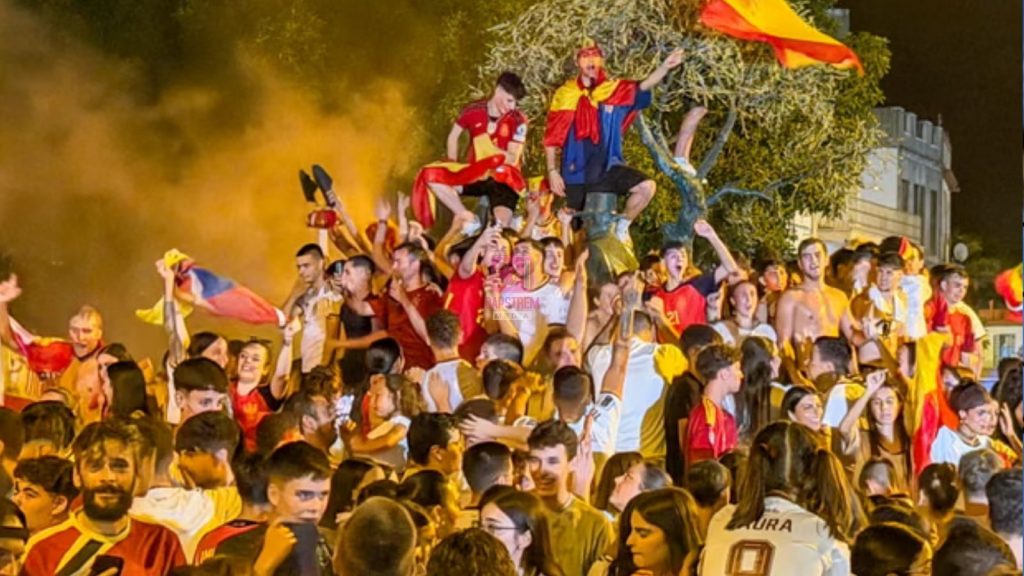
Supporters across Spain celebrated long into the night as cities and towns erupted in scenes of joy following the historic triumph. Public squares filled with fans waving Spanish flags, singing national songs, and celebrating the return of the FIFA World Cup trophy after more than a decade. The victory united millions of people in shared celebration, demonstrating football’s extraordinary ability to bring communities together.
International football legends, former players, coaches, and sporting organizations also congratulated Spain on their achievement. Many praised the team’s consistency, discipline, and attractive style of football throughout the tournament, describing them as worthy champions who had earned their place at the top of world football.
For Argentina, despite the disappointment of defeat, reaching another World Cup final represents another remarkable accomplishment. Competing in consecutive tournaments at such a high level reflects the depth of talent within Argentine football and its enduring ability to develop elite players capable of challenging for major international honors.
The final itself will likely be remembered as one of the most entertaining championship matches in recent World Cup history. Its combination of tactical sophistication, technical quality, emotional intensity, and dramatic extra-time conclusion produced a fitting finale to a tournament that captivated football fans across the globe.
Spain’s second FIFA World Cup title also strengthens their legacy among football’s most successful nations. Joining the select group of countries with multiple World Cup championships reinforces their reputation as a global football powerhouse and reflects decades of excellence both domestically and internationally.
As celebrations continue, attention will eventually shift toward the future. Spain’s triumph has established a new benchmark for the current generation of players, who will now seek to build on this success in upcoming international competitions. Expectations will naturally rise, but so too will confidence following their remarkable World Cup campaign.
Spain’s extra-time victory over Argentina represents more than simply winning another trophy. It is a story of perseverance, teamwork, tactical excellence, and unwavering belief. By overcoming the defending champions on football’s grandest stage, Spain have once again etched their name into World Cup history, lifting their second FIFA World Cup title and providing millions of supporters with memories that will endure for generations.