Meta Launches AI Business Agents on WhatsApp, Instagram, and Facebook: A New Era for Digital Sales and Customer Engagement
Meta has officially rolled out a new wave of artificial intelligence-powered business agents across its platforms, including WhatsApp, Instagram, and Meta Platforms. The new AI tools are designed to help businesses interact with customers more efficiently, recommend products in real time, and even assist in closing sales directly within chat conversations.
The announcement marks another major step in Meta’s broader strategy to integrate artificial intelligence into everyday digital communication and commerce. For small businesses, online sellers, and large enterprises alike, the rollout signals a shift toward automated customer engagement that operates 24 hours a day without human fatigue or delay.
At the core of this innovation are AI-powered business agents that function as virtual sales assistants. These agents can respond instantly to customer inquiries, provide product details, suggest alternatives based on user preferences, and guide potential buyers through the purchasing journey. Instead of waiting for a human sales representative, customers can now interact with an AI system that understands context, language patterns, and buying intent.
Meta’s move comes at a time when social media platforms are no longer just spaces for communication but have evolved into full-scale digital marketplaces. Businesses already rely heavily on messaging platforms like WhatsApp and Instagram Direct Messages to engage customers, handle complaints, and process orders. The introduction of AI agents is expected to dramatically enhance this experience by reducing response times and increasing conversion rates.
For small business owners, especially in emerging markets, the tool presents both opportunities and challenges. On one hand, it reduces the need for large customer service teams, making it easier for entrepreneurs to manage high volumes of inquiries. A single business owner running an online shop, for example, can now rely on an AI assistant to handle repetitive questions such as pricing, availability, delivery timelines, and product comparisons.
On the other hand, the introduction of subscription fees—reportedly around Sh6,500 per month once the free trial period ends—raises questions about affordability for micro and small enterprises. While larger companies may easily absorb the cost as part of their digital marketing budgets, smaller vendors may need to carefully evaluate whether the tool delivers enough value to justify the expense.
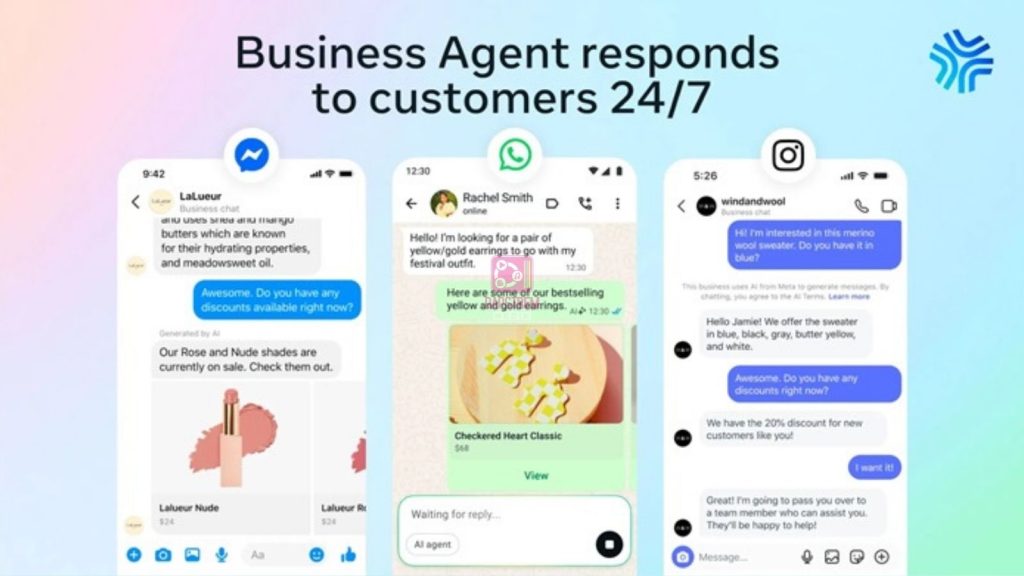
The AI agents are designed to operate across multiple customer touchpoints. On Facebook, they can engage users browsing business pages. On Instagram, they assist shoppers discovering products through reels, posts, and stories. On WhatsApp, they function as direct conversational assistants, guiding users through inquiries and purchase decisions in real time.
One of the most significant advantages of these AI agents is personalization. Unlike traditional automated chatbots that rely on rigid scripts, Meta’s AI systems are built to analyze user behavior and adapt responses accordingly. This means that a returning customer may receive different product recommendations compared to a first-time visitor, based on their previous interactions, interests, and engagement patterns.
For businesses in competitive sectors such as fashion, electronics, travel services, and food delivery, this level of personalization could significantly boost sales. By analyzing customer preferences and purchase history, AI agents can suggest relevant products at the right time, increasing the likelihood of conversion.
The introduction of AI-driven sales tools also reflects a broader global trend in e-commerce automation. Companies across the world are increasingly investing in conversational commerce, where transactions take place directly within messaging platforms rather than traditional websites. This reduces friction in the buying process and aligns with changing consumer behavior, particularly among younger users who prefer chat-based interactions over browsing multiple web pages.
However, the rollout also raises important concerns about data privacy, transparency, and consumer trust. As AI agents become more involved in customer interactions, questions arise about how user data is collected, stored, and used to train recommendation systems. Businesses and regulators will need to ensure that customers are clearly informed when they are interacting with an AI rather than a human representative.
There is also the question of accuracy and reliability. While AI systems have advanced significantly, they are not immune to errors or misinterpretations. In a commercial setting, incorrect product recommendations or pricing errors could lead to customer dissatisfaction or loss of trust. For this reason, many experts believe that AI agents should complement, rather than fully replace, human customer service teams.
From a business perspective, the introduction of these tools could reshape digital marketing strategies. Companies may begin to prioritize chat optimization just as much as website optimization. Instead of focusing solely on search engine visibility or social media engagement, brands will need to ensure that their AI agents are well-trained, responsive, and capable of representing the brand effectively in real time conversations.
The pricing model, once fully implemented, is likely to influence adoption rates across different markets. While the initial free access encourages experimentation and early adoption, the monthly fee of approximately Sh6,500 will test how valuable businesses find the tool in practice. For some, the ability to automate customer service and increase sales will easily justify the cost. For others, especially small informal businesses, it may become an optional luxury rather than a necessity.
Despite these concerns, the long-term direction of digital commerce appears clear. AI-driven communication is becoming a standard feature across major platforms, and Meta’s integration of business agents into its ecosystem positions it at the center of this transformation. By combining social networking, messaging, advertising, and AI-powered sales tools, the company is effectively building an end-to-end digital commerce environment.
For consumers, the experience of shopping online is likely to become faster and more interactive. Instead of scrolling through catalogs or waiting hours for responses, users can simply ask questions in chat and receive immediate, tailored answers. This convenience could significantly reshape expectations around customer service in the digital age.
For businesses, the challenge will be adapting to this new reality. Success will depend not only on adopting the technology but also on using it effectively to build trust, maintain brand identity, and ensure meaningful engagement with customers.
As Meta continues to expand its AI capabilities, the introduction of business agents across WhatsApp, Instagram, and Facebook represents a major milestone in the evolution of social commerce. It signals a future where conversations and transactions are increasingly intertwined, and where artificial intelligence plays a central role in shaping how people discover, evaluate, and purchase products online.
Whether this shift will ultimately empower small businesses or widen the gap between large and small enterprises remains to be seen. What is certain, however, is that the way people buy and sell online is undergoing a profound transformation—one chat at a time.