From Power and Premier League Ambition to Exile, Conviction and Prison in Thailand
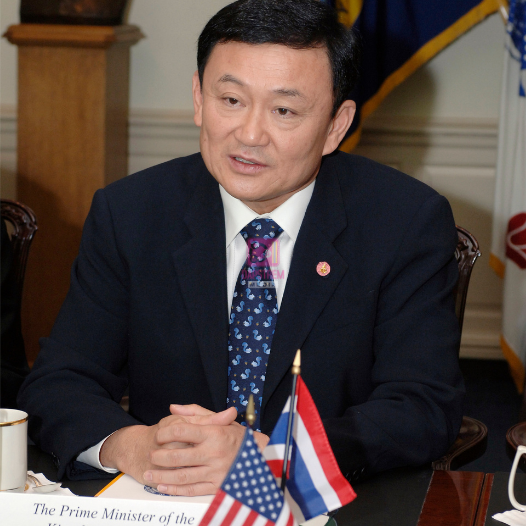
Born on July 26, 1949, in Chiang Mai, Thailand, Thaksin Shinawatra rose from humble beginnings to become one of the most influential and controversial figures in modern Thai history. A former police officer turned telecommunications tycoon, Thaksin built a business empire through Shin Corporation, amassing billions and becoming one of Thailand’s richest men. His success in business paved the way for his entry into politics.
In 2001, Thaksin became Prime Minister of Thailand after a landslide electoral victory. He positioned himself as a leader for the rural poor, introducing policies that transformed the country’s political landscape. His administration rolled out universal healthcare, village development funds, debt relief programs for farmers, and microfinance initiatives. These policies earned him immense support in rural Thailand and among working-class citizens who felt long neglected by Bangkok’s political elite.
However, his leadership style drew sharp criticism. Opponents accused him of authoritarian tendencies, media suppression, conflicts of interest, and corruption. Tensions escalated in 2006 following mass protests in Bangkok. Later that year, while Thaksin was abroad, Thailand’s military staged a coup, removing him from office and dissolving his government. The coup marked a dramatic turning point — from prime minister to political fugitive.
After the coup, Thai courts pursued several corruption cases against him. In 2008, Thai courts convicted him in absentia of a conflict-of-interest charge over a land deal and sentenced him to prison. Facing legal battles at home, Thaksin chose self-exile, spending years moving between countries including the United Kingdom, the United Arab Emirates, and others willing to host him. Despite living abroad, he remained a powerful political force in Thailand, influencing elections and backing political parties aligned with his ideology.
It was during this period of exile that Thaksin turned to English football.
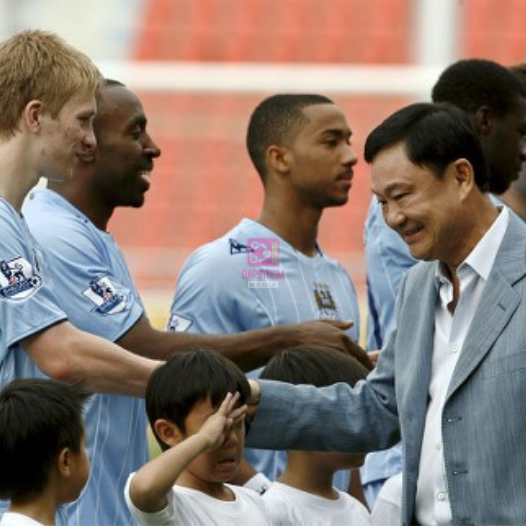
In 2007, he purchased Manchester City Football Club for around £81.6 million. At the time, Manchester City was struggling both financially and competitively. The club, based in Manchester, had spent years in the shadow of rivals Manchester United. Thaksin promised to restore pride and ambition to the team. He appointed former England manager Sven-Göran Eriksson and invested heavily in player transfers, bringing in names like Elano, Martin Petrov and Vedran Ćorluka.
For a brief moment, optimism returned to the blue half of Manchester. The club showed signs of revival and competed strongly in the Premier League. Thaksin presented himself as a hands-on owner with global ambition, often attending matches and interacting with fans.
But his legal troubles in Thailand began to affect the club. In 2008, Thai authorities froze a large portion of his assets — reportedly worth around £800 million — limiting his ability to fund Manchester City’s ambitions. Financial uncertainty loomed over the club. By September 2008, Thaksin agreed to sell Manchester City to Abu Dhabi United Group, owned by Sheikh Mansour bin Zayed Al Nahyan.
That sale changed football history.
Under Abu Dhabi ownership, Manchester City transformed into a global powerhouse. Massive investment in players, infrastructure and management followed. The club went on to win multiple Premier League titles, FA Cups and eventually the UEFA Champions League. The Etihad Stadium became home to one of Europe’s most dominant teams. In many ways, Thaksin’s short-lived ownership marked the beginning of a new era, even if he did not reap its long-term rewards.
Meanwhile, Thailand remained deeply divided over his legacy.
Supporters saw him as a populist reformer who empowered rural communities and challenged entrenched elites. Critics viewed him as a billionaire who blurred the lines between business and politics, undermined democratic institutions, and fueled political polarization. His influence continued through parties aligned with him, including those led by allies and even family members. His sister, Yingluck Shinawatra, later became Thailand’s first female prime minister in 2011, though she too was removed from office by a military coup in 2014 and later fled the country.
For over 15 years, Thaksin lived mostly abroad, largely based in Dubai. Despite exile, he remained central to Thailand’s political discourse. Elections often became referendums on his influence. Street protests, court rulings, and military interventions repeatedly reshaped the nation’s political landscape, but his shadow never disappeared.
In 2023, after years of speculation, Thaksin returned to Thailand. His return was dramatic. Supporters gathered at the airport, hoping to see their political hero come home. But upon arrival, authorities immediately enforced outstanding court sentences related to corruption and abuse of power cases. He was taken into custody and transferred to prison.
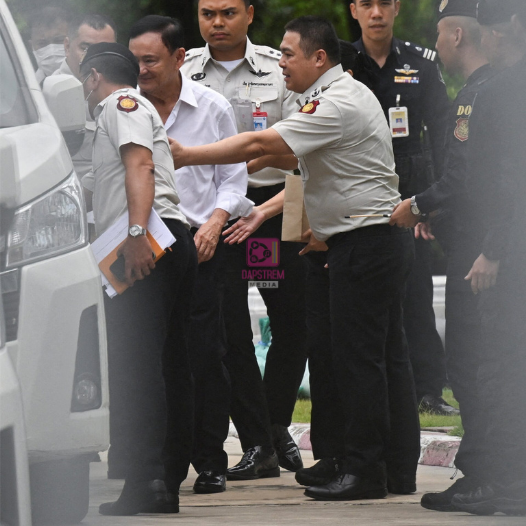
Health concerns soon surfaced, and he was later moved to a hospital facility under correctional supervision. In 2023, Thailand’s king reduced his prison sentence, significantly shortening the time he would serve. Even so, the image of a former prime minister — once commanding national power and owning an English Premier League club — now under correctional control marked a stunning reversal of fortune.
His journey reflects broader themes about wealth, politics and accountability. Thailand itself has struggled with cycles of democratic elections, military coups, constitutional rewrites and political unrest. The country, a Southeast Asian nation known for its tourism, export economy and strategic regional role, has faced persistent tension between populist political movements and traditional power centers including the military and monarchy.
Thaksin’s rise coincided with Thailand’s rapid economic development in the late 20th century. His downfall mirrored the instability that followed deep political divisions. His story cannot be separated from the nation’s broader struggle over who holds power and how democracy should function.
In football terms, his time at Manchester City was brief but historically significant. He bridged the gap between the club’s unstable mid-2000s period and its transformation into a global brand. Though overshadowed by what followed, his acquisition laid the groundwork for the Abu Dhabi takeover that reshaped the Premier League.
Today, Thaksin Shinawatra remains one of the most polarizing figures in Thai history. To some, he is a visionary reformer. To others, a flawed leader whose ambition overreached. From running a nation to languishing behind prison walls, his story is a cautionary tale about power — how quickly it can be gained, how fiercely it can be contested, and how dramatically it can be lost.