
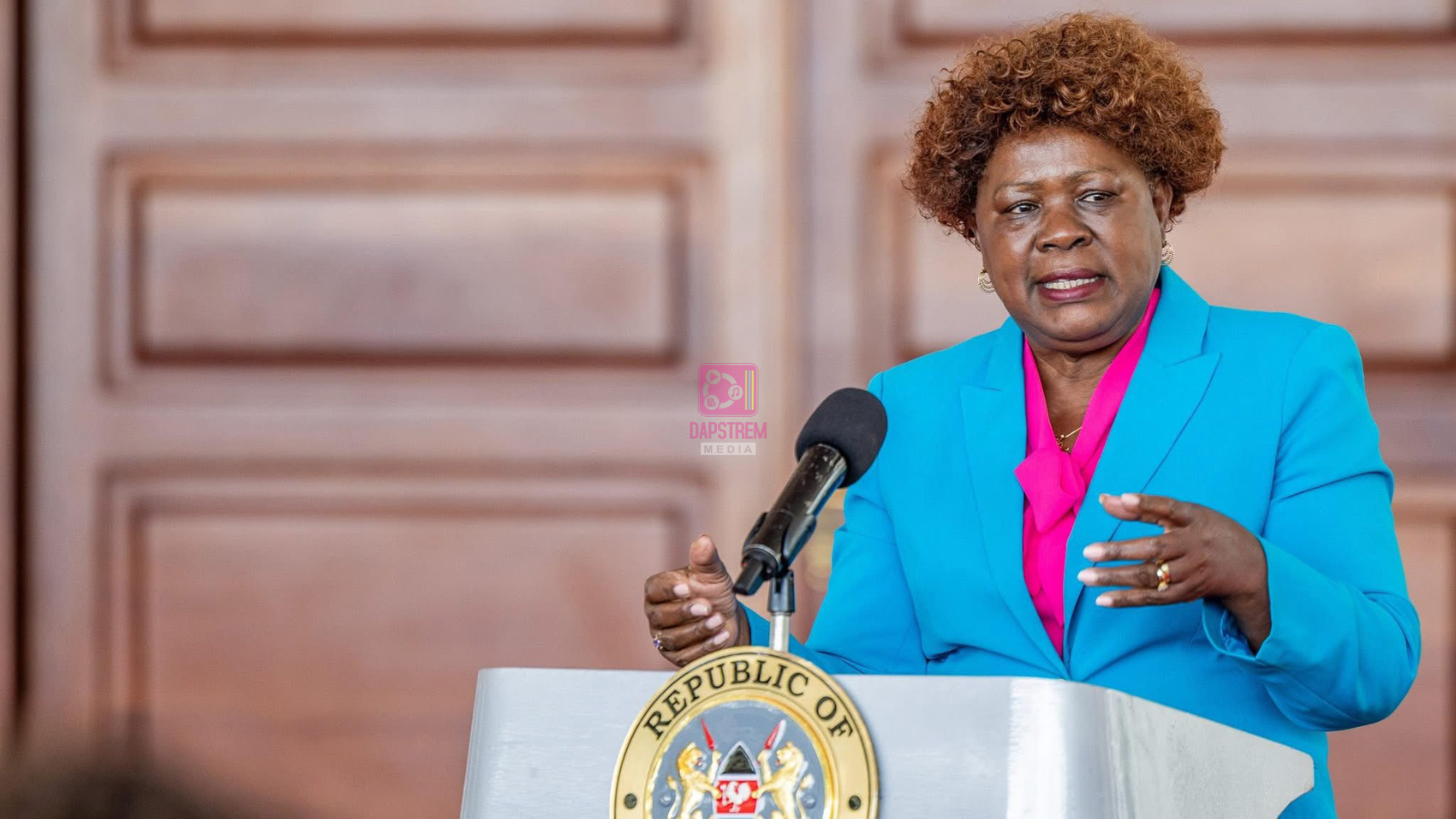
The Kenyan government has identified about 7,000 acres of land for the proposed Lamu oil refinery, Lands Cabinet Secretary Alice Wahome has said, as the multi-trillion-shilling project moves closer to its groundbreaking ceremony amid an ongoing dispute over land rights.
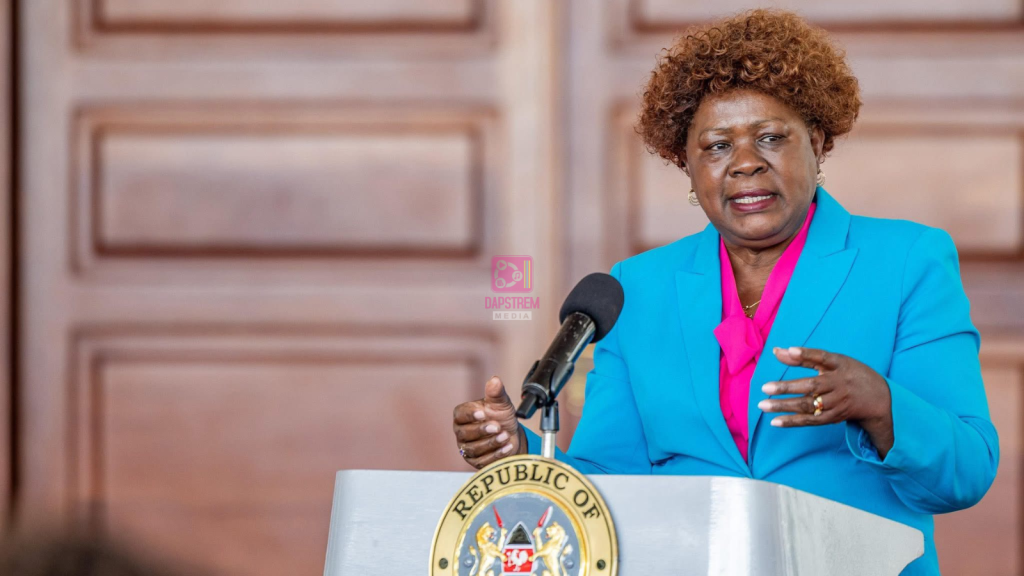
Wahome made the disclosure on Tuesday during President William Ruto’s Coast tour, saying the government had identified land for the refinery and could acquire privately held property where necessary, provided the process follows the law.
“We saw that we have 7,000 acres there for the refinery,” Wahome said.
The announcement comes just a day before the planned groundbreaking of the refinery, which is being developed with Nigerian businessman Aliko Dangote and is expected to become one of Africa’s largest petroleum-processing facilities.
Land at the centre of the project
The size of the land identified for the refinery is significant because land ownership has emerged as one of the most contentious issues surrounding the project.
Wahome told the President that, in addition to the approximately 7,000 acres identified for the refinery, the government has another parcel of more than 2,000 acres that she described as State-owned.
Her remarks came as residents of Chandavai and surrounding areas challenge the use of land they say is ancestral property.
More than 100 residents have taken the government to court, arguing that development associated with major infrastructure projects in the area has resulted in the destruction of homes, crops, trees and other property. Court papers filed by 133 residents of Mvinjeni say they have lived on and used parts of the disputed land for generations.
The residents say they are seeking protection of their constitutional rights and livelihoods as the refinery project advances.
Court battle continues
The land dispute has not, however, stopped preparations for the refinery’s groundbreaking.
The Malindi Environment and Land Court recently declined to stop the planned groundbreaking but directed parties to maintain the status quo on a disputed parcel identified as LR No. 13061 in the Hindi/Manda Magogoni area.
Justice Jane Onyango ordered that the parties maintain the prevailing status quo until October 14, when the case is scheduled to be heard between the parties. The applicants had sought orders stopping the groundbreaking and development of the refinery, but the court did not grant that request at this stage.
The legal dispute therefore remains unresolved even as the government and investor prepare to move ahead.
Reuters reported on Tuesday that Dangote Group said the court ruling would not prevent Wednesday’s official groundbreaking ceremony, although the company acknowledged that the dispute could affect some activities at the site.
Government defends compulsory acquisition powers
Wahome’s comments also brought the issue of compulsory acquisition into sharp focus.
The Lands CS said the State has the power to acquire privately owned property when it is required for a public-purpose project, provided the acquisition is conducted according to the law.
“There is nobody who can say the President should not do the refinery on Kenyan land,” Wahome said, arguing that the State could acquire property for the project in the interests of Kenyans.
The position is likely to remain a key part of the debate as the government seeks to reconcile the planned investment with claims by residents who say they have ancestral interests in some of the land earmarked for development.
The land question is particularly sensitive in Lamu, where communities have previously raised concerns about the effects of large infrastructure projects on traditional livelihoods.
A project worth trillions
The proposed refinery is estimated to cost about Sh2.2 trillion, with earlier reports putting the investment at roughly $15 billion to $17 billion depending on the project’s valuation and financing assumptions.
The facility is planned to have a processing capacity of 700,000 barrels of crude oil per day, potentially making it the largest refinery in East and Central Africa. The project is expected to be built within the Lamu Port-South Sudan-Ethiopia Transport (LAPSSET) corridor.
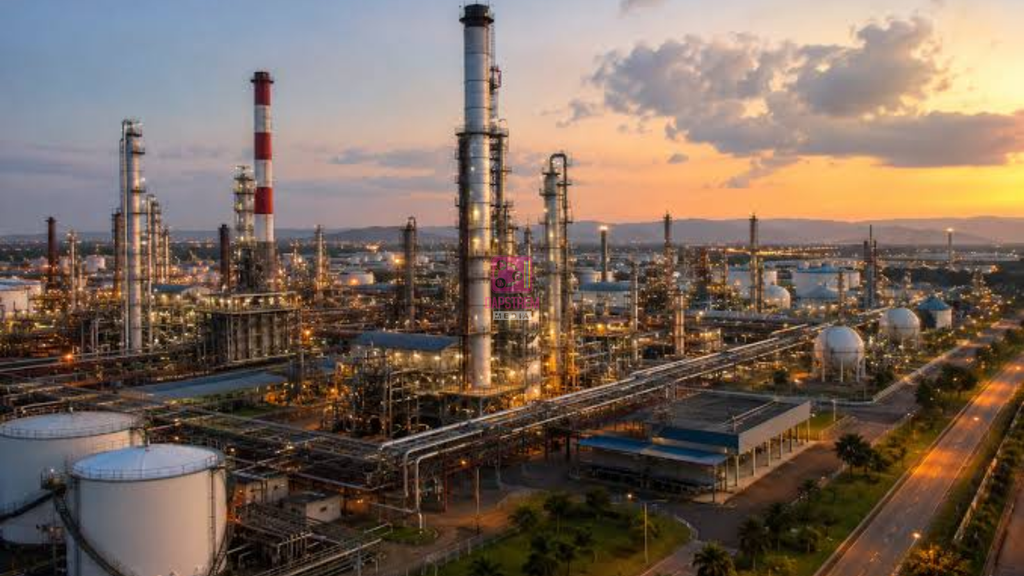
Dangote Industries had previously identified Lamu as the site and said soil testing, engineering and design work had begun. The company has said the refinery would primarily serve Kenya and neighbouring markets.
The scale of the proposed facility would make it a major addition to East Africa’s petroleum infrastructure.
Why Lamu?
The choice of Lamu is closely linked to the area’s deep-water port and the wider LAPSSET corridor.
The project is expected to benefit from access to the Indian Ocean, allowing crude oil and other petroleum-related cargoes to be transported by sea. The refinery would also be positioned within a wider infrastructure network intended to connect Kenya with South Sudan, Ethiopia and other regional markets.
Government officials have described the refinery as part of a broader strategy to establish a petrochemical hub and strengthen regional energy security.
In July, Deputy President Kithure Kindiki said the government was working with East African partners to establish the necessary legal and regulatory framework for the project. At the time, officials said feasibility work was still being undertaken to establish the suitability of Lamu for the regional facility.
The project’s development has therefore progressed rapidly in recent months, moving from feasibility discussions to site preparation and a planned groundbreaking.
The crude oil challenge
Despite the project’s size, questions remain over how the refinery will obtain sufficient crude oil.
Kenya currently does not have commercial-scale crude production capable of supplying a refinery of 700,000 barrels per day.
A Reuters investigation earlier this month highlighted the challenge, noting that potential crude sources could include Kenya, Uganda and South Sudan, but each presents infrastructure or geopolitical complications. Uganda’s crude is connected to Tanzania through the East African Crude Oil Pipeline, while South Sudan’s exports currently depend on routes through Sudan.
That means the proposed Lamu refinery could initially have to rely significantly on crude imported by sea.
Reuters also reported that the Lamu Port area lacks some of the oil-storage infrastructure that would be required to support a refinery of this scale, adding another layer of infrastructure and financing challenges.
What does the project mean for Lamu residents?
For residents, the refinery represents both an economic opportunity and a potential source of disruption.
Community leaders have previously said they are not opposed to the investment but want greater transparency, participation in decision-making and a fair share of the economic benefits.
Residents have also called for priority in employment, business opportunities and contracts arising from the project. Some community representatives have proposed that a significant proportion of the expected jobs be reserved for indigenous Lamu residents.
Fishing communities have raised questions about the potential effects of industrial development and oil-related activities on traditional fishing grounds and the marine environment.
These concerns are particularly important because Lamu’s economy and communities are closely connected to the coastline and marine environment.
Pressure over land values
The expected refinery has already begun changing expectations around land in the area.
Lamu Governor Issa Timamy recently warned residents in Hindi and Mkunumbi wards against selling land cheaply ahead of the refinery’s development.
Timamy said land values could rise as the project progresses and urged residents to be cautious about offers from speculators. He identified areas including Magogoni, Bargoni, Kwasasi, Hindi and Ndeu as places where landowners and residents should exercise particular vigilance.
The warning illustrates another consequence of the proposed investment: expectations that the refinery could stimulate demand for housing, commercial property, logistics facilities and other businesses.
Timamy has estimated that more than 100,000 people could eventually be employed directly or indirectly by the refinery and related economic activity, although that figure is a projection rather than an established employment total.
A major investment under scrutiny
President Ruto has strongly defended the refinery, describing it as a potentially transformative investment for Kenya.
On Tuesday, the President said the government would not allow what he described as attempts to sabotage the project. He argued that the refinery could attract foreign investment, create employment and strengthen Kenya’s position as a regional petroleum-processing centre.
Ruto also said the government would have a stake in the refinery and that Kenyans would eventually have an opportunity to acquire shares through the Nairobi Securities Exchange.
The President’s remarks, however, represent the government’s position and should be distinguished from the unresolved legal and community questions surrounding the project.
The residents challenging the land arrangements are asking the courts to protect what they describe as ancestral land and their livelihoods. The court has yet to make a final determination on those claims.
The immediate milestone is the planned September 30 groundbreaking ceremony.
The ceremony is expected to mark the formal beginning of a project that the government and Dangote Group hope will transform Lamu into a major regional energy and industrial centre.
But the groundbreaking will not settle the questions surrounding the project.
The court case over the disputed land remains active, with the next hearing scheduled for October 14. Meanwhile, issues surrounding land acquisition, compensation, environmental safeguards, crude supply, financing and community participation will continue to shape the project’s development.
For Wahome, the government’s position is clear: land has been identified and the State has legal mechanisms for acquiring property where necessary.
For affected residents, however, the central question is whether the development can proceed while their claims to land and livelihoods are properly addressed.
The 7,000 acres identified by the government therefore represent more than a figure on a project plan. They sit at the intersection of Kenya’s ambitions for energy security and industrialisation, the rights of communities in Lamu, and the enormous economic expectations surrounding one of the country’s biggest proposed investments.
As the refinery moves towards groundbreaking, the balance between development, investment and land rights is likely to remain one of the defining issues surrounding the project.