
Nairobi is racing against time to strengthen its defences ahead of an anticipated El Niño-driven rainy season, with county authorities and national agencies stepping up drainage works, identifying evacuation centres and coordinating emergency response plans in some of the capital’s most flood-prone neighbourhoods.
The preparations come as meteorological agencies warn that the developing El Niño could bring unusually heavy rainfall to parts of East Africa during the October–December season, with wet conditions potentially extending into early 2027.
For a city that has repeatedly struggled with flash floods, blocked drainage channels and development along waterways, the forecast has sharpened an old question: Will Nairobi be ready before the water arrives?
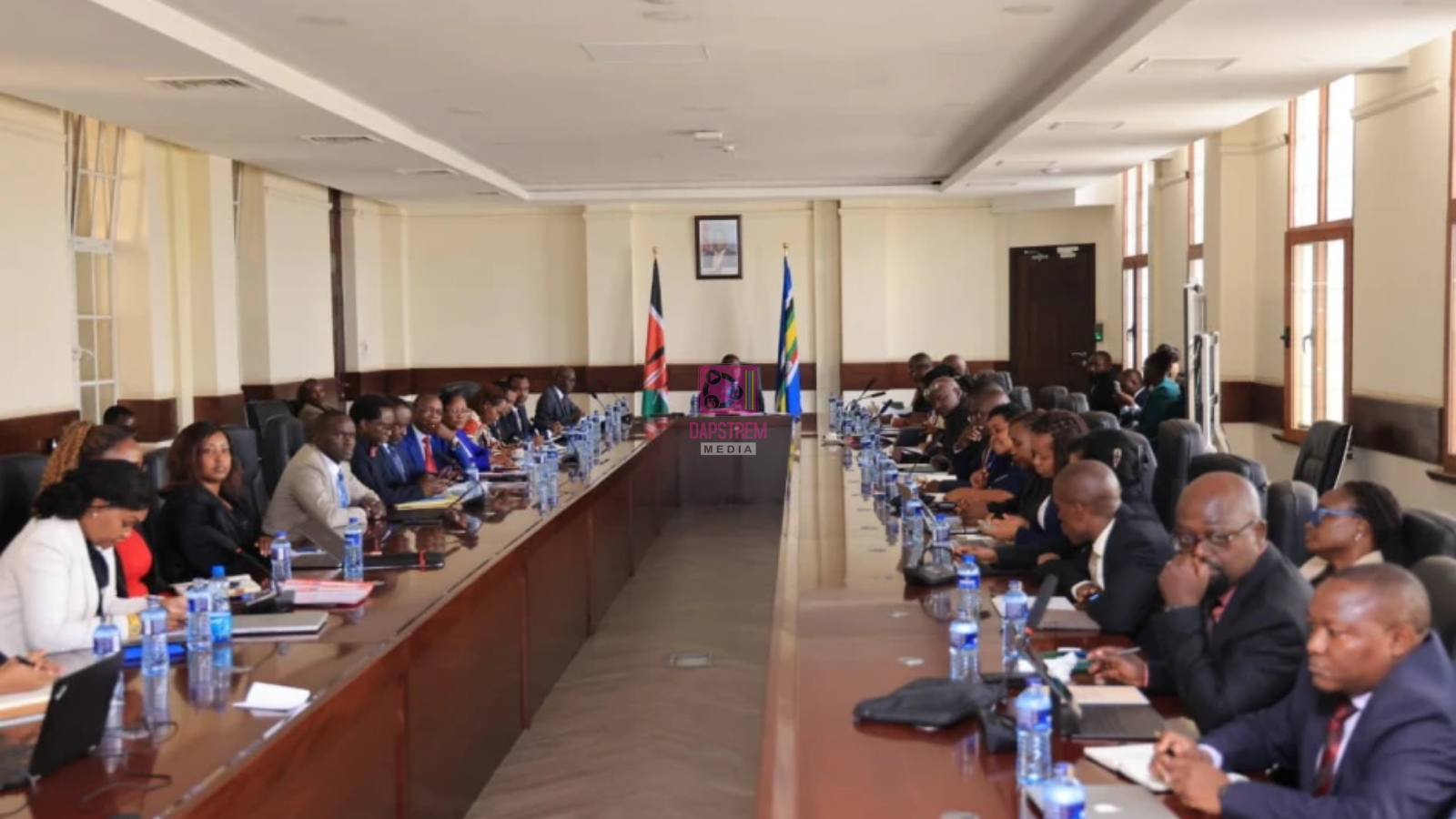
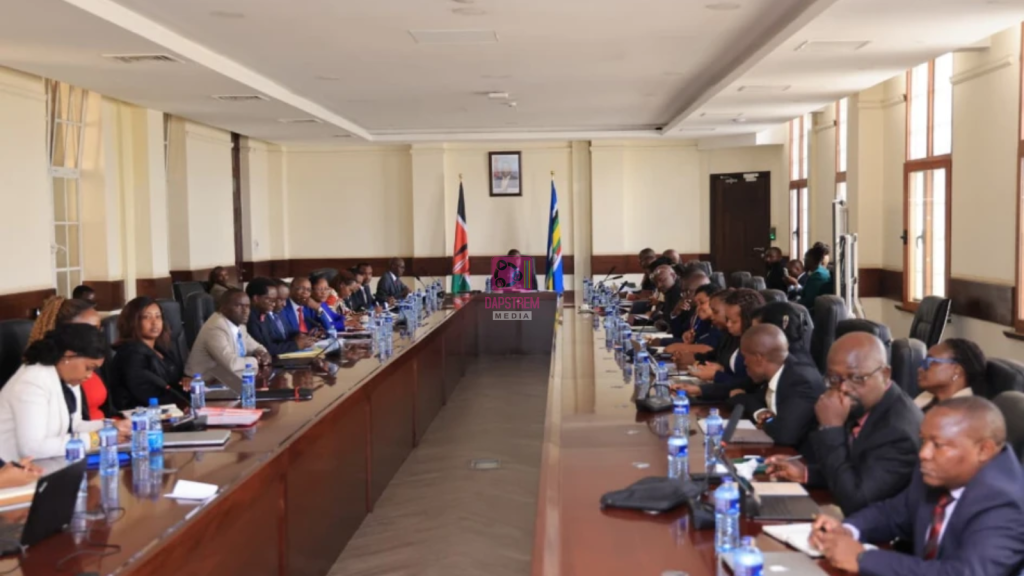
Governor Johnson Sakaja on Monday chaired a multi-agency meeting at Kenya Railways headquarters to review preparations and coordinate the response to the expected rains. The meeting brought together the Kenya Red Cross, Kenya Urban Roads Authority, Kenya National Highways Authority, Kenya Rural Roads Authority, disaster-management teams and other agencies.
County officials say drainage improvement and clearance works are already under way in vulnerable areas, including along Mombasa Road. County Green Army teams have also been deployed to clear and unclog drainage systems, an intervention intended to increase the city’s capacity to move storm water quickly during intense rainfall.
The county has established an emergency response centre and dedicated communication channels through which residents can report incidents. Rescue centres have also been identified in anticipation of possible evacuations.
Sakaja has urged residents living in high-risk riparian areas to move to safer ground before the rains intensify, saying the objective is to prevent deaths rather than wait for flooding to turn into a full-scale emergency.
“We are preparing early because we know what is coming.”
That approach reflects a broader shift in disaster management: preparedness is increasingly being measured not by how quickly authorities can respond once roads are underwater, but by how much can be done before the first major storm.
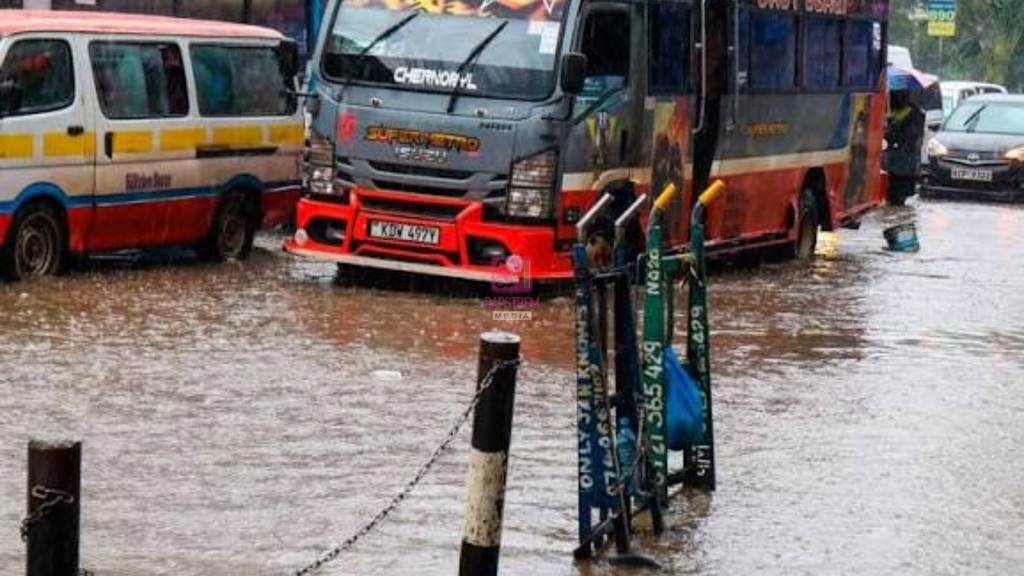
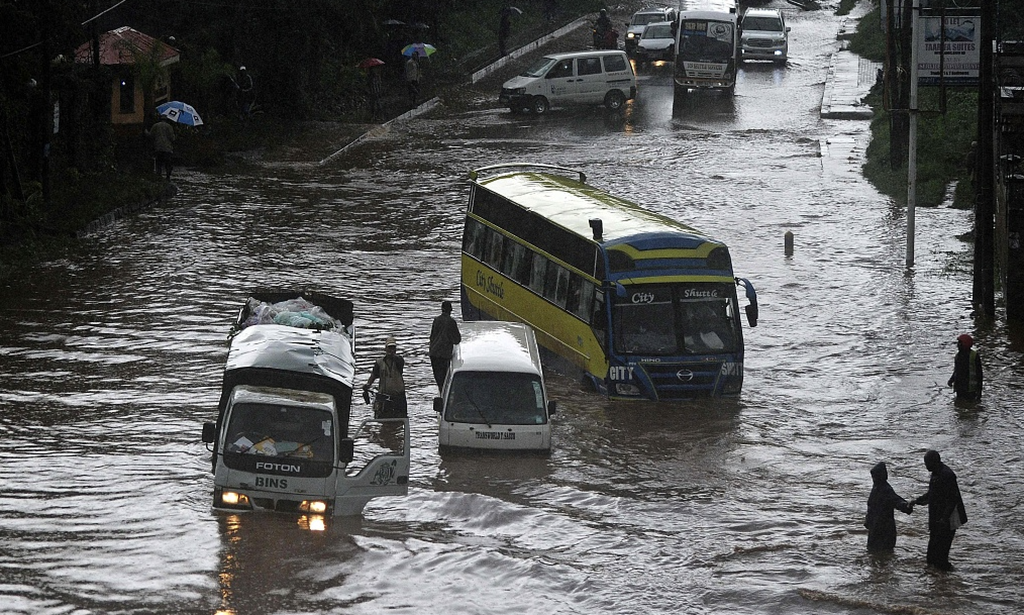
During periods of intense rainfall, parts of the capital can become inundated within a matter of hours. Roads become impassable, vehicles are swept away or stranded, homes and businesses are flooded, and residents in informal settlements and low-lying areas face the greatest danger.
The city’s rapid expansion has added another layer to the problem. As buildings, roads and other paved surfaces have spread, rainwater has fewer natural surfaces through which to drain. At the same time, construction and settlement along rivers and riparian reserves have increased exposure to flooding.
Blocked or undersized drainage infrastructure can turn an episode of heavy rain into a crisis.
The memory of the destructive floods experienced during the March–May 2026 rains is still fresh. A recent humanitarian assessment noted that flooding during that season affected 27 counties by early May, underscoring the scale of the country’s exposure even before the anticipated El Niño rains arrive.
For Nairobi, that experience has provided a warning: the next emergency may not give authorities enough time to improvise.
Why El Niño matters
El Niño is a naturally occurring climate pattern associated with unusually warm sea-surface temperatures in the central and eastern tropical Pacific Ocean. Its effects are felt far beyond the Pacific, influencing rainfall and temperature patterns around the world.
The World Meteorological Organization said in June that El Niño conditions were developing and that there was an 80 per cent likelihood of an El Niño event during June–August 2026. The probability of the phenomenon continuing through at least November was put at around 90 per cent or higher.
The WMO cautioned, however, that El Niño does not produce identical weather everywhere or in every year. Its impacts depend on the event’s strength, timing and interaction with other climate systems, including the Indian Ocean Dipole.
For Kenya, the most important concern is the expected increase in rainfall later in the year.
Kenya’s meteorological authorities have warned of above-normal rainfall from October, with the enhanced rains potentially extending into early 2027.
From clearing drains to preparing for evacuation
The county’s current strategy is built around several layers of intervention.
That forecast gives Nairobi a critical window in which to prepare.
The first is drainage clearance. Removing garbage, silt and other obstructions from drainage channels can improve the movement of storm water and reduce the likelihood that relatively short periods of intense rain will overwhelm the system.
The second is infrastructure intervention. Agencies responsible for roads and urban infrastructure are being brought into a common response framework, with works targeting known flood-prone locations.
The third is emergency response. Authorities are preparing rescue facilities and communication mechanisms so that warnings, evacuations and emergency assistance can be coordinated when flooding occurs.
And the fourth perhaps the most difficult is moving people out of danger.
Residents living beside rivers and in other high-risk locations are being encouraged to relocate before heavy rainfall begins. Some households have already moved to safer areas, according to the county government.
That raises difficult questions about where displaced residents will go, how long they can remain there and whether evacuation centres have enough water, sanitation, food and medical support to accommodate people during prolonged flooding.
Preparedness, therefore, is not only about digging trenches or clearing drains. It is also about ensuring that people have somewhere safe to go when those measures fail. The test will come when the rain falls
The greatest challenge for Nairobi will be translating plans into action.
Flood preparedness frequently looks impressive on paper: committees are formed, drainage channels are cleared, emergency centres are identified and public warnings are issued. But the real measure of preparedness comes during the first major downpour.
Can an alert reach residents before floodwaters rise?
Can emergency teams reach a flooded neighbourhood when roads are already impassable?
Are evacuation centres accessible?
Can ambulances, fire engines and rescue teams move through the city quickly?
And, critically, will residents trust and act on government warnings?
These questions matter because extreme rainfall can overwhelm even functioning infrastructure. The WMO has stressed that El Niño increases the likelihood of rainfall extremes, while also noting that each event has different regional impacts.
Nairobi therefore cannot rely on the forecast alone. The forecast must trigger action.
A city facing a wider climate challenge
The coming rains also expose a deeper problem facing Nairobi and other rapidly growing African cities: urban infrastructure is struggling to keep pace with population growth and increasingly disruptive weather.
Climate change does not necessarily mean that El Niño itself will occur more frequently or become stronger. The WMO says there is currently no evidence that climate change increases the frequency or intensity of El Niño events. But a warmer atmosphere and ocean can amplify some of the impacts associated with extreme weather by increasing the amount of heat and moisture available to the atmosphere.
That distinction is important.
The challenge for Nairobi is not simply that more rain may be coming. It is that heavy rain is colliding with an urban environment where drainage, land-use planning, river protection and emergency systems are already under pressure.
The anticipated El Niño season is therefore more than a weather event. It is a stress test for the city’s infrastructure and its disaster-response institutions.
Preparedness beyond the headlines
Kenya is also preparing at the national level. The anticipated El Niño impacts have prompted discussions around emergency financing and broader disaster-response measures. Reuters reported last week that Kenya was expected to access approximately $400 million in emergency World Bank financing, with El Niño-related disruptions among the risks covered by the proposed support.
But money and equipment alone will not determine whether Nairobi gets through the season safely.
Preparedness ultimately comes down to the last mile: the drainage channel beside a home, the warning reaching a family in time, the road that remains open for an ambulance, the community leader who knows where vulnerable residents live, and the household that understands when it is time to leave.
The county government’s decision to bring multiple agencies around one table is therefore significant. Flooding rarely respects administrative boundaries. A blocked county drain can affect a national road; a flooded road can prevent rescue teams from reaching a neighbourhood; and a swollen river can threaten communities far beyond the point where rainfall was recorded.
A coordinated response is essential.
For Nairobi, the objective this time is clear: act before the water rises.
The city has been given advance warning. Meteorological agencies have provided an increasingly clear picture of the coming climate risk. County officials have begun clearing drains, coordinating agencies and preparing evacuation facilities.
The real test will be whether those preparations are completed and whether they work when the skies finally open.
For thousands of Nairobi residents living in flood-prone neighbourhoods, preparedness is not an administrative exercise.
It is the difference between watching the rain from a safe doorway and trying to escape it from the middle of a flooded street.