Mwezi wa Baba: ODM Dedicates October 2026 to Raila Odinga in Year-One Death Anniversary Tribute
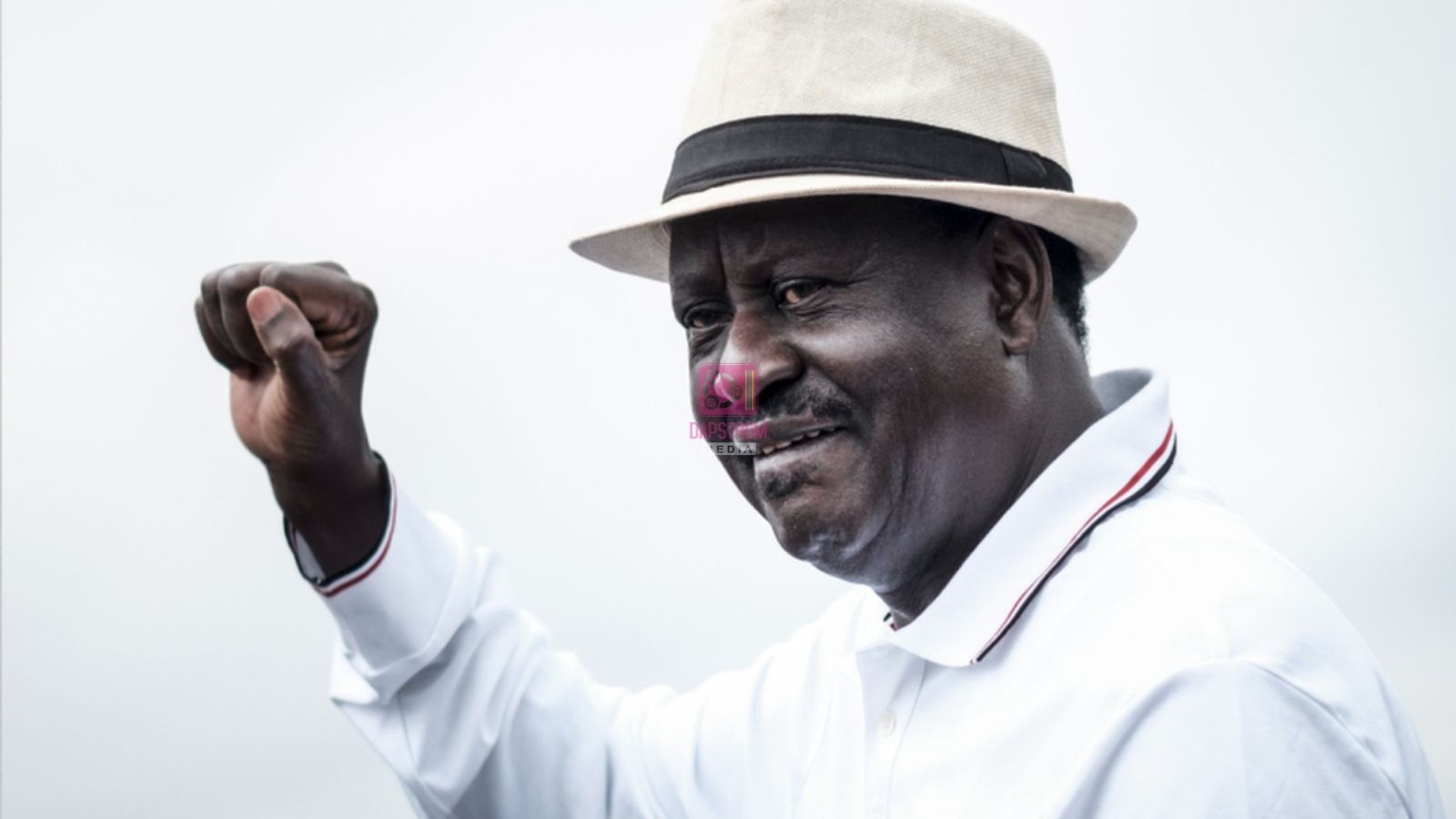
The Orange Democratic Movement (ODM) is preparing to dedicate October 2026 to the memory of its late party leader, Raila Amolo Odinga, as Kenya approaches the first anniversary of the death of one of the country’s most influential political figures.
The planned tribute, expected to be marked under the theme “Mwezi wa Baba”, will give ODM supporters and Kenyans an opportunity to remember Raila’s life, political journey, sacrifices and contribution to the country’s democratic development.
Raila died on October 15, 2025, while receiving medical treatment in India. His death brought an end to a political career that spanned decades and placed him at the centre of some of Kenya’s most important political struggles, constitutional debates and national conversations. A presidential proclamation issued after his death described him as a champion of democracy, social justice and constitutional reform, while recognising his role in Kenya’s journey towards the 2010 Constitution.
One year later, his absence continues to be felt within ODM and across Kenya’s political landscape.
For many of his supporters, Raila was not simply a party leader. He was “Baba”, a name that became closely associated with his political identity and his relationship with millions of supporters across the country.
The decision to dedicate an entire month to his memory therefore carries both emotional and political significance.
October is already closely associated with Raila’s final days and death. It was the month when the country went into mourning in 2025 after news emerged that the former Prime Minister had died in Kochi, India. The government subsequently declared a period of national mourning and accorded him a State Funeral with military honours.
His death also triggered an extraordinary outpouring of grief.
Thousands of Kenyans travelled to Nairobi and later to Bondo to pay their final respects. Political leaders from across the divide, civil society groups, religious leaders, diplomats and ordinary citizens joined the country in mourning.
Even political opponents acknowledged the scale of his contribution to Kenya.
President William Ruto dedicated the 2025 Mashujaa Day celebrations to Raila, describing him as a patriot who placed the interests of Kenya above personal political ambition. The President also posthumously conferred on him the Chief of the Order of the Golden Heart of Kenya, the country’s highest civilian honour.
That recognition has become part of the broader conversation about Raila’s legacy as the country prepares to mark his first death anniversary.
For ODM, however, the anniversary is likely to be particularly significant because it comes at a time when the party is navigating a new political era without the man who founded and led it through many of its most defining moments.
Raila was not only the face of ODM but also the political figure around whom the party built its identity for years.
His political career was defined by persistence, resistance and political reinvention. He was detained during the struggle for multiparty democracy, later became a key figure in opposition politics and eventually served as Kenya’s second Prime Minister in the coalition government formed after the disputed 2007 presidential election.
His supporters credit him with helping push Kenya towards greater political pluralism and constitutional reform.
The official Raila tribute portal describes his political journey as one marked by decades of resistance, detention and exile, as well as an enduring commitment to constitutional reforms. It also notes his role in national politics as a Cabinet minister, opposition leader and Prime Minister.
His contribution to the 2010 Constitution remains one of the central elements of the legacy that will dominate the October commemorations.
Raila was among the political leaders who championed reforms that eventually resulted in the adoption of the Constitution of Kenya 2010. The new constitutional order introduced major changes to governance, including devolution and stronger institutional checks and balances.
His supporters have long argued that his political struggles helped create the democratic space that Kenyans enjoy today.
Even after his death, the debate about what Raila represented has continued.
To some Kenyans, he was the symbol of opposition politics and resistance to excessive concentration of power. To others, he was a political strategist whose ability to negotiate across political divides helped prevent the country from sliding into deeper crises.
His decision to work with former President Mwai Kibaki after the disputed 2007 election remains one of the most frequently cited examples of his willingness to compromise when national stability was at stake.
The 2008 power-sharing arrangement ended months of political violence that had left more than 1,000 people dead and displaced hundreds of thousands.
Years later, Raila again entered into a political understanding with one of his former opponents when he shook hands with President Uhuru Kenyatta in 2018.
That Handshake became one of the defining political developments of his later career.
Although Raila remained a fierce political competitor, his political journey demonstrated his ability to move between confrontation and negotiation depending on what he believed was in the national interest.
This complicated political history is likely to form part of the conversation during “Mwezi wa Baba”.
The October tribute will not simply be about remembering a politician who died a year earlier. It will also provide an opportunity for ODM and its supporters to examine what remains of the ideals Raila championed and how those ideals can survive beyond his leadership.
That question is especially important because ODM has entered a new chapter since his death.
The party has had to reorganise its leadership structures and rethink its political direction. Raila’s absence has inevitably created a gap that cannot easily be filled because his influence extended beyond formal party structures.
He had built personal relationships with political leaders, grassroots supporters and political networks across the country over several decades.
His political brand was also deeply personal.
The name “Baba” was not simply a slogan. It represented a relationship between Raila and his supporters that had developed over years of campaigns, political struggles and elections.
Many supporters regarded him as a father figure who had stood with them through political and social challenges.
That emotional connection explains why his death was experienced by many supporters as a personal loss rather than merely the death of a political leader.
“Mwezi wa Baba” therefore carries a strong emotional message.
The month is expected to allow supporters to celebrate his life rather than focus only on the circumstances of his death.
It is also likely to bring together stories from people who interacted with him during different stages of his political career.
Some will remember his years in opposition. Others will remember him as Prime Minister. Some will remember his presidential campaigns, while others will focus on his role in constitutional reform and Pan-African affairs.
Raila also served as the African Union High Representative for Infrastructure Development, giving him a continental role beyond Kenya’s domestic politics. His supporters have often described him as a Pan-Africanist who believed in stronger economic and political integration across Africa.
His continental legacy could therefore form another important part of the October commemorations.
The first anniversary will also coincide with several other initiatives designed to preserve his memory.
The government is constructing a state-of-the-art mausoleum at the Odinga family home in Bondo, Siaya County, where Raila was buried after his death. The project is being undertaken by the Kenya Defence Forces, with the National Museums of Kenya involved in the heritage component. It is expected to be completed around the first anniversary period.
The planned mausoleum is expected to include a memorial hall, cultural galleries, exhibition spaces and a national monument documenting Raila’s political journey and contribution to Kenya.
The project is intended to preserve his memory for future generations and provide a place where Kenyans can learn about his role in the country’s political history.
The University of Nairobi is also preparing to establish the Raila Odinga Centre for Democracy.
The university announced that the centre is expected to be formally inaugurated in October 2026, deliberately coinciding with the week of the first anniversary of Raila’s death.
According to the university, the centre is intended to become a hub for public dialogue, research and innovation in democracy. Plans also include an inaugural Raila Odinga Memorial Lecture on Democracy.
These initiatives demonstrate that the first anniversary will extend beyond political gatherings.
They are increasingly becoming part of a wider national effort to document and preserve Raila’s contribution to Kenya’s democratic history.
For ODM supporters, this could make October 2026 one of the most important periods for reflecting on Raila’s legacy since his death.
The challenge, however, will be determining what his legacy means in practical terms.
Raila was known for advocating democracy, social justice, devolution, constitutionalism and greater political participation.
The question now is whether those ideas will continue to shape Kenya’s politics after his departure.
Political parties often struggle to maintain the identity of dominant leaders after their deaths. ODM faces a similar challenge.
The party must preserve its institutional identity while adapting to a political environment without the leader who had become synonymous with it.
That process is already attracting public attention.
The party has experienced internal debates and leadership changes since Raila’s death. His departure also created questions about the future direction of ODM and the political alliances that had developed around him.
“Mwezi wa Baba” could therefore provide the party with an opportunity to bring its supporters together and emphasise continuity rather than division.
It could also become an opportunity for ODM to communicate the values it believes Raila stood for.
For a party that has spent years presenting itself as a vehicle for democratic reform, the anniversary could be used to renew its commitment to those principles.
But the commemorations will also take place in a Kenya that has changed considerably since Raila’s death.
The political environment is already beginning to take shape ahead of the 2027 General Election.
Raila had been one of the country’s most influential political actors in successive election cycles. His absence means that the political calculations surrounding the next election will be different from what many Kenyans had expected before October 2025.
His death removed one of the most experienced negotiators and coalition builders from the political arena.
That makes the first anniversary not only a moment of remembrance but also a major political moment.
Nevertheless, ODM will have to balance political activity with respect for the solemn nature of the anniversary.
The first year after the death of a national figure is often a period of reflection. For Raila’s family, friends and long-time supporters, the anniversary is likely to reopen memories of the final days of his life and the emotional farewell that followed.
For Mama Ida Odinga and the Odinga family, October will once again bring national attention to a deeply personal loss.
Raila was not only a politician. He was a husband, father, grandfather, brother and friend.
His official biography records that he and Ida Odinga had four children: the late Fidel, Rosemary, Raila Junior and Winnie.
His family has also had to navigate life without a figure who was closely associated with Kenya’s political and public life for decades.
As the anniversary approaches, many Kenyans are likely to revisit photographs, speeches, interviews and moments from Raila’s long career.
His famous political phrases and campaign moments will once again dominate social media.
Supporters are likely to share memories of his rallies, while journalists and historians will revisit some of the defining events in which he played a role.
The anniversary may also trigger renewed debates about his political legacy.
Was Raila ultimately successful in achieving the reforms he fought for?
Did his political compromises strengthen or weaken his political ambitions?
What should future generations learn from his decades in public life?
And perhaps most importantly, can the values he championed survive without the personality that carried them for so long?
These are questions that cannot be answered through one anniversary event.
They require a broader national conversation.
That conversation is already taking shape through memorial initiatives, academic programmes and heritage projects.
The planned Raila Odinga Centre for Democracy at the University of Nairobi, for example, is designed to turn his political legacy into an area of research and public dialogue rather than leaving it only in the memories of political supporters.
Similarly, the Bondo mausoleum is expected to preserve his history through exhibitions and cultural documentation.
Together, these initiatives could help ensure that future generations encounter Raila not only as a political slogan but as a historical figure whose career can be studied, debated and understood in its full complexity.
For ODM, “Mwezi wa Baba” is therefore likely to be more than a month of mourning.
It could become a month of storytelling, reflection, political education and celebration of a leader whose career shaped Kenya for more than half a century.
Raila’s political journey was never without controversy. He had supporters and critics, victories and disappointments, alliances and confrontations.
But few would dispute the fact that he occupied a unique position in Kenya’s modern political history.
His influence extended across generations.
He remained politically relevant from the era of one-party rule to the multiparty era and into the constitutional dispensation created by the 2010 Constitution.
Even after losing presidential elections, he remained one of the most powerful opposition figures in the country.
His ability to repeatedly reinvent himself ensured that his political influence survived several generations of political leaders.
That is the legacy ODM will be attempting to honour in October.
As the first anniversary approaches, the phrase “Mwezi wa Baba” is likely to resonate strongly among his supporters.
For them, October will not simply mark one year since Raila died.
It will mark one year since a political era came to an end.
It will also be a reminder that the influence of a national leader does not necessarily disappear with death.
Raila’s speeches, political ideas, struggles and achievements remain part of Kenya’s national story.
Whether future generations agree with his politics or challenge his methods, his role in shaping Kenya’s democratic journey will continue to attract discussion.
And as ODM dedicates October 2026 to his memory, the party will have an opportunity to turn remembrance into a deeper conversation about the Kenya Raila spent his life trying to build.
A Kenya where democratic institutions are stronger, political participation is broader, constitutional rights are protected and national unity is placed above political rivalry.
That may ultimately become the most important question surrounding “Mwezi wa Baba”: not simply how Kenya remembers Raila Odinga, but what Kenya does with the values and ideals that defined his long political journey.