The Kenyan government has clarified that its crackdown on foreigners engaging in local trade without the required work permits will be conducted in an orderly, transparent and lawful manner.
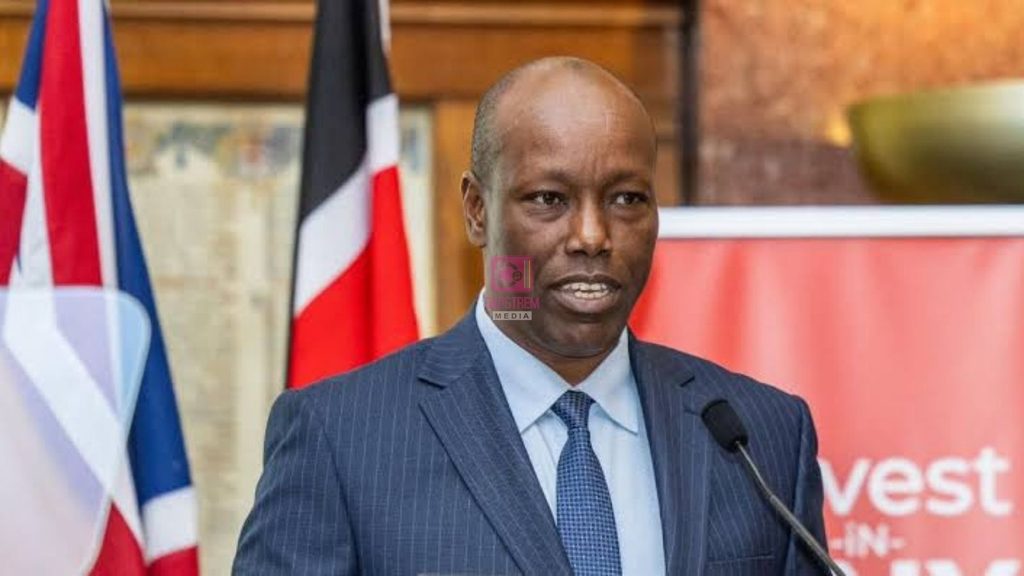
Investments, Trade and Industry Cabinet Secretary Lee Kinyanjui said visa-free entry into Kenya does not automatically give foreign nationals the right to work, trade or operate businesses in the country.

The clarification comes days after President William Ruto directed authorities to take action against foreign nationals involved in small-scale trading and hawking activities that compete directly with local traders.
Foreigners Without Work Permits Face Crackdown
According to Kinyanjui, the government has identified cases where some foreigners entered Kenya under tourist or investor arrangements before engaging in activities that fall outside the conditions of their immigration status.

The CS said there was a need to ensure that foreigners involved in retail and local trade comply with Kenya’s work permit and other regulatory requirements.
The government has stressed that being allowed to enter Kenya without a visa or electronic travel authorisation does not amount to permission to work or run a business.
Foreign nationals who want to engage in employment, trade or commercial activities must therefore meet the applicable immigration and regulatory requirements.
Government Promises Transparent Enforcement
One of the key messages from the government is that enforcement will not be carried out arbitrarily.
Kinyanjui said implementation would be undertaken in accordance with the law and in an orderly and transparent manner, while taking into account Kenya’s obligations under the East African Community.
This clarification is important because the government’s position has generated questions about how the directive will affect foreigners who already have valid permits and licences.
Foreign Affairs Principal Secretary Korir Sing’oei has also stated that foreign nationals who possess the necessary work permits and licences remain legally protected to operate businesses in Kenya.
The government has therefore sought to distinguish between foreigners operating legally and those engaging in commercial activities without the required approvals.
Ruto’s Directive on Small Businesses
President Ruto raised the issue on September 2 while meeting micro, small and medium-sized enterprise traders at State House in Nairobi.
He said the government needed to protect Kenyan traders from unfair competition in small-scale activities such as hawking and retail.
Ruto directed authorities to begin enforcement against foreign nationals involved in such businesses, while arguing that Kenya remains open to foreign investment that brings capital, creates jobs and contributes to economic growth.
The directive has since attracted significant attention, particularly among foreign traders from other African countries.
However, the government has emphasized that the move should not be interpreted as a blanket ban on foreign businesses.
Visa-Free Entry Does Not Mean Work Permission
Kenya introduced a visa-free entry regime for visitors from around the world in January 2024. The country later removed electronic travel authorisation requirements for citizens of most African countries in January 2025.
Kinyanjui said the policy has supported tourism and investment and that Kenya remains committed to it.
However, he explained that easier entry into the country is separate from permission to work or conduct commercial activities.
The government says some visitors have been misusing their immigration status by entering Kenya as tourists or investors and subsequently engaging in local trade without the appropriate approvals.
Foreign nationals found violating applicable visa provisions could have their visas revoked in accordance with the law.
EAC Commitments Also Considered
The enforcement process could be particularly important for citizens of East African Community member states.
Kenya is part of the EAC Customs Union and has obligations relating to the free movement of people and goods within the region.
Kinyanjui said these regional commitments would be taken into account as the government implements immigration and work permit requirements.
This means the enforcement process will have to balance the government’s efforts to protect local traders with Kenya’s regional commitments and its broader policy of encouraging legitimate investment.
Police Warn Against Attacks on Foreigners
As the government clarifies its position, police have also warned members of the public against targeting foreigners perceived to be operating businesses illegally.
The Star reported that Nairobi police said they had not received reports of harassment of foreign nationals following the government’s announcement. Authorities also urged the public not to take enforcement into their own hands.
This reinforces the government’s position that enforcement should be handled through the appropriate legal and administrative channels.
The crackdown is therefore expected to focus on compliance with immigration, work permit and business regulations rather than allowing members of the public to confront suspected offenders.
What Happens Next?
The government’s latest clarification comes as enforcement begins around the September 7 deadline announced after Ruto’s remarks.
Authorities are expected to examine the documentation and immigration status of foreigners involved in affected sectors.
At the same time, questions remain about the precise scope of the directive and how it will apply to foreigners who already possess valid permits and licences.
The government has reiterated that legitimate foreign investors and businesses remain welcome in Kenya, provided they operate within the law.
The focus, according to Kinyanjui, is on ensuring compliance and preventing misuse of immigration arrangements.
The coming days are therefore likely to provide more clarity on how the enforcement exercise will be implemented across Kenya.
For now, the government’s message is that foreigners engaging in employment, retail, hawking or other commercial activities must have the appropriate documentation, while those operating legally will continue to be protected under Kenyan law.
The government says the enforcement will be orderly, transparent and guided by the law, as Kenya seeks to protect opportunities for local traders while maintaining its commitments to legitimate foreign investment and regional trade.