CS Mutahi Kagwe Pushes Digital IDs for Livestock to Curb Theft and Strengthen Animal Traceability
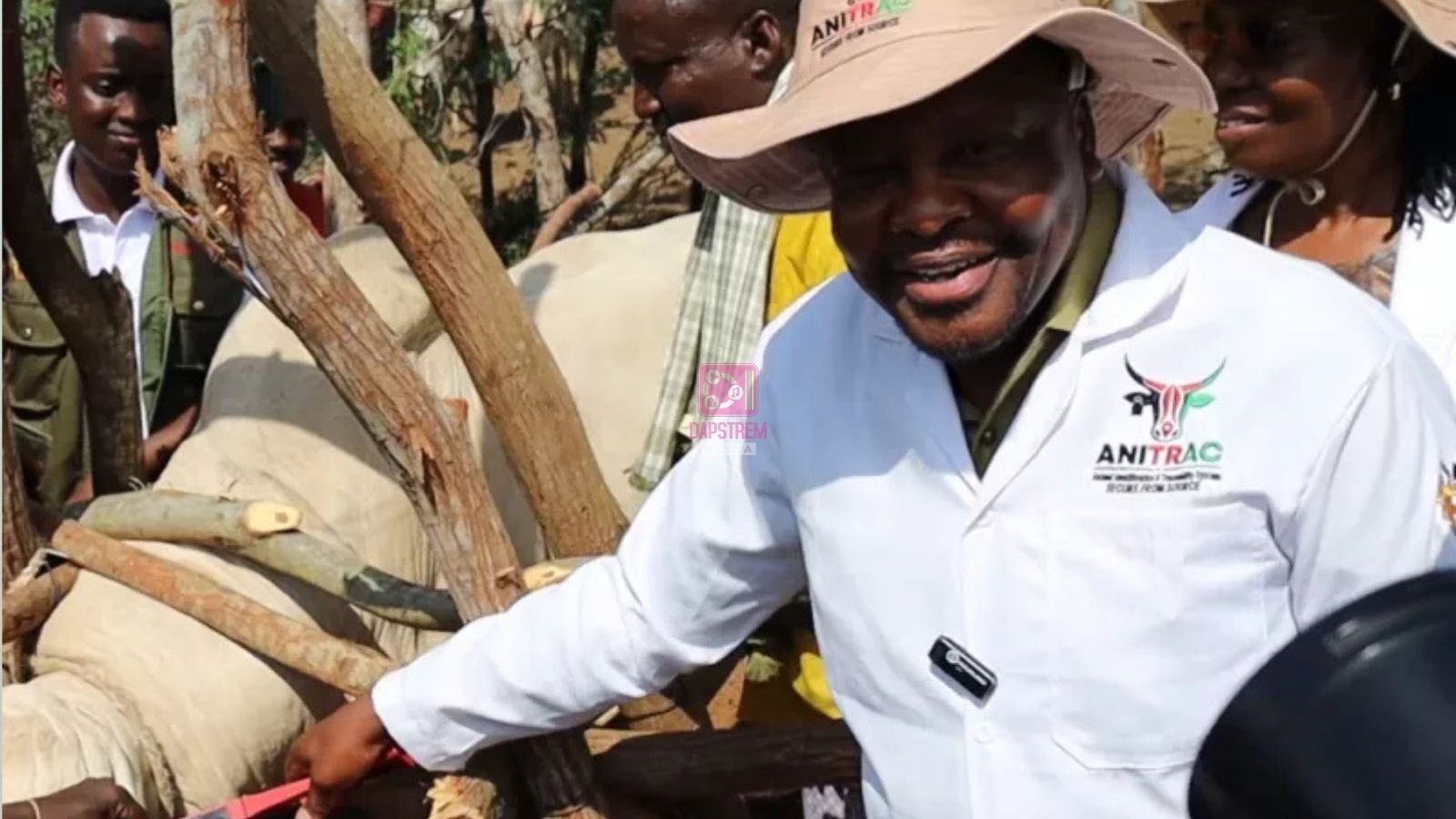
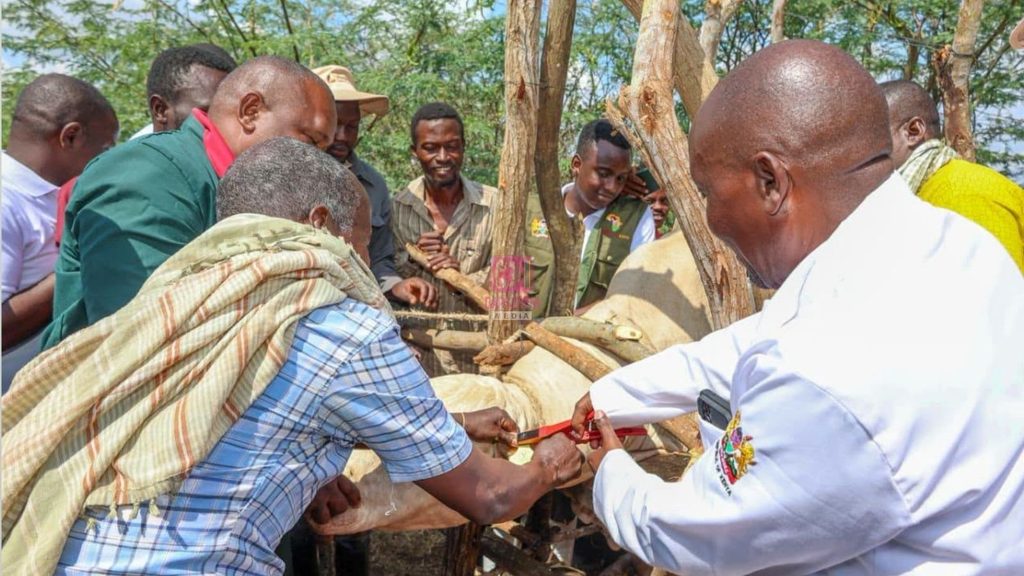
Agriculture Cabinet Secretary Mutahi Kagwe is pushing for the adoption of digital identification systems for livestock as Kenya explores new ways of tackling the persistent problem of livestock theft across the country.
The proposed system would give animals such as cows, goats and sheep unique digital identities, making it easier for authorities, farmers, traders and other stakeholders to establish ownership and trace animals as they move through the livestock value chain.
The initiative is part of broader efforts to modernise Kenya’s livestock sector by using technology to improve identification, traceability and accountability. For farmers who have lost animals to thieves, the proposal could provide an important tool for recovering stolen livestock and preventing criminals from easily selling animals whose ownership cannot be established.
Livestock theft remains a major concern in several parts of Kenya, particularly in pastoral and agricultural communities where cattle, goats and sheep represent an important source of income and wealth. For many households, livestock are not simply farm animals. They provide food, milk, meat, breeding opportunities and income for paying school fees, medical expenses and other household needs.
When an animal is stolen, therefore, the financial consequences can be significant.
The proposed digital identification system seeks to address one of the biggest challenges associated with livestock theft: proving ownership and tracking animals after they have changed hands.
Under a reliable identification system, each animal could have a unique digital record containing information that allows authorities and authorised stakeholders to identify it. Such information could potentially include details about the animal, its owner and relevant movements or transactions.
This would make it more difficult for stolen livestock to disappear into the market unnoticed.
The proposal comes as Kenya increasingly embraces digital technology across different sectors of the economy. From digital government services to electronic payments and digital health records, technology is becoming an important part of how public services and commercial activities are managed.
The livestock sector could similarly benefit from digital transformation.
For years, livestock identification in many parts of Kenya has relied heavily on traditional methods such as branding, ear tags and physical records. While these approaches remain useful, they can have limitations, particularly when animals move over long distances or pass through several markets.
A digital system could complement existing identification methods by creating a centralised record that can be accessed by authorised users.
For farmers, this could make it easier to demonstrate that a particular animal belongs to them.
For traders, it could provide greater confidence that animals being purchased have legitimate ownership records.
For law enforcement officers, it could offer another tool for identifying animals suspected to have been stolen.
And for government agencies, it could improve the collection of information about livestock populations and movements across the country.
The potential benefits extend beyond fighting theft.
A comprehensive livestock identification system could help Kenya strengthen disease surveillance and improve the management of animal health. When authorities know where animals originate from and where they have moved, they can respond more effectively when outbreaks of livestock diseases occur.
This could become particularly important in pastoral areas where animals frequently move between counties and across borders in search of pasture and water.
Livestock mobility is an essential part of pastoralism, but it can also make disease control and animal tracking more difficult.
Digital identification could help authorities understand these movements and respond more quickly when necessary.
The technology could also support livestock trade.
Kenya has a significant livestock economy, with cattle, sheep and goats traded across counties and through numerous markets. As the government seeks to increase the commercial value of agriculture, better traceability could help strengthen confidence in the sector.
Consumers, meat processors and exporters increasingly want to know where animals and animal products come from.
A reliable traceability system could therefore help Kenya meet market requirements and potentially improve opportunities for farmers seeking to access higher-value markets.
For pastoral communities, however, the most immediate benefit would likely be improved protection against livestock theft.
In areas where livestock raids and theft have historically caused conflict, losing animals can have consequences beyond financial loss. Livestock can represent a family’s accumulated wealth and social security.
The theft of a large herd can leave a household economically vulnerable for years.
Recovering stolen animals can also be extremely difficult when they are quickly moved across county or national borders.
Criminals can sell animals in distant markets, change their physical appearance or mix them with legitimate herds.
Without reliable identification, tracing ownership becomes complicated.
Digital records could make such transactions more difficult.
If a trader attempts to sell an animal whose digital identity is associated with another owner, the transaction could potentially raise an alert or provide authorities with information about its history.
This would require the system to be properly integrated into livestock markets, slaughterhouses, transport systems and other points where animals change ownership.
The effectiveness of the initiative will therefore depend heavily on implementation.
Simply assigning digital identification numbers to animals will not solve livestock theft on its own.
The entire livestock value chain would need to participate.
Farmers would need to register their animals.
Traders would need to verify ownership before buying livestock.
Transporters would need appropriate documentation.
Markets would need systems for checking animal identities.
Abattoirs would need to confirm that animals arriving for slaughter are legitimately sourced.
Law enforcement agencies would need access to relevant information when investigating theft.
Without such coordination, criminals could simply bypass registered markets and continue using informal channels.
The government would therefore have to invest in infrastructure, training and public education.
Farmers, particularly those in remote areas, would need to understand how the system works and what they are required to do.
This is important because Kenya’s livestock sector includes both large commercial farms and millions of small-scale farmers and pastoralists.
A system designed without considering the realities of rural communities could face resistance or low adoption.
Cost will also be an important consideration.
Farmers may be concerned about whether they will have to pay to register every animal and whether the process will create additional administrative burdens.
The government would need to make the system affordable and accessible, particularly for smallholder farmers who own only a few animals.
Mobile technology could potentially play a major role in making the system easier to use.
Kenya has extensive mobile-phone penetration, and many rural residents already use mobile money and digital government services.
If livestock identification information could be linked to simple mobile-based platforms, farmers and traders might be able to verify ownership without travelling long distances to government offices.
However, digital systems also raise questions about data security and privacy.
Livestock ownership information can have significant financial value, particularly for large herds. The government would therefore need to ensure that records are protected from unauthorised access, manipulation or theft.
There would also need to be clear rules about who can access livestock information and under what circumstances.
Another challenge will be ensuring that the technology works in remote areas.
Some of Kenya’s major livestock-producing regions have limited internet connectivity and electricity infrastructure.
A digital identification system that depends entirely on constant internet access could exclude some of the communities that need it most.
The government may therefore need to develop systems capable of working offline and synchronising information when connectivity becomes available.
Training will be equally important.
Farmers, veterinary officers, livestock officers, traders and law enforcement personnel will all need to understand how to use the technology.
If officials cannot properly update or verify records, the system could quickly become unreliable.
The initiative also presents an opportunity to improve Kenya’s livestock statistics.
Accurate information about the number and location of livestock can help the government plan vaccination programmes, veterinary services, drought responses and other interventions.
For example, during periods of severe drought, authorities could use reliable livestock data to identify areas with large animal populations and prioritise emergency interventions.
The same information could help in planning water infrastructure, livestock markets and veterinary centres.
Digital identification could also strengthen responses to livestock diseases.
When an outbreak occurs, authorities need to know where potentially infected animals have been and which animals may have come into contact with them.
Without proper records, tracing animal movements can be extremely difficult.
A digital system could make contact tracing more efficient and allow veterinary authorities to respond more quickly.
This could reduce the spread of diseases and protect both farmers and the wider livestock economy.
The proposal also comes at a time when Kenya is seeking to modernise agriculture and increase its contribution to the economy.
The livestock industry provides livelihoods for millions of Kenyans and supports farmers, traders, transporters, meat processors, veterinary professionals and other businesses.
Improving traceability could therefore have a wider economic impact.
If farmers have greater confidence that their animals can be identified and protected, they may be more willing to invest in improving their herds.
Better records could also help financial institutions assess livestock-related businesses and potentially improve access to credit.
Livestock can represent significant household wealth, but proving ownership and accurately valuing herds can sometimes be difficult.
Reliable digital records could eventually provide financial institutions with better information when assessing farmers.
There is also the possibility of improving insurance products.
Livestock insurance depends partly on being able to establish what animals are covered and who owns them.
A reliable identification system could make it easier to insure individual animals or herds and process claims when animals are lost.
The fight against livestock theft, however, will remain the central motivation for many communities.
In areas where livestock theft has contributed to insecurity and conflict, better identification could complement other government measures aimed at improving security.
Police and other security agencies could use livestock records alongside traditional investigations to trace stolen animals.
Cross-county cooperation would also be necessary.
A stolen cow does not stop being identifiable simply because it crosses a county boundary. If the system is national, authorities in different counties could potentially verify the same animal’s ownership information.
The same principle could apply to animals moved across Kenya’s borders.
Cross-border livestock trade is common in East Africa, and animals can move between Kenya and neighbouring countries.
Regional cooperation could therefore become important if digital livestock identification is to provide comprehensive protection.
Kenya could potentially work with neighbouring countries to develop compatible identification and verification systems.
Such cooperation would make it more difficult for criminals to exploit borders to conceal stolen animals.
The initiative could also help address concerns around illegal livestock markets.
Animals obtained through theft can enter legitimate markets and eventually reach consumers without their origins being properly established.
Improved traceability could make it harder for stolen animals to be introduced into the formal supply chain.
This could benefit legitimate traders by creating a more transparent market.
Farmers could also potentially receive better prices if buyers have greater confidence in the quality and origin of livestock.
However, the government will need to ensure that digital identification does not create unnecessary bureaucracy.
One of the reasons informal livestock markets remain popular is convenience.
If registering, transporting or selling an animal becomes too complicated, some traders and farmers may continue operating outside the formal system.
The system should therefore be designed to make compliance easier rather than simply introducing additional requirements.
The success of the programme will ultimately depend on whether farmers see tangible benefits.
If farmers register their animals but rarely recover stolen livestock or receive useful services from the system, they may lose confidence in it.
On the other hand, if digital identification helps recover stolen animals, improves disease management and makes livestock transactions safer, adoption could grow naturally.
Public awareness will therefore be critical.
The government will need to explain the system clearly and demonstrate how it will benefit farmers.
Farmers should understand that digital identification is not simply another government registration exercise but potentially a tool for protecting their investments and improving access to livestock services.
There will also need to be safeguards against misuse.
No farmer should fear that livestock information could be used unfairly against them or that errors in a digital database could result in legitimate animals being seized.
There must be mechanisms for correcting records, resolving ownership disputes and appealing decisions.
Clear procedures will be particularly important in communities where livestock ownership can sometimes involve family, clan or communal arrangements.
Technology should support traditional livestock systems where appropriate rather than ignoring them.
As the proposal gains attention, its implementation will therefore be watched closely by farmers and livestock stakeholders.
The idea of giving cows, goats and sheep digital identities may initially sound unusual, but it reflects a broader global movement towards traceability in agriculture.
Consumers increasingly want to know where food comes from, governments need better data to manage animal health and farmers need stronger protection for their assets.
For Kenya, digital livestock identification could potentially address all three challenges at the same time.
The country’s livestock sector is too important to remain dependent on fragmented records and systems that can be easily bypassed.
If properly implemented, digital identification could help build a more secure, transparent and modern livestock industry.
For a farmer who has spent years building a herd, knowing that every animal can be identified and traced could provide an important sense of security.
For law enforcement, having reliable ownership information could make investigations more effective.
For traders, it could create greater confidence in transactions.
For consumers and processors, it could improve traceability.
And for government planners, it could provide better data for managing one of Kenya’s most important economic sectors.
The proposal by CS Mutahi Kagwe therefore represents more than an attempt to introduce technology into livestock farming. It reflects a broader effort to bring Kenya’s agricultural systems into the digital age while addressing a problem that has affected farming communities for generations.
The real test, however, will be implementation.
Kenya will need to ensure that the technology is affordable, accessible and reliable. It will need to train farmers and officials, protect digital records and create strong links between registration systems, livestock markets, veterinary services, law enforcement and border agencies.
Most importantly, farmers must be placed at the centre of the programme.
If the system is designed around their needs and delivers practical benefits, digital identification could become an important tool in protecting livestock and strengthening the country’s agricultural economy.
For thousands of Kenyan farmers and pastoralists who depend on cows, goats and sheep for their livelihoods, the promise is straightforward: an animal should be easier to identify, its ownership easier to prove and its movement easier to trace.
As Kenya continues to explore the proposal, the country’s livestock sector could be heading towards a future where even a cow, goat or sheep has a digital identity—and where technology becomes another line of defence against the criminals who have long profited from livestock theft.