Over 100 Feared Dead as Landslide Triggers Devastating Goldmine Collapse in Central African Republic
More than 100 people have been killed after a devastating landslide caused an artisanal goldmine to collapse in western Central African Republic, in one of the country’s deadliest mining disasters in recent years.
The tragedy occurred at a gold-mining site in Zamboye village, in the Nana-Mambéré prefecture near the border with Cameroon. The incident happened on Tuesday, August 18, with rescue and recovery operations continuing as authorities and local volunteers searched through the rubble for additional victims and possible survivors.
Initial reports from the scene gave conflicting figures as rescuers struggled to reach the collapsed mining site. At first, local authorities reported that at least 30 bodies had been recovered. As rescue operations progressed, however, the death toll rose sharply, with a local Red Cross volunteer and other officials saying more than 100 bodies had been recovered. Several other people were reportedly still missing or trapped beneath the rubble, raising fears that the final death toll could be even higher.
The scale of the disaster has sent shockwaves through the local community and highlighted once again the dangers faced by thousands of people who depend on artisanal mining for their livelihoods across Africa.
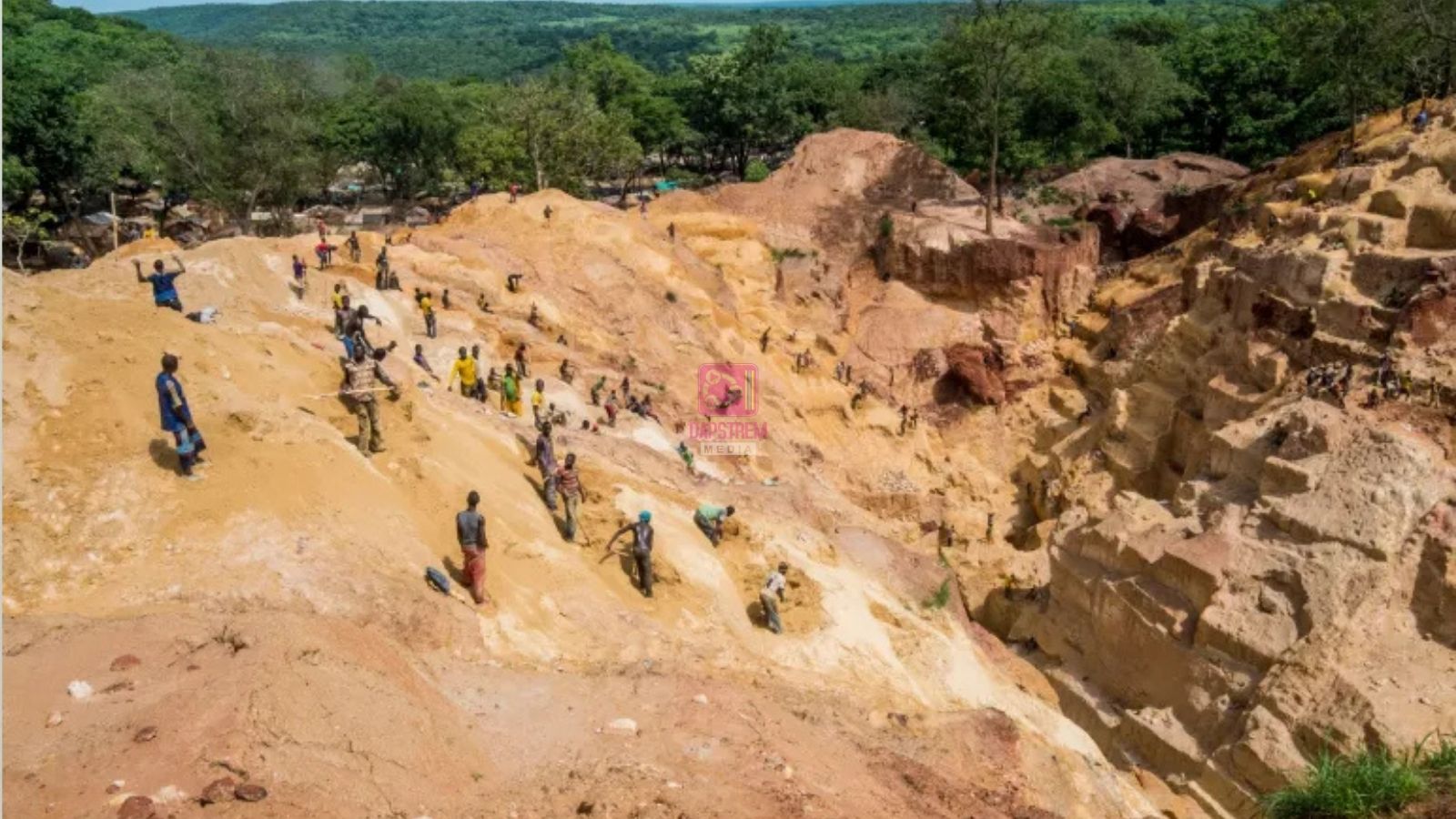
The Zamboye mine was described as a low-tech artisanal operation, meaning miners worked using relatively basic equipment and methods rather than the sophisticated machinery and extensive safety systems normally associated with large-scale industrial mining. Reports indicate that a landslide caused several underground tunnels to collapse, burying miners who were working at or near the site.
The exact circumstances surrounding the collapse remain under investigation.
For families in Zamboye and surrounding communities, however, the immediate concern is no longer the cause of the accident but the devastating loss of life.
Many of those who went to the mine were young people trying to earn enough money to support themselves and their families. The mining site represented an opportunity to make a living in a region where formal employment opportunities are limited.
The tragedy has therefore exposed a painful reality faced by many communities in mineral-rich parts of Africa: the same resources that offer a potential route out of poverty can also become a source of enormous danger when extraction takes place without adequate safety measures.
A member of the Zamboye youth council described the victims as people who had gone to the mines in an effort to help their families escape economic hardship. The collapse has consequently affected not just individual miners but entire households that depended on income generated at the mining site.
The rescue operation has also proved extremely challenging.
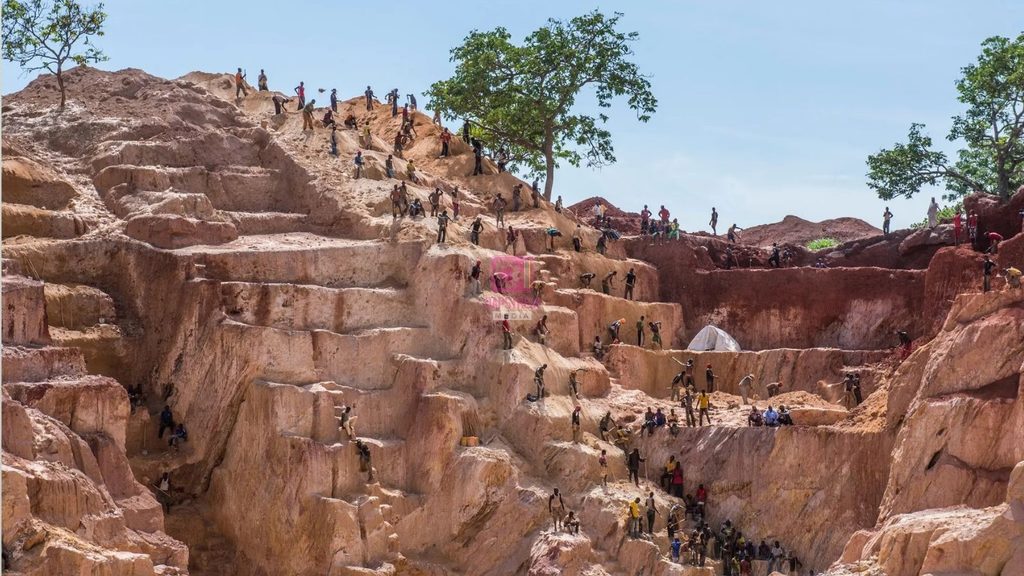
After the landslide, local residents, miners and Red Cross volunteers joined efforts to search for people buried under the earth and debris. Emergency workers have been working in difficult conditions, with unstable ground and limited equipment making it dangerous and complicated to reach deeper sections of the collapsed mine.
Reports indicate that some victims were still trapped beneath the rubble after the initial rescue efforts, while some survivors were taken for medical treatment.
The lack of specialised equipment has been another major obstacle.
Artisanal mining sites are often located in remote areas where emergency services are limited. When a collapse occurs, communities may have to depend on local residents and miners to begin digging through the rubble before professional rescue teams can arrive.
That can significantly reduce the chances of finding people alive.
The first hours after a mine collapse are critical because people trapped underground can face suffocation, serious injuries, dehydration and further collapses.
In Zamboye, rescuers have continued working despite the difficult circumstances, but hopes of finding additional survivors have diminished as the operation has progressed.
The incident has also raised questions about the safety conditions under which artisanal miners operate.
Artisanal and small-scale mining is widespread across Africa and provides income for millions of people. Gold, diamonds and other minerals are extracted by individuals and small groups who often lack access to sophisticated machinery, geological surveys, protective equipment and professionally engineered mining structures.
For many workers, the risks are accepted because the alternative may be unemployment or extreme poverty.
That economic reality makes the problem particularly difficult to address.
Simply shutting down dangerous mining sites may remove an immediate safety risk, but it can also eliminate the only source of income available to hundreds or thousands of families.
The long-term solution therefore requires a combination of regulation, safer mining practices, alternative employment opportunities and greater support for communities that depend on small-scale mining.
The Central African Republic is rich in natural resources, including gold, diamonds and other minerals. Yet the country has struggled to translate its mineral wealth into broad-based economic prosperity.
Decades of political instability and conflict have weakened state institutions and made regulation of remote mining areas particularly challenging.
Informal and illegal mining operations have consequently continued to operate in parts of the country.
The Zamboye disaster illustrates the human consequences of that situation.
When mining activities take place outside effective regulatory oversight, there may be no professional assessment of whether a particular site is structurally safe.
There may also be inadequate monitoring of underground tunnels, insufficient reinforcement and little preparation for emergencies.
Miners may work deep underground without helmets, protective clothing, ventilation systems or reliable communication equipment.
A collapse can therefore become catastrophic within seconds.
The tragedy is also a reminder that mining disasters are rarely caused by one factor alone.
A landslide may trigger a collapse, but the scale of the resulting deaths can be influenced by the design of the mine, the number of people underground, the availability of emergency equipment and whether safety warnings were followed.
Investigators will therefore need to establish exactly what happened at Zamboye.
Authorities will be expected to determine whether the mine had been operating legally, whether safety requirements were being followed and whether there had been previous warnings about unstable ground.
They will also need to establish whether the mining site had appropriate permits and whether local authorities were aware of the scale of operations.
These questions are important because the disaster should not simply be treated as an unavoidable natural event.
If human decisions contributed to the scale of the tragedy, those factors must be identified so that similar disasters can be prevented.
The investigation could also provide an opportunity to examine the broader state of artisanal mining in the Central African Republic.
The country has experienced repeated mining accidents, demonstrating that the problem is not limited to a single site.
The latest disaster is reported to be among several mining-related incidents recorded in CAR this year.
That pattern should concern authorities.
Each mining accident represents not only a loss of life but also a warning about weaknesses in regulation, safety education and emergency preparedness.
For the families of the victims, the consequences will extend far beyond the immediate tragedy.
Many households may suddenly lose their primary breadwinner.
Children could lose parents.
Parents could lose sons and daughters.
Entire families could be pushed deeper into poverty because the person providing income has died.
This makes the economic impact of the disaster particularly severe.
Artisanal miners often work on a daily or short-term basis, meaning their income is directly connected to their ability to access the mining site.
When a mine collapses, the consequences therefore affect both lives and livelihoods.
The psychological impact will also be significant.
Residents who witnessed the collapse or participated in the recovery operation may have experienced traumatic scenes.
Families waiting for confirmation about missing relatives are likely to endure uncertainty and distress as rescue teams continue searching.
Communities will also have to deal with the difficult task of identifying victims and arranging burials.
The authorities face a major responsibility to ensure that victims are identified as accurately as possible.
This is especially important because the mining area is near the Cameroon border and reports indicate that some of the victims may have been Cameroonian nationals.
The Cameroonian government has confirmed that several of its citizens were among those killed.
The cross-border nature of the tragedy adds another dimension to the response.
People often move across borders in search of employment opportunities, particularly in regions where communities have longstanding economic and social connections.
The mining sector is no exception.
The deaths of Cameroonian nationals mean that authorities in both countries may have to coordinate with families and local officials during the identification and repatriation process.
The disaster therefore affects communities on both sides of the border.
Beyond the immediate rescue operation, the Central African Republic government will face questions about what happens next.
There will be pressure to investigate the disaster and establish responsibility where necessary.
Authorities may also face calls to strengthen regulation of artisanal mining and improve safety standards.
Such measures could include requiring miners to follow approved excavation methods, conducting geological assessments before mining begins and providing protective equipment and training.
Governments could also establish emergency response systems specifically designed for remote mining communities.
But enforcement remains one of the biggest challenges.
In many parts of Africa, informal mining operations are spread across large and remote territories.
Government officials may not have enough personnel or resources to monitor every site.
Some miners may also avoid official registration because they fear taxes, licensing fees or restrictions on their activities.
This creates a cycle in which miners remain outside the formal system, making it difficult for authorities to regulate them effectively.
Formalising artisanal mining could provide one possible solution.
If miners are registered and organised into cooperatives, authorities may have a better opportunity to provide training, enforce safety standards and monitor production.
Miners could also potentially gain access to financing and improved equipment.
Formalisation could therefore address both the safety problem and some of the economic challenges that push people into dangerous mining conditions.
However, it would require cooperation between governments, mining communities and industry stakeholders.
It would also require miners to trust authorities.
If formalisation is viewed simply as a way to collect taxes or impose restrictions, workers may continue operating outside the system.
Authorities would need to demonstrate that registration comes with tangible benefits.
The tragedy in Zamboye should also encourage a wider conversation about the value of mineral resources.
Gold can generate enormous wealth, but the people extracting it often receive only a small share of that value.
This imbalance is particularly visible in artisanal mining communities.
Workers take significant physical risks while operating in difficult conditions, yet they may have little financial security.
The question is therefore not only how governments can make mining safer but also how they can ensure that communities benefit more fairly from the natural resources beneath their land.
For the Central African Republic, that question is particularly important.
The country has vast mineral potential, but instability and weak infrastructure have prevented many communities from benefiting fully from that wealth.
Responsible mining could potentially provide jobs, government revenue and economic development.
Unsafe and unregulated mining, however, can result in environmental damage, exploitation and loss of life.
The Zamboye disaster demonstrates the human cost of failing to address those risks.
As recovery teams continue working at the site, the priority remains finding anyone who may still be alive and recovering those who have died.
The final death toll will only become clear once the search operation is completed.
Authorities will also need to provide accurate information to families and the public as the recovery continues.
At a time of tragedy, misinformation can cause additional suffering.
Families should receive confirmation through official channels rather than relying on rumours circulating through social media or informal networks.
The same caution should apply to reports about the cause of the collapse.
While officials have linked the disaster to a landslide and reports indicate that several underground tunnels may have given way, the full circumstances still need to be established through investigation.
The tragedy has already attracted international attention, with condolences being expressed to the Central African Republic and the families of those who died.
But once the immediate attention fades, the country will still have to confront the deeper issues exposed by the disaster.
How many other miners are currently working in similarly dangerous conditions?
How many mining sites are operating without adequate supervision?
How many families depend on income from these mines?
And what can be done to ensure that people do not have to choose between extreme poverty and dangerous work?
These questions cannot be answered by rescue operations alone.
They require long-term investment in rural communities, employment opportunities, mining regulation and safety education.
For the miners who died in Zamboye, the tragedy is a stark reminder of the risks they faced every time they entered the earth in search of gold.
They were not simply numbers in a death toll.
They were workers, parents, children, spouses, siblings and members of communities.
They went to the mine because they needed to earn a living.
The scale of the disaster makes that human dimension impossible to ignore.
More than 100 lives have reportedly been lost, while others have been injured or remain unaccounted for.
The final number could rise as rescue teams continue removing debris and searching areas that remain inaccessible.
For now, Zamboye is a community in mourning.
Families are waiting for news.
Rescuers are still working.
Authorities are facing difficult questions.
And the country is once again confronting the dangerous reality of unregulated artisanal mining.
The tragedy should not end with the recovery of the last body.
It should become a catalyst for action.
The Central African Republic has an opportunity to strengthen mining regulations, improve safety standards and provide artisanal miners with the training and resources they need to work more safely.
Governments across the region can also learn from the disaster and examine similar mining operations within their own borders.
Gold should not come at the cost of human lives.
The wealth beneath Africa’s soil has the potential to transform communities, but that transformation can only be meaningful if the people extracting those resources are protected.
As the search continues at the Zamboye mine, the thoughts of many remain with the families who have lost loved ones and those still waiting for answers.
The disaster is a painful reminder that behind every mining statistic is a human life, and that the pursuit of economic survival should never require workers to accept conditions in which death can come without warning.