
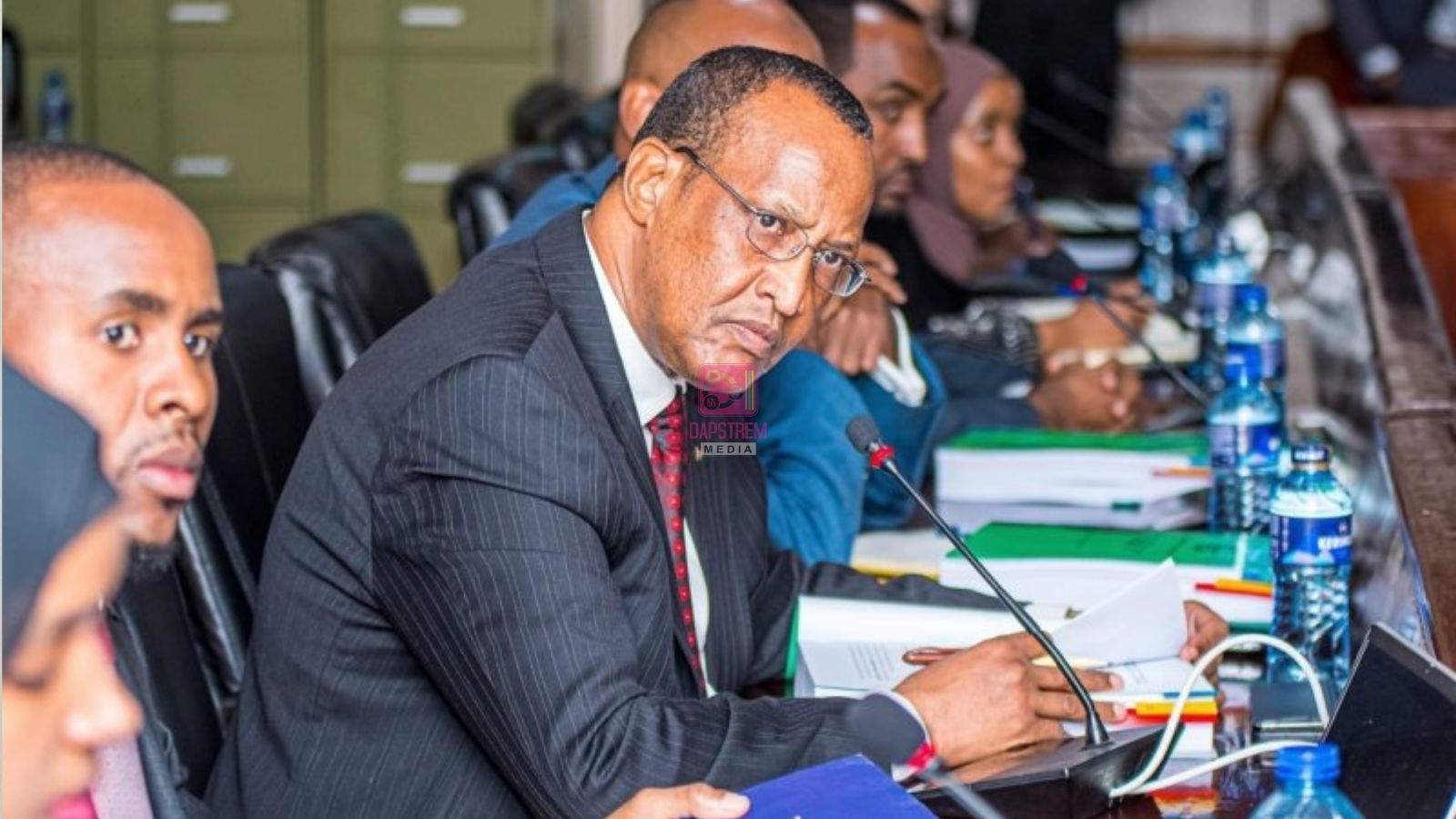
Garissa Strengthens Municipal Autonomy as New Law Gives Towns Greater Control Over Revenue
Garissa County has taken a significant step towards strengthening the financial independence of its municipalities after passing a landmark law designed to give urban centres greater control over revenue collected within their jurisdictions.
The move is expected to change the way municipal finances are managed in Garissa and could have far-reaching implications for service delivery, urban development and accountability across the county. The legislation comes after years of calls for municipalities to receive greater autonomy in managing their affairs and resources.
The new law is particularly significant because municipalities are often the first level of government residents encounter when it comes to everyday urban services. From markets and parking areas to business permits, outdoor advertising, waste management and other local services, municipalities play a direct role in the daily lives of residents and businesses.
Giving them greater control over revenue could therefore allow them to respond more quickly to local needs instead of depending entirely on decisions made at the county headquarters.
The development also comes against the backdrop of longstanding discussions in Garissa over municipal autonomy. In 2024, the Garissa County Assembly raised concerns about budget constraints and delays in the release of funds to municipalities, arguing that greater autonomy could improve resource management, revenue generation, infrastructure development and service delivery. The assembly specifically highlighted Garissa, Dadaab, Masalani and Bura municipalities.
The latest law could therefore be viewed as a continuation of efforts that have been underway for several years to strengthen municipal governance in the county.
For residents, the most important question will be what the new arrangement means in practical terms.
Greater control over revenue should ideally translate into better services.
If municipalities are able to retain and manage a larger portion of the revenue generated from local economic activities, they could potentially have more resources to maintain markets, improve roads and drainage systems, manage waste, upgrade public facilities and support other urban services.
This could also reduce delays that occur when funds have to pass through several layers of government before reaching the level where services are actually required.
The idea behind decentralising revenue management is relatively straightforward: the authorities closest to residents are often better placed to understand the problems affecting those residents.
A municipal administration dealing directly with traders, motorists, property owners and businesses is likely to have a clearer picture of the challenges affecting a particular town than an office located far away.
If properly implemented, greater financial autonomy could allow municipal officials to prioritise projects based on local needs rather than applying a uniform approach across different urban centres.
Garissa’s municipalities operate in areas with different economic activities and challenges. What is required in Garissa town may not necessarily be the same as what is needed in Dadaab, Bura or Masalani.
A decentralised financial system could therefore provide municipalities with greater flexibility to respond to those differences.
The move is also significant because Garissa has been working to improve its own-source revenue collection.
Recent data from the Controller of Budget shows that Garissa County collected Sh317.85 million in own-source revenue, including facility improvement funds, during the first half of the 2025/26 financial year. That represented a 99 per cent increase from Sh160.09 million collected during the corresponding period of the previous financial year.
The figures demonstrate that revenue collection is already an important part of Garissa’s financial strategy.
However, the Controller of Budget also noted that an executive order giving municipalities authority to collect certain fees and levies had affected the performance and reporting of some county revenue streams.
The new legal framework could therefore be important in clarifying how revenue collected by municipalities is handled, accounted for and utilised.
That clarity will be essential.
Giving municipalities greater control over money also creates a greater responsibility to account for that money.
Financial autonomy cannot be separated from transparency.
Residents will want to know how much money their municipality collects, where it is deposited, what projects it finances and whether the funds are being used for the purposes for which they were collected.
Municipal leaders will consequently face greater scrutiny.
The success of the new law should not simply be measured by how much revenue municipalities collect. It should also be measured by whether that revenue results in visible improvements in the lives of residents.
A municipality that collects more money but continues to struggle with uncollected garbage, poor drainage, deteriorating roads and inadequate public facilities would not necessarily be considered successful.
The ultimate objective should be better urban management.
Garissa town, as the county’s main urban centre, has experienced significant growth over the years. Population growth and expanding commercial activity inevitably increase pressure on infrastructure and public services.
More businesses mean more demand for markets, roads, parking spaces, sanitation and waste management.
Greater municipal financial control could help authorities respond to those pressures.
It could also encourage municipalities to become more innovative in how they raise revenue.
Instead of relying solely on traditional fees and charges, municipal administrations could explore more efficient and transparent revenue systems.
Digital payment platforms, improved business registration systems and better monitoring of revenue collection could reduce leakages and make it easier for residents to pay for services.
Technology could become an important part of the new system.
Digital revenue collection can make it easier to track payments, generate reports and identify areas where revenue collection is underperforming.
It can also reduce the amount of cash handled by revenue officers, potentially limiting opportunities for corruption and diversion of public funds.
However, technology alone will not solve every problem.
Municipalities will still require competent personnel, effective financial controls and strong oversight mechanisms.
The law will need to be supported by clear regulations and administrative procedures so that there is no confusion over the responsibilities of municipalities and the county government.
Garissa’s existing municipal charter already provides a framework for municipal governance and recognises objectives including efficient and accountable management of municipal affairs, public participation and efficient service delivery.
The new law could strengthen that framework by giving municipalities greater practical control over the resources required to fulfil those responsibilities.
That could mark an important shift from a system where municipalities have responsibilities but limited financial independence.
One of the longstanding challenges facing local governments is the gap between responsibility and resources.
An institution can be given responsibility for maintaining markets or managing waste, for example, but if it does not have timely access to adequate funds, its ability to perform that responsibility becomes limited.
This is why financial autonomy matters.
When resources are available at the point where services are delivered, local authorities can potentially respond more quickly to problems.
A blocked drainage channel may not need to wait for a lengthy approval process.
A damaged market facility could potentially be repaired faster.
Waste collection schedules could be adjusted according to local needs.
Small infrastructure projects could be prioritised based on feedback from residents.
These are the kinds of practical improvements residents will expect to see.
The law could also encourage greater accountability between municipalities and the people they serve.
When residents know that a portion of the revenue they generate through businesses, parking, markets and other activities is directly supporting their local municipality, they may demand clearer explanations about how that money is spent.
That can strengthen public participation.
Residents could become more interested in municipal budgets, development plans and expenditure reports.
Public participation is already a central principle of Kenya’s devolved governance system, and municipal structures provide an opportunity to bring decision-making even closer to communities.
However, greater autonomy must not become an excuse for reduced oversight.
Municipalities should remain subject to county laws, national financial management requirements and appropriate auditing mechanisms.
The Controller of Budget, Auditor-General, county assembly and other oversight institutions will continue to have important roles in ensuring that public funds are properly managed.
This is particularly important because financial decentralisation can create both opportunities and risks.
On one hand, it can improve efficiency and local decision-making.
On the other, it can create additional points where public funds may be mismanaged if controls are weak.
The solution is therefore not to avoid decentralisation but to accompany it with strong accountability.
The new law could also have implications for economic development.
Municipalities with greater control over their revenue may have a stronger incentive to create environments that encourage businesses to operate formally and expand.
A clean, organised and well-maintained market is more attractive to traders and customers.
Reliable waste collection improves public health and makes commercial areas more appealing.
Better roads and parking facilities can make it easier for customers and suppliers to access businesses.
In this way, municipal revenue can become part of a cycle of economic development.
Businesses generate revenue for municipalities.
Municipalities invest part of that revenue in better services and infrastructure.
Improved services create a better business environment.
A stronger local economy then has the potential to generate additional revenue.
That cycle, however, depends on good governance.
If businesses believe that revenue collection is unfair, unpredictable or disconnected from service delivery, compliance may decline.
Municipal authorities will therefore need to demonstrate that taxpayers and businesses are receiving value for their contributions.
This could become one of the biggest tests of the new system.
Garissa’s economic environment is also unique because of the importance of livestock trade and cross-border commerce in the wider region.
The county serves as a major commercial centre for northeastern Kenya, and Garissa town has historically benefited from livestock markets and regional trade.
The municipality’s ability to manage markets and related infrastructure efficiently can therefore have a direct effect on economic activity.
Better municipal management could potentially strengthen the environment in which traders operate.
The new law also arrives at a time when Kenya’s broader devolution system continues to evolve.
County governments have been receiving increasing attention over their ability to raise own-source revenue while still relying heavily on nationally raised revenue.
For the 2026/27 financial year, Parliament approved Sh428 billion as the equitable share for county governments.
That national debate over county financing makes Garissa’s decision particularly relevant.
Counties are under pressure to improve their ability to generate revenue while ensuring that citizens receive quality services.
Municipalities, as urban administrative units within counties, are part of that broader financial picture.
If municipalities can improve revenue collection and management, they could potentially reduce pressure on county resources.
But municipal revenue should complement, rather than replace, the constitutional obligations of county governments.
Residents should not be expected to pay increasingly high fees simply because municipalities have been given more autonomy.
Revenue collection must remain reasonable, transparent and connected to services.
The new law should therefore be accompanied by clear public communication.
Residents need to understand which fees and levies municipalities will collect, how much they are expected to pay and what services the money will support.
Businesses should similarly be provided with clear information to avoid confusion and disputes.
The county government will also need to establish effective coordination mechanisms.
Greater municipal autonomy does not mean municipalities should operate as completely separate governments.
They remain part of the county’s wider governance structure and must work alongside county departments and other public institutions.
Clear division of responsibilities will be essential.
This is especially important in areas where county and municipal functions overlap.
Without clear coordination, residents could potentially face situations where different government departments demand payments for similar services or where agencies disagree over who is responsible for a particular function.
The law should therefore simplify rather than complicate administration.
Another major consideration will be capacity.
Not every municipality has the same level of administrative and financial capacity.
Some may have stronger revenue bases, more personnel and better infrastructure than others.
Garissa County will need to ensure that municipalities receive the technical support necessary to manage their expanded responsibilities.
Training municipal officials in public finance, procurement, revenue administration and urban planning could be critical.
The county will also need to invest in systems that allow municipal revenues and expenditures to be tracked accurately.
This will help prevent disputes over how much each municipality collects and how much it spends.
It will also make it easier for oversight bodies and residents to assess performance.
The passage of the law should therefore be seen as the beginning of a process rather than the end.
The legislation provides the framework.
Implementation will determine whether the promise of greater municipal autonomy becomes reality.
For residents of Garissa, the expectations will be high.
They will want to see cleaner towns, better-managed markets, improved roads, more reliable waste collection and better public facilities.
They will also expect municipal leaders to explain how public money is being used.
For traders and businesses, the hope will be that improved revenue management leads to better commercial infrastructure and a more predictable operating environment.
For the county government, the challenge will be ensuring that the new system improves local services without weakening overall financial discipline.
If successfully implemented, Garissa’s approach could become an example for other counties considering ways to strengthen municipal autonomy.
The debate over how much control municipalities should have over their own finances is not unique to Garissa.
Across Kenya, urban centres are growing and demanding more sophisticated systems of governance.
As populations increase, counties will need to find ways of ensuring that local administrations have the resources and authority required to manage increasingly complex urban environments.
Garissa’s decision could therefore contribute to a wider conversation about the future of municipal governance in Kenya.
The county has already had discussions about granting greater autonomy to Garissa, Dadaab, Masalani and Bura municipalities. Earlier county assembly records specifically linked autonomy to improved resource management, revenue generation, infrastructure development and service delivery.
The latest development suggests that those calls are now translating into concrete legislative action.
The real measure of success, however, will not be the passage of the law itself.
It will be whether residents feel the difference.
If money collected from local businesses, markets, parking and other municipal activities is converted into visible improvements, the new system could strengthen public confidence in devolution.
If revenue increases without corresponding improvements in services, questions about accountability will inevitably follow.
That is why transparency must remain at the centre of implementation.
Municipalities should regularly publish revenue collection figures, budgets, projects and expenditure reports.
Residents should have opportunities to participate in setting priorities.
Oversight institutions should be able to examine municipal accounts and investigate any allegations of financial misconduct.
And officials responsible for managing public resources should be held accountable when funds are misused.
Ultimately, Garissa’s new law represents an important experiment in bringing financial decision-making closer to the people.
The principle behind it is that local authorities should have enough control over locally generated resources to respond effectively to local problems.
For a rapidly growing county like Garissa, that could be transformative.
The opportunity now lies in turning greater financial authority into better governance.
If municipalities use the new powers responsibly, strengthen revenue systems, improve accountability and invest in services that residents can see and feel, the law could become one of the most consequential developments in Garissa’s urban governance.
But if autonomy is not matched with transparency and oversight, the benefits could be limited.
The coming months will therefore be crucial.
Municipal officials, county leaders, businesses and residents will all have a role to play in determining whether the new framework delivers on its promise.
For now, Garissa has made its position clear: municipalities should have a stronger hand in managing the resources generated within their areas.
The next chapter will be about proving that greater control can translate into greater responsibility, better services and stronger local economic development.