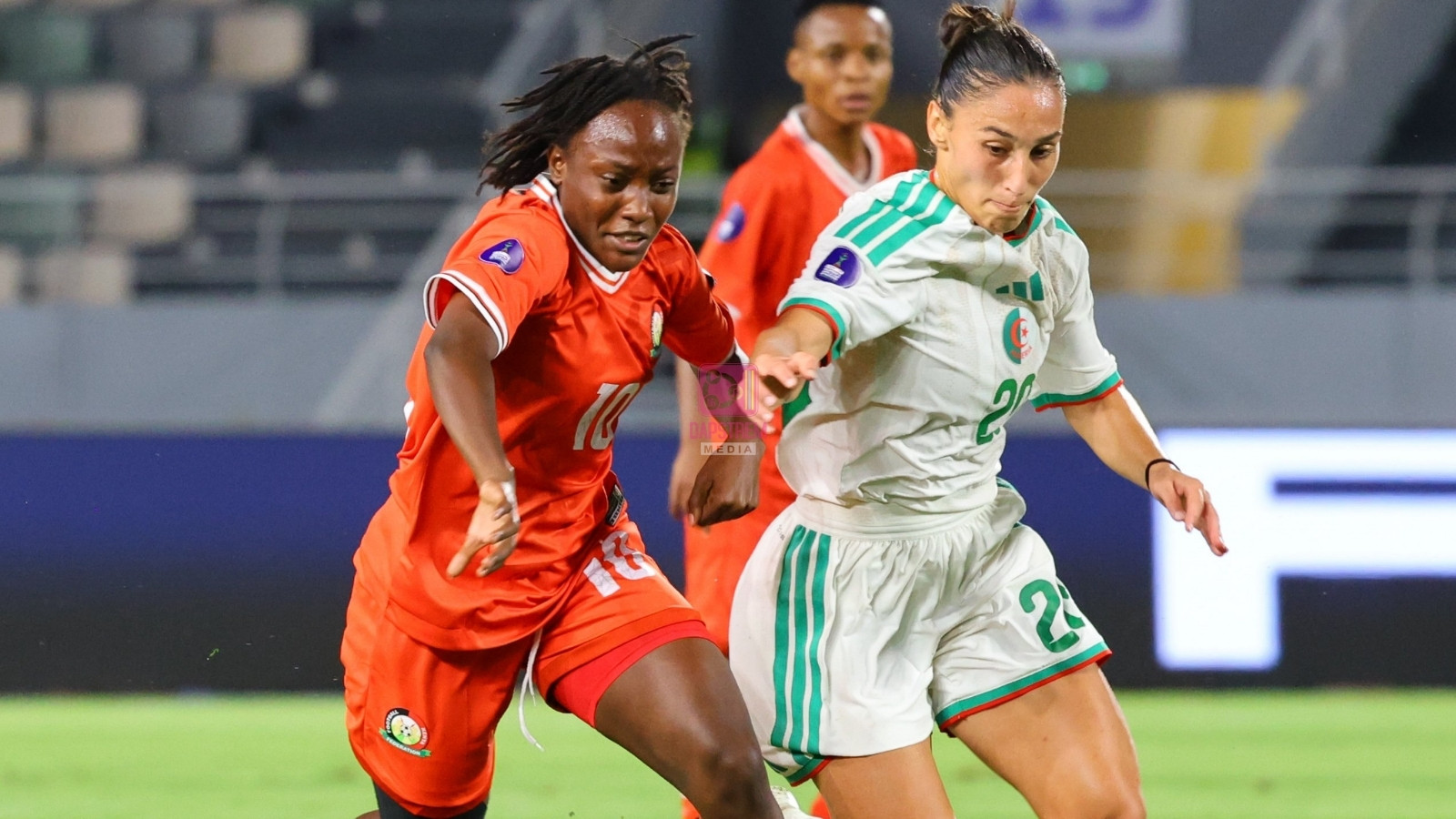
Harambee Starlets bowed out of the 2026 Women’s Africa Cup of Nations (WAFCON) on a disappointing note after suffering a 2-0 defeat to Algeria in their final Group A match, ending a campaign that exposed both the team’s fighting spirit and the gulf that still exists between Kenya and the continent’s elite sides.
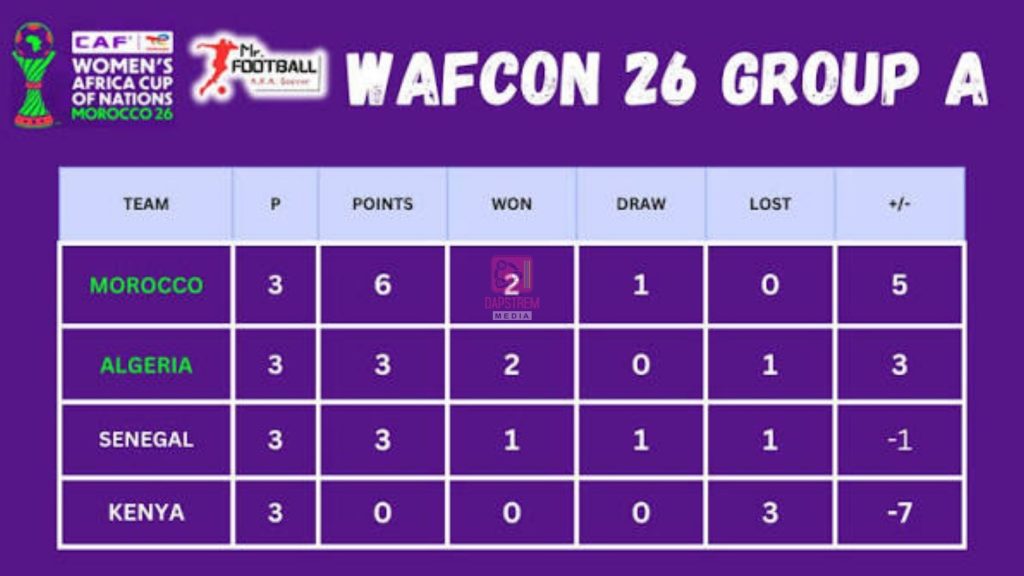
The loss, played in Morocco, condemned Kenya to a third consecutive defeat in the tournament and left Beldine Odemba’s side rooted at the bottom of Group A without a single point. It marked a painful conclusion to the Starlets’ return to WAFCON after a decade-long absence, having qualified impressively by eliminating The Gambia 4-1 on aggregate in the qualifiers.
Kenya entered the match needing a positive result to salvage pride after heavy defeats to hosts Morocco and Senegal in their opening two fixtures. Instead, Algeria produced another disciplined display to secure all three points and strengthen their campaign in the tournament.
The North Africans controlled possession for large spells, frustrating Kenya’s attempts to build attacks while exploiting defensive gaps. Their clinical finishing ultimately made the difference as Harambee Starlets struggled to create clear scoring opportunities.
The defeat completed a miserable group-stage campaign in which Kenya conceded multiple goals and failed to register a victory against three of Africa’s strongest women’s football nations.
The Starlets’ tournament began with a harsh reality check against tournament hosts Morocco, who overwhelmed Kenya 4-0 in the opening match. Despite a bright start that saw Terry Engesha hit the crossbar early in the game, Morocco’s superior quality and experience proved decisive as they scored four unanswered goals to take control of Group A.
Coach Beldine Odemba admitted after the opening defeat that her players struggled to cope with Morocco’s pace, transitions and efficiency in front of goal. However, she remained optimistic that the team could recover in the remaining matches.
That recovery never materialized.
Facing another difficult opponent in Senegal, Kenya once again found themselves chasing the game and were unable to produce the attacking spark that had characterized their qualification campaign.
By the time they faced Algeria in their final fixture, elimination was already looming, with the match offering an opportunity to restore confidence and end the tournament on a positive note. Instead, Algeria’s organization and composure ensured Kenya left Morocco empty-handed.
The campaign nevertheless offered valuable lessons for a squad making only its second appearance at the Women’s Africa Cup of Nations. Kenya’s only previous participation came in 2016, making the 2026 edition an important milestone in the continued growth of women’s football in the country.
Starlets end tournament with three consecutive defeats
Qualification alone represented significant progress after years of rebuilding. The Starlets earned their place in Morocco by defeating The Gambia over two legs, raising hopes that they could compete strongly against Africa’s best.
However, the tournament demonstrated the challenges that remain.
Kenya often showed determination, work rate and moments of attacking intent, but struggled with defensive organization, maintaining possession under pressure and converting chances against technically superior opponents.
The team’s preparations had also presented warning signs. Ahead of WAFCON, Harambee Starlets suffered defeats in friendly matches against Benin and Ivory Coast before also losing one of two warm-up games against Algeria while drawing the other. Those results highlighted areas requiring improvement before the continental finals.
Despite the disappointing outcome, individual performances offered reasons for optimism. Experienced players continued to provide leadership, while younger members of the squad gained invaluable exposure to elite continental competition.
For head coach Beldine Odemba, the tournament provides a foundation on which to build ahead of future regional and continental competitions. Since taking charge, Odemba has overseen improvements in Kenya’s competitiveness, culminating in qualification for WAFCON after a 10-year absence.
Football Kenya Federation is also expected to review the campaign as part of broader efforts to strengthen the women’s national team programme. Greater investment in youth development, more competitive international friendlies and increased support for the domestic women’s league are widely viewed as critical if Kenya is to close the gap on leading African nations.
The experience in Morocco also underlines the importance of sustained exposure to high-level competition. Countries such as Morocco, Algeria and Senegal have invested heavily in women’s football over recent years, improving player development, coaching structures and professional leagues.
For Kenya, maintaining momentum after qualification will be essential. While the results were disappointing, simply returning to WAFCON has given the current generation of players experience that could prove valuable in future qualification campaigns.
The immediate focus now shifts to rebuilding confidence and preparing for upcoming international fixtures, with lessons from Morocco expected to shape the next phase of Harambee Starlets’ development.
Although the 2026 WAFCON campaign ended without a point, it also served as a reminder that Kenya has returned to Africa’s biggest women’s football stage. The challenge moving forward will be transforming qualification success into competitive performances capable of delivering victories at future continental tournaments.