
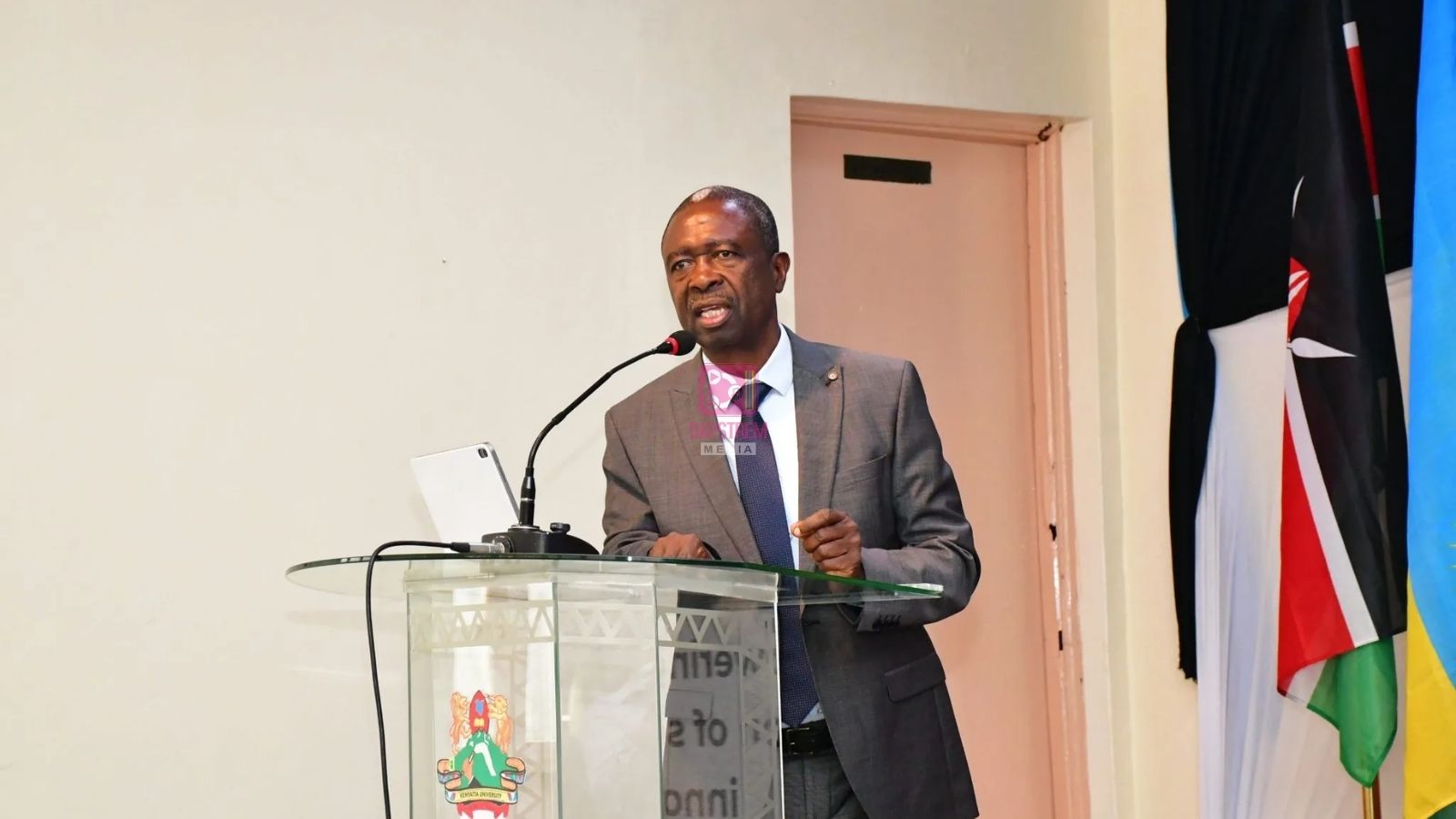
Kenyatta University Appoints Prof. John Okumu as New Vice Chancellor in Major Leadership Transition
Kenyatta University has ushered in a new chapter in its history following the appointment of Prof. John Okumu as its new Vice Chancellor. The appointment marks a significant leadership transition at one of Kenya’s largest and most influential public universities, with expectations running high that the new administration will build on the institution’s achievements while steering it through the evolving landscape of higher education.
The appointment has attracted widespread attention across the country’s education sector, where leadership changes at major universities are closely watched because of their impact on academic excellence, research, innovation, student welfare, and institutional governance. As Prof. Okumu assumes office, he inherits the responsibility of leading an institution that has played a central role in shaping Kenya’s education system for decades.
Kenyatta University is widely recognized as one of East Africa’s leading institutions of higher learning. Over the years, it has produced thousands of graduates who now serve in government, business, healthcare, education, technology, engineering, law, media, and numerous other sectors. Its reputation has been built on a commitment to quality teaching, research, community service, and innovation, making the role of Vice Chancellor one of the most important leadership positions in Kenya’s higher education sector.
The appointment of Prof. Okumu comes at a time when universities worldwide are facing unprecedented changes. Advances in technology, shifting labour market demands, digital learning, increased research collaboration, financial sustainability, international competition, and evolving student expectations continue to redefine the role of higher education institutions. As a result, university leaders today are expected to possess not only academic excellence but also strategic leadership, financial management skills, and the ability to build partnerships that strengthen institutional growth.
For Kenyatta University, the new Vice Chancellor assumes office during a period when universities are increasingly being called upon to produce graduates equipped with practical skills capable of addressing national and global challenges. Employers now demand graduates who possess critical thinking, innovation, adaptability, communication skills, digital literacy, and entrepreneurial abilities alongside traditional academic qualifications.

These changing expectations place universities at the centre of national development. Institutions such as Kenyatta University are increasingly expected to conduct impactful research, support innovation, contribute to policy development, promote industrial partnerships, and prepare graduates capable of driving economic transformation.
Leadership therefore plays a crucial role in determining how effectively universities respond to these emerging demands. The Vice Chancellor is responsible for providing strategic direction while ensuring that academic standards remain high, research output continues to grow, institutional finances remain sustainable, and students receive quality educational experiences.
Prof. Okumu’s appointment is expected to provide renewed momentum for the university’s long-term development agenda. Members of the university community will be looking to his leadership to strengthen teaching quality, improve research productivity, expand international collaborations, modernize infrastructure, and enhance student services.
Research remains one of the defining characteristics of leading universities around the world. Kenyatta University has built a strong reputation in several research fields, contributing valuable knowledge in health sciences, agriculture, education, environmental conservation, engineering, business, information technology, and the social sciences. Strengthening this research culture is likely to remain among the institution’s key priorities under the new leadership.
Innovation is equally important as universities increasingly position themselves as centres for technological advancement and entrepreneurship. Modern higher education institutions are no longer limited to classroom instruction; they also serve as incubators for new ideas, scientific discoveries, business startups, and technological solutions capable of addressing societal challenges.
As Vice Chancellor, Prof. Okumu will also oversee efforts aimed at strengthening partnerships with government agencies, private sector organizations, international universities, development partners, and research institutions. Such collaborations often provide opportunities for joint research projects, academic exchanges, scholarships, infrastructure development, and technology transfer.
Student welfare is another area expected to receive considerable attention. Universities today recognize that academic success depends not only on classroom learning but also on the overall well-being of students. Issues such as mental health support, accommodation, security, career guidance, sports, leadership development, and digital learning resources continue to influence the quality of university life.
Financial sustainability remains one of the greatest challenges facing many public universities across Kenya. Rising operational costs, increasing student populations, changing government funding models, and expanding infrastructure needs require prudent financial management and innovative resource mobilization strategies. The university’s leadership will therefore play a central role in ensuring efficient use of available resources while exploring new opportunities for institutional growth.
Digital transformation has also become increasingly important within higher education. The rapid adoption of online learning technologies during recent years demonstrated the importance of investing in digital infrastructure capable of supporting flexible learning models. Universities continue integrating virtual classrooms, digital libraries, online assessments, and learning management systems into their academic programs to improve accessibility and efficiency.
Internationalization represents another key objective for many universities. Expanding global partnerships allows institutions to attract international students, facilitate faculty exchanges, strengthen collaborative research, and improve global rankings. Kenyatta University has steadily enhanced its international profile over the years, and many stakeholders will expect this progress to continue under the new administration.
Faculty development also remains essential to maintaining academic excellence. Lecturers and researchers require continuous professional development opportunities that enable them to remain current with emerging knowledge, research methodologies, teaching technologies, and industry developments. Supporting academic staff ultimately strengthens the quality of education delivered to students.
The appointment of a new Vice Chancellor also provides an opportunity to reinforce principles of transparency, accountability, integrity, and effective institutional governance. Universities function best when leadership promotes inclusive decision-making, open communication, and collaboration among faculty, students, administrative staff, alumni, and external stakeholders.

The university’s alumni network will undoubtedly continue playing an important role in supporting institutional development. Thousands of Kenyatta University graduates occupy influential positions across Kenya and internationally. Their continued engagement through mentorship, partnerships, philanthropy, and professional collaboration can significantly contribute to the university’s long-term success.
Education experts note that strong university leadership extends beyond day-to-day administration. Effective Vice Chancellors provide strategic vision capable of positioning institutions for future success while responding proactively to changing educational, technological, economic, and societal trends.
Prof. Okumu’s leadership will likely be measured by several indicators, including improvements in academic quality, research output, graduate employability, financial sustainability, infrastructure expansion, digital transformation, international partnerships, and student satisfaction. Achieving progress across these areas requires collaboration throughout the university community.
The appointment also reflects the broader importance of higher education in Kenya’s national development agenda. Universities remain central to producing skilled professionals, generating new knowledge, promoting innovation, and supporting evidence-based policymaking. Their contribution extends beyond education to economic growth, healthcare improvement, technological advancement, environmental sustainability, and social transformation.
For students currently enrolled at Kenyatta University, the leadership transition represents an opportunity for renewed optimism. Many will look forward to policies that improve learning experiences, strengthen student support services, expand internship opportunities, enhance employability, and create a more dynamic academic environment.
Ultimately, the appointment of Prof. John Okumu as Vice Chancellor marks the beginning of a significant new chapter for Kenyatta University. As one of Kenya’s premier institutions of higher learning, the university carries immense responsibility in shaping future generations of leaders, professionals, researchers, and innovators.
With expectations high across the education sector, Prof. Okumu assumes office at a pivotal moment for higher education. His leadership will not only influence the future direction of Kenyatta University but may also contribute to broader efforts aimed at strengthening Kenya’s universities as engines of knowledge, innovation, research, and national development. The coming years will present both opportunities and challenges, but they also offer the chance to build upon the university’s proud legacy while positioning it for even greater success in an increasingly competitive global academic environment.