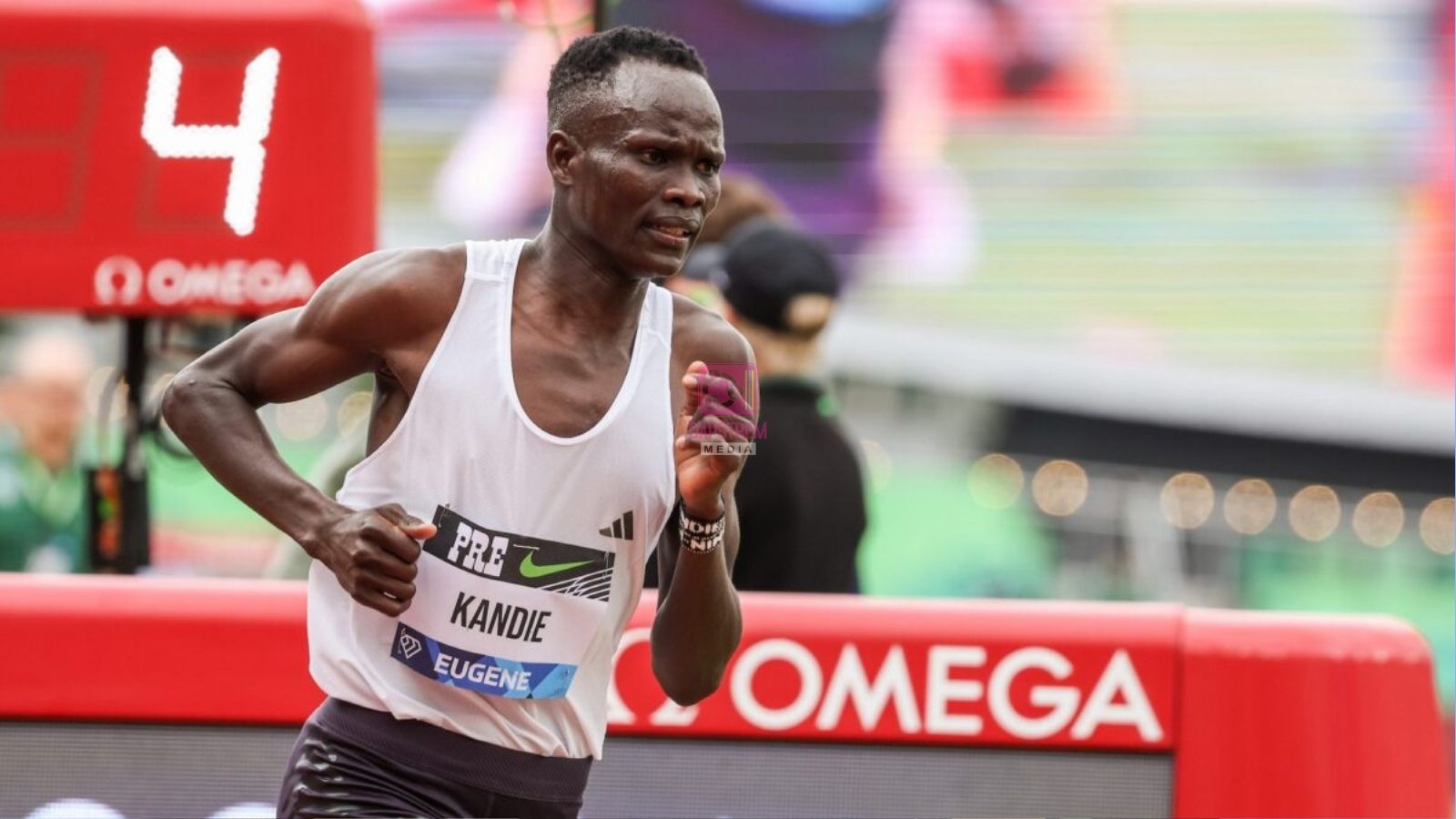
Former half marathon world record holder Kibiwott Kandie receives seven-year ban after admitting to refusing sample collection and tampering with the anti-doping control process.
Kenyan long-distance running has suffered another major setback after former half marathon world record holder Kibiwott Kandie was handed a seven-year ban by the Athletics Integrity Unit (AIU) following the admission of two anti-doping rule violations. The decision marks one of the most significant disciplinary actions involving a high-profile Kenyan athlete in recent years and has once again placed the spotlight on the country’s ongoing battle against doping in athletics.
According to the Athletics Integrity Unit, Kandie admitted to refusing to submit to sample collection and tampering with the doping control process—two serious anti-doping violations that carry severe penalties under international athletics regulations. The lengthy suspension effectively sidelines the accomplished distance runner from competitive athletics for seven years, bringing an abrupt halt to a career that had once placed him among the world’s elite road runners.
The ruling is another chapter in the global fight against doping, a campaign aimed at protecting the integrity of sport and ensuring that athletes compete on a level playing field. While positive drug tests often dominate headlines, anti-doping regulations also treat refusal to provide samples and interference with testing procedures as equally serious offences because they undermine the credibility and effectiveness of the testing system.
Kibiwott Kandie rose to international prominence through his exceptional performances in road running, particularly in the half marathon. His breakthrough performances earned him global recognition and established him as one of Kenya’s leading distance runners during a period when the country continued to dominate international athletics.
His greatest career achievement came when he set a new half marathon world record, a performance that showcased extraordinary endurance, speed, and tactical brilliance. The record cemented his place among the sport’s elite and elevated his reputation as one of the finest long-distance runners of his generation.
Over the years, Kandie consistently performed at the highest level, winning and finishing on the podium in several prestigious international road races. His achievements inspired many young athletes in Kenya, where long-distance running remains one of the country’s most celebrated sporting disciplines and a pathway to international success.
However, the latest disciplinary action has overshadowed those achievements and raised fresh questions about the challenges facing Kenyan athletics. The Athletics Integrity Unit stated that Kandie admitted to refusing to provide a sample when requested and tampering with the doping control process. Under the World Athletics Anti-Doping Rules, both actions are considered serious violations because they obstruct efforts to determine whether an athlete has complied with anti-doping requirements.
Refusing to submit to sample collection is regarded as a violation because anti-doping programs depend on athletes cooperating with testing officials whenever they are selected for testing. Whether tests are conducted during competitions or outside competition, athletes are expected to comply fully with sample collection procedures.
Similarly, tampering with the doping control process encompasses actions that interfere with or attempt to manipulate testing procedures. Such conduct compromises the integrity of anti-doping investigations and is therefore treated with the same seriousness as the use of prohibited substances.
The seven-year suspension reflects the gravity of the admitted violations and serves as a reminder that athletes are expected to uphold strict standards of conduct throughout the testing process. Anti-doping authorities have repeatedly emphasized that compliance with testing procedures is fundamental to maintaining fairness in sport.
The decision is likely to have significant consequences for Kandie’s professional career. A seven-year ban effectively removes him from competitive athletics for a substantial period, making any future return to elite competition considerably more difficult. It also affects opportunities for sponsorships, endorsements, prize money, and participation in major international competitions.
Beyond the personal impact on the athlete, the case has broader implications for Kenyan athletics. Kenya has long been regarded as a global powerhouse in middle- and long-distance running, producing Olympic champions, world champions, and record holders across multiple disciplines. The country’s athletes have consistently dominated international competitions, earning admiration for their remarkable endurance and success on the track and roads.
However, in recent years, Kenya has also faced increasing scrutiny over a growing number of doping-related cases. Several athletes have received sanctions for anti-doping rule violations, prompting concerns among international sporting bodies and raising questions about the effectiveness of anti-doping education and enforcement within the country.
In response to these challenges, Kenyan authorities, Athletics Kenya, and anti-doping agencies have intensified efforts to combat doping. These initiatives include expanded athlete education programs, increased testing, stronger collaboration with international organizations, and stricter enforcement of anti-doping regulations.
The government has also committed additional resources toward strengthening anti-doping institutions and ensuring that athletes understand their rights and responsibilities under international rules. Education has become a key component of these efforts, with athletes being encouraged to familiarize themselves with testing procedures, prohibited substances, therapeutic use exemptions, and reporting obligations.
Sports analysts argue that preserving Kenya’s reputation as a global athletics powerhouse depends not only on producing champions but also on maintaining the highest standards of integrity. Every doping-related case attracts international attention and has the potential to affect perceptions of the country’s athletics program as a whole.
The Athletics Integrity Unit has consistently maintained that robust anti-doping enforcement is essential to protecting clean athletes. By investigating suspected violations and imposing sanctions where appropriate, the AIU seeks to ensure that competitions remain fair and that athletes who follow the rules are not disadvantaged.
For aspiring athletes, the Kandie case serves as a powerful reminder that success in sport must always be achieved within the rules. Compliance with anti-doping regulations extends beyond avoiding prohibited substances; it also includes cooperating fully with testing authorities and respecting every aspect of the doping control process.
As the athletics community reflects on the latest development, attention is likely to focus on continued reforms aimed at strengthening integrity in Kenyan sport. Coaches, administrators, sports federations, and athletes all have an important role to play in fostering a culture of clean competition and ethical conduct.
Kibiwott Kandie’s seven-year suspension marks a significant moment both in his career and in Kenya’s ongoing efforts to restore confidence in its athletics program. While his achievements on the road earned him international acclaim, the anti-doping violations that resulted in his lengthy ban now become part of a complex legacy that underscores the importance of accountability and integrity in elite sport.
The decision reinforces a message that applies to athletes worldwide: sporting excellence must be accompanied by honesty, transparency, and full compliance with anti-doping rules. As global athletics continues to strengthen its commitment to clean competition, cases such as this demonstrate that protecting the integrity of sport remains one of its highest priorities.