Dr. Monica Juma Sworn In as UNODC Executive Director and UN Office at Vienna Chief in Landmark Global Appointment
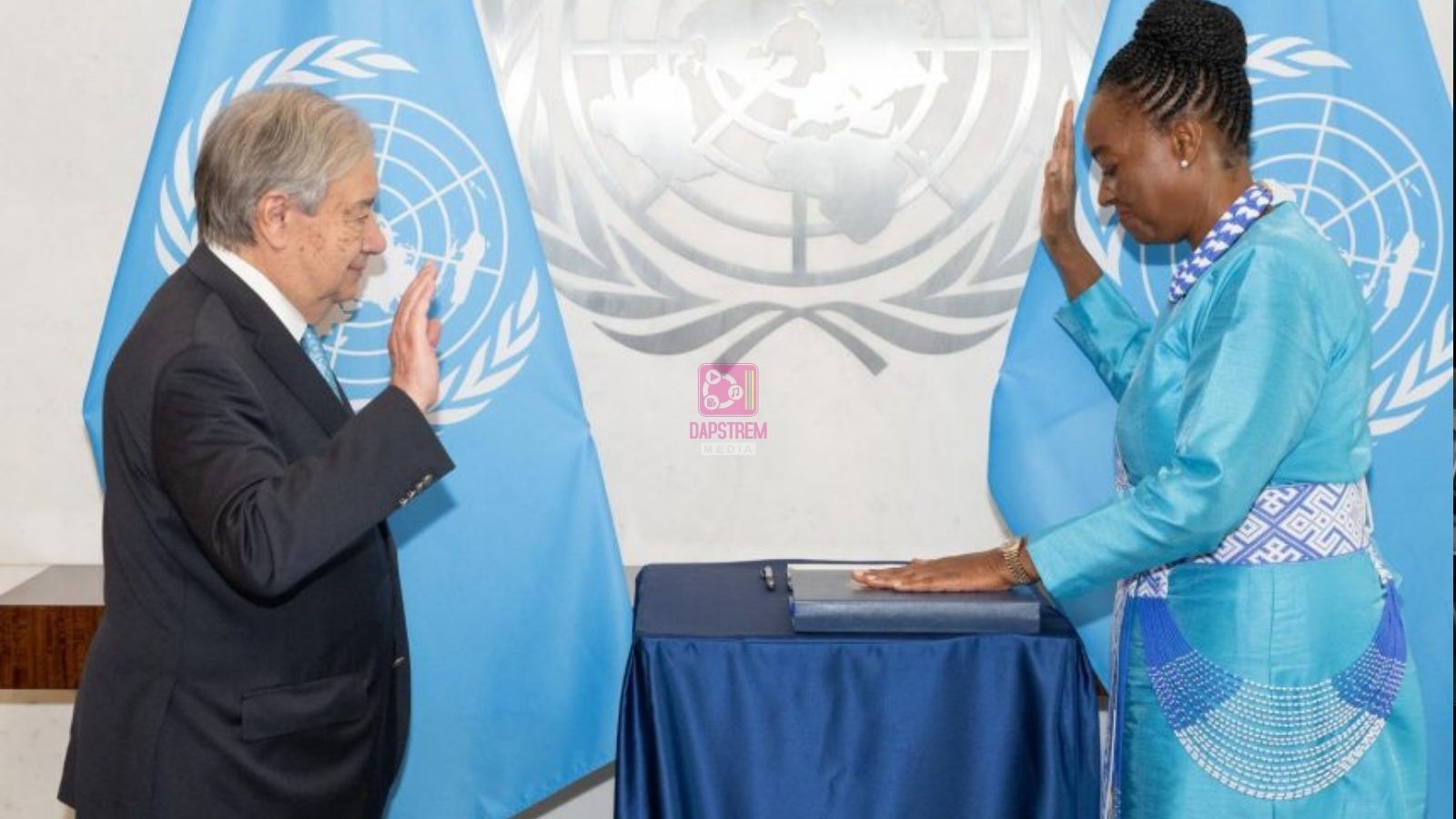
Ambassador Dr. Monica Juma has officially taken the oath of office as the Executive Director of the United Nations Office on Drugs and Crime (UNODC) and the Director-General of the United Nations Office at Vienna (UNOV), marking a historic milestone not only in her distinguished career but also for Kenya’s presence and influence on the global diplomatic stage. The appointment, made under the authority of United Nations Secretary-General António Guterres, places one of Kenya’s most accomplished diplomats at the helm of one of the world’s most important institutions dealing with transnational crime, corruption, terrorism, and international justice.
Her swearing-in represents more than a ceremonial transition into office. It symbolizes a recognition of decades of public service, diplomacy, and leadership in both national and international affairs. Dr. Juma now assumes responsibility for guiding global efforts to combat some of the most pressing security and governance challenges of the 21st century, ranging from drug trafficking and organized crime to cybercrime, terrorism financing, corruption, and human trafficking.
The United Nations Office on Drugs and Crime is one of the UN’s key agencies tasked with promoting justice, strengthening the rule of law, and supporting member states in addressing complex criminal networks that increasingly operate across borders. The organization works with governments to improve legal systems, build law enforcement capacity, combat illicit financial flows, and develop strategies for preventing crime and violent extremism. In an era of rapidly evolving global threats, the role of UNODC has become more significant than ever.
At the same time, Dr. Juma will serve as Director-General of the United Nations Office at Vienna, one of the four major headquarters of the United Nations. The Vienna office plays a central role in facilitating international diplomacy and multilateral cooperation, hosting negotiations and discussions involving issues such as nuclear safety, peaceful uses of outer space, international crime prevention, and sustainable development. Leading both institutions places Dr. Juma at the heart of global policymaking and international collaboration.
For Kenya, the appointment is being viewed as a moment of national pride. Over the years, the country has steadily strengthened its reputation as a regional diplomatic hub, hosting major international agencies and playing active roles in peacebuilding and conflict resolution efforts across Africa. The elevation of a Kenyan diplomat to such a senior United Nations position reinforces the country’s growing influence in global governance and highlights the contribution of African leaders to international institutions.
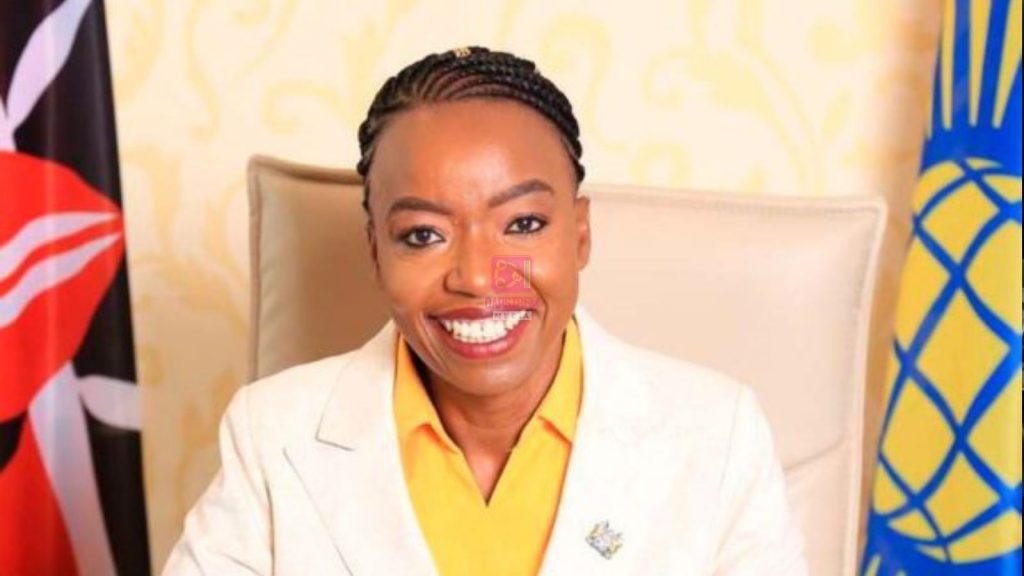
Dr. Juma brings to the role an extensive record of public service and policy leadership. Throughout her career, she has occupied several high-profile positions within the Kenyan government, earning respect both domestically and internationally for her expertise in foreign affairs, security policy, and development planning. She previously served as Kenya’s Cabinet Secretary for Foreign Affairs, where she played a key role in advancing the country’s diplomatic agenda and strengthening bilateral and multilateral partnerships.
Her tenure in government also included service as Cabinet Secretary for Defence and earlier as Principal Secretary in the Ministry of Foreign Affairs. Before assuming these roles, she had already established herself as a respected scholar and policy expert, contributing to discussions on governance, security, and regional integration. Her blend of academic grounding and practical leadership experience has often been cited as one of her greatest strengths.
International observers note that her appointment comes at a time when global security challenges are becoming increasingly interconnected. Organized criminal networks now exploit digital technologies, weak governance structures, and porous borders to expand their operations. Human trafficking, illicit arms trade, wildlife trafficking, and drug smuggling continue to affect millions of people across continents, while cybercrime and online financial fraud have emerged as rapidly growing threats. Addressing these issues requires not only strong law enforcement but also effective international cooperation, diplomacy, and coordinated policy responses.
The fight against corruption is another area where the UNODC has an increasingly important mandate. Corruption undermines public institutions, weakens economic growth, and erodes public trust in governance systems. Through the implementation of international agreements such as the United Nations Convention Against Corruption, the agency supports countries in strengthening transparency, accountability, and anti-corruption frameworks. Dr. Juma’s background in governance and public administration is expected to be an asset in advancing these global initiatives.
Her leadership will also be tested by the continuing challenge of combating illicit drug production and trafficking. Drug markets have evolved significantly in recent years, with synthetic narcotics and sophisticated trafficking routes posing new difficulties for governments and law enforcement agencies. The UNODC works closely with member states to monitor trends, share intelligence, and support prevention and rehabilitation programs aimed at reducing both supply and demand.
In addition to traditional security concerns, the organization has become increasingly engaged in addressing the links between crime, conflict, and development. Research has shown that weak institutions and economic inequalities often create conditions that allow criminal organizations to thrive. Consequently, the UNODC has expanded its work to include initiatives that strengthen justice systems, support community resilience, and promote sustainable development as a means of preventing crime before it takes root.
Dr. Juma’s appointment is also significant from the perspective of African representation in international leadership. For many years, there have been calls for greater inclusion of leaders from the Global South in the highest levels of global institutions. Her elevation to one of the United Nations’ top leadership positions reflects the growing recognition of Africa’s role in shaping international policy and providing solutions to shared global challenges. It also offers inspiration to a new generation of African diplomats, policymakers, and public servants who aspire to serve beyond their national borders.
Her career trajectory has consistently demonstrated an ability to navigate complex political and diplomatic environments. Whether representing Kenya in international forums, negotiating bilateral agreements, or overseeing national security portfolios, she has built a reputation for strategic thinking and consensus-building. These qualities are likely to prove invaluable in a role that requires balancing the interests of diverse member states while maintaining the integrity and effectiveness of the United Nations system.
The appointment has been welcomed by many within diplomatic and policy circles, who see it as an acknowledgment of her extensive contributions to international affairs. It also reflects the confidence placed in her by the United Nations Secretary-General and member states to lead critical global conversations at a time when multilateral cooperation is more important than ever.
For Kenya, Dr. Juma’s swearing-in serves as a reminder of the country’s longstanding investment in diplomacy and international engagement. Nairobi already hosts numerous United Nations agencies and remains one of the organization’s key operational centers in Africa. Having a Kenyan at the helm of the UNODC and UNOV further strengthens the country’s profile and could deepen its role in shaping discussions on peace, security, and development.
As she embarks on this new chapter, expectations will be high. The challenges facing the international community are increasingly complex, requiring innovative thinking, collaborative leadership, and a commitment to the principles of justice and the rule of law. Dr. Monica Juma now assumes a position where her decisions and leadership will influence global efforts to tackle some of humanity’s most persistent and evolving threats.
Her oath of office therefore marks not only the beginning of a new assignment but also the continuation of a distinguished career dedicated to public service, diplomacy, and international cooperation. At a time when the world faces interconnected crises that transcend national borders, her appointment stands as a testament to the value of experienced leadership and the enduring importance of multilateral institutions in building a safer, fairer, and more secure global community.