Subtle Signs Your Dog Trusts You Completely and Feels Safe, Loved and Secure in Your Presence
Dogs may not be able to tell you in words that they trust you, but they have countless ways of showing it.
Sometimes, the signs are obvious. Your dog runs to the door when you come home, wags its tail when it sees you, or follows you from one room to another. Other times, the signs are so subtle that you may not even realise what your dog is communicating.
Trust between a dog and its owner is built gradually. It comes from consistency, safety, affection, patience and everyday experiences. A dog learns that you will feed it, protect it, respond to its needs and treat it with care. Over time, that reliability can shape the way the dog behaves around you.
Dogs communicate largely through body language, posture, movement, facial expressions and behaviour. Understanding those signals can help owners recognise when their dogs feel comfortable and secure. Experts also caution that individual signals should always be considered in context because the same behaviour can have different meanings depending on the situation.
So, if you have ever wondered whether your dog genuinely trusts you, look beyond the enthusiastic greetings and obvious affection. Some of the strongest signs may happen when your dog is doing absolutely nothing.
One of the clearest signs is when your dog chooses to sleep deeply around you.
Sleep is a vulnerable state for animals. A sleeping dog is less able to respond immediately to what is happening around it. When your dog regularly settles down and sleeps peacefully in your presence, particularly in relaxed positions, it can indicate that the animal feels safe in its surroundings.
You may notice your dog stretching out completely on the floor, curling comfortably on its bed or even lying on its back with its belly exposed.
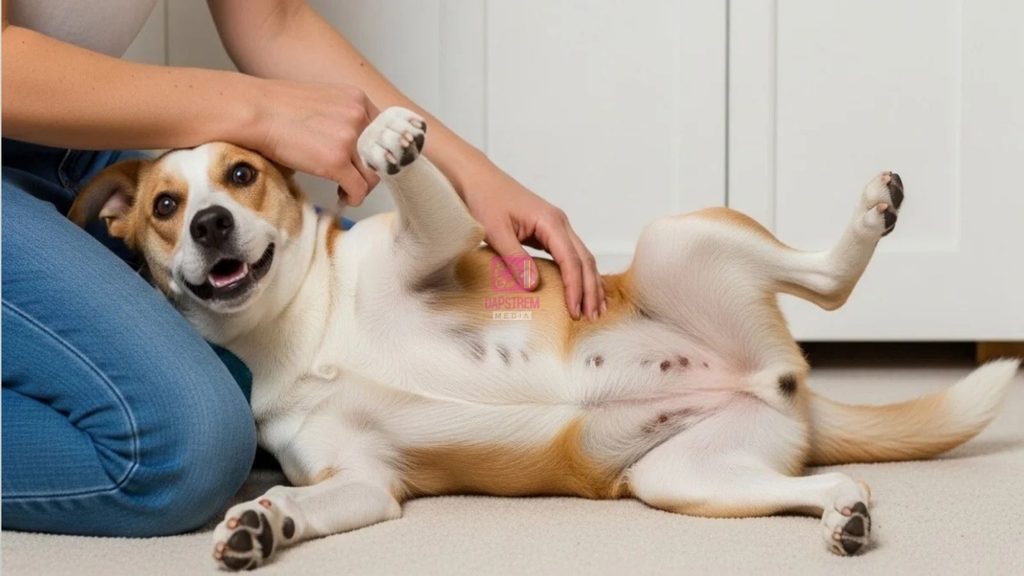
A dog sleeping on its back is often associated with relaxation and security. The position exposes vulnerable parts of the body and can therefore indicate that the dog feels sufficiently comfortable in its environment to relax. It can also help a dog cool down because the belly and paw pads have less insulating fur.
However, context matters.
A dog rolling onto its back does not automatically mean, “I trust you completely.” Dogs can also roll onto their backs as an appeasement or submissive gesture when they feel uncomfortable. The rest of the dog’s body language can help you understand what is happening. A relaxed body, loose muscles and comfortable facial expression suggest something very different from a tense body, tucked tail or avoidance.
Another subtle sign is when your dog turns its back to you and relaxes.
At first, this can seem strange. Humans often interpret facing someone as a sign of attention and affection. Dogs, however, communicate differently.
If your dog lies down beside you and turns its back while remaining relaxed, it may simply be comfortable enough not to keep watching you. The dog does not feel the need to constantly monitor what you are doing.
That can be particularly noticeable when your dog sits beside you while you are watching television, reading or working.
Rather than staring at you, the dog may simply settle down with its back facing you.
There is an important difference between a relaxed dog turning away and a fearful dog avoiding you. A comfortable dog may have a loose posture and remain close to you. A fearful dog may lower its body, tuck its tail, avoid eye contact or repeatedly try to move away. Understanding the whole picture is therefore more useful than interpreting one movement in isolation.
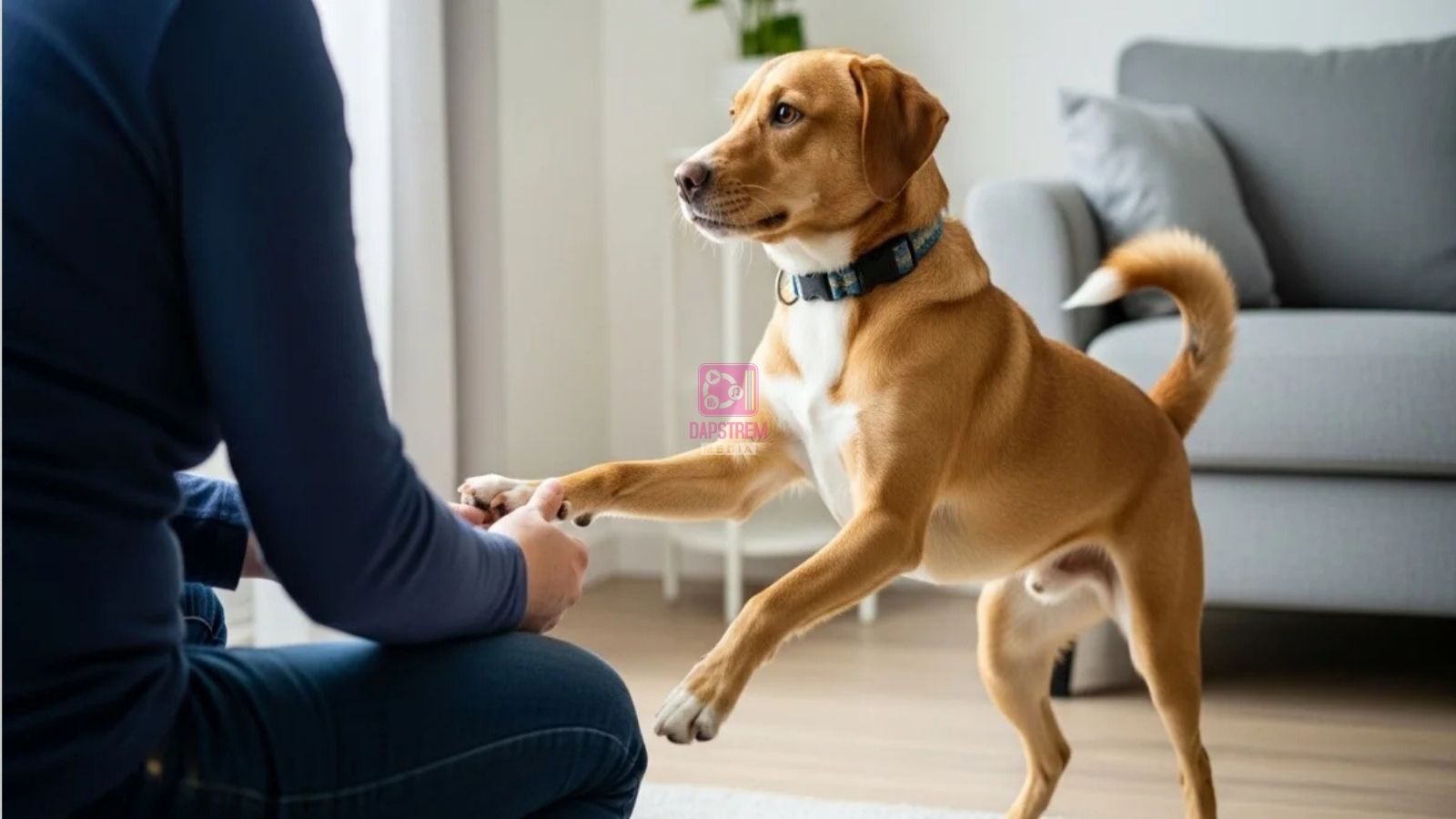
Your dog may also show trust by bringing you its favourite possessions.
Perhaps it carries a favourite toy across the house and drops it at your feet. Maybe it brings you a ball, blanket or another object it particularly enjoys.
This behaviour can be an invitation to interact and play. It can also demonstrate that your dog associates you with positive experiences.
Dogs learn through repeated experiences. If bringing you a toy regularly results in a game, attention or affection, the behaviour can become part of the relationship between you.
That simple act of dropping a favourite toy in front of you can therefore become one of the dog’s ways of saying, “I want to share this moment with you.”
Another sign is your dog choosing to stay near you even when nothing exciting is happening.
Dogs do not always need food, walks or toys to want your company.
Sometimes your dog simply wants to be in the same room.
You may be cooking in the kitchen and find your dog lying nearby. You may move to the bedroom and notice the dog follows you. You may sit outside and the dog settles somewhere close.
This behaviour can reflect attachment and social bonding.
Dogs are social animals, and some naturally prefer staying close to people they are bonded with. Following an owner can also be reinforced by positive experiences such as food, affection, walks and play.
There is, however, an important distinction between healthy attachment and excessive dependence.
A dog following you from room to room does not automatically mean it trusts you more than other people. Some dogs are naturally more independent, while others are naturally very attached. A sudden increase in clinginess can sometimes indicate fear, discomfort or an underlying health problem and may warrant veterinary attention.
One of the most beautiful signs of trust can be the way your dog looks at you.
A relaxed dog may occasionally glance at you, make gentle eye contact and then look away.
The important word is relaxed.
A hard, prolonged stare can mean something very different from a soft, relaxed gaze. Dogs use their eyes as part of a larger communication system, and looking away can sometimes be a calming or stress-related signal.
When your dog looks at you with a loose body, relaxed face and natural posture, it may simply be checking in with you.
It is almost like a silent conversation.
The dog is paying attention to you without appearing threatened or anxious.
Dogs also pay remarkable attention to human body language and emotions. They observe facial expressions, posture and tone of voice and can respond to changes in their owners’ emotional states.
That is why your dog may behave differently when you are having a difficult day.
You may come home unusually quiet and notice your dog staying close. You may sit on the sofa feeling exhausted and suddenly find a warm head resting on your leg.
While we should not assume that dogs understand human emotions exactly as humans do, their ability to notice changes in our behaviour is well documented.
Another sign of trust is when your dog allows you to handle parts of its body without becoming uncomfortable.
Think about everyday situations such as wiping its paws, brushing its coat, checking its ears or gently examining its body.
A dog that has developed a strong relationship with you may become increasingly comfortable with routine handling, particularly when it has learned that the experience is safe and predictable.
But this should never be taken as permission to force physical contact.
Even a dog that deeply trusts its owner has boundaries.
Some dogs dislike having their paws touched. Others dislike hugs, ear handling or being disturbed while eating. Respecting those preferences is actually part of building trust.
A dog learns that it can communicate discomfort without being punished.
That creates a safer relationship.
Your dog may also demonstrate trust by eating comfortably in your presence.
Food can be extremely important to dogs, and their behaviour around meals can tell you something about how comfortable they feel.
A relaxed dog may eat while you move around the room, sit nearby or carry on with ordinary household activities.
However, not every dog will behave the same way. Some dogs naturally prefer privacy while eating, while others may have learned to guard food because of previous experiences.
The important thing is whether the dog appears relaxed rather than tense or defensive.
Trust can also be visible when your dog allows you to approach while it is resting.
Imagine your dog sleeping peacefully on its bed.
You walk past.
It opens its eyes, sees you and goes straight back to sleep.
That tiny moment can say a lot.
The dog has recognised you and decided there is no reason to become alert.
A dog that feels secure around its owner may not need to react to every movement.
That is one reason a calm home environment can be so important for a dog’s wellbeing.
Your dog may also greet you differently from everyone else.
Perhaps it becomes visibly excited when you arrive. Its body becomes loose, its tail starts moving and it comes towards you with an unmistakable sense of happiness.
Some dogs greet their favourite people by bringing toys. Others lean against their owners, circle around their legs or simply sit close.
The precise greeting varies from one dog to another.
What matters is the emotional pattern.
A dog that consistently associates you with safety and positive experiences may develop a predictable excitement around your arrival.
And sometimes, the strongest sign of trust is not excitement at all.
It is calmness.
A dog that trusts you does not necessarily need to be jumping on you every time you walk through the door.
It may simply look up, wag its tail gently and return to whatever it was doing.
That calm response can be just as meaningful as an enthusiastic greeting.
It can mean that your arrival is normal, familiar and safe.
Your dog may also choose to rest close to you without demanding attention.
This is different from constantly seeking affection.
A dog might lie beside your chair while you work, sleep near your feet while you eat or settle next to you while you read.
There is no obvious reason for the dog to be there.
It simply wants to share your space.
For many owners, these quiet moments are among the most meaningful parts of living with a dog.
There is also the way your dog responds to your voice.
Dogs learn associations between words, tone and actions. Familiar phrases can become connected with routines, while tone and body language also provide important information about what a person wants or feels.
A dog that has learned to trust its owner may respond readily to familiar cues.
It may come when called.
It may look towards you when you say its name.
It may wait for you before going outside.
These behaviours are not simply about obedience. Training can also create predictability. The dog learns what you expect and learns that responding to you leads to safe and rewarding outcomes.
Trust can also appear during unfamiliar situations.
Your dog may look at you when it hears a strange sound. It may briefly move closer when something unfamiliar happens. It may check your reaction before deciding how to respond.
Dogs constantly gather information from their surroundings and from people around them. Their ability to read human body language can influence how they respond to situations.
This does not mean the dog expects you to solve every problem.
Rather, you have become an important source of information.
Your presence can provide reassurance.
Perhaps one of the most overlooked signs of trust is when a dog feels comfortable enough to be vulnerable around you.
That vulnerability can take many forms.
It might be sleeping deeply.
It might be exposing its belly.
It might be stretching out completely.
It might be resting its head on your lap.
It might be allowing you to groom it.
It might simply be closing its eyes while you sit nearby.
These moments matter because trust is not only about excitement. It is about feeling safe enough to relax.
A dog does not need to constantly demonstrate affection for a strong bond to exist.
Sometimes, the dog showing the most trust is the one quietly sleeping beside you.
At the same time, dog owners should avoid turning every behaviour into a human-style message.
Dogs have individual personalities, histories and preferences. Breed, age, previous experiences and environment can all influence behaviour.
A dog that does not sleep on its back may still trust you completely.
A dog that does not follow you around the house may simply be independent.
A dog that does not enjoy cuddling may still have a deep bond with you.
Trust does not have one universal appearance.
The best way to understand your dog is to learn its normal behaviour.
Pay attention to what your dog looks like when it is relaxed. Notice its normal sleeping habits, posture, facial expressions and reactions to familiar people.
Then you can recognise when something changes.
This is especially important because behavioural changes can sometimes signal pain, anxiety or illness. A dog that suddenly becomes withdrawn, unusually clingy, reluctant to be touched or different in its sleeping and eating habits may need veterinary attention.
Understanding your dog’s body language can therefore do more than strengthen your relationship.
It can help you notice when something is wrong.
A strong bond is built through consistency.
Feed your dog at appropriate times. Provide exercise. Give it a safe place to rest. Use positive and consistent training. Respect its boundaries. Spend time together. Learn how it communicates.
Most importantly, be predictable.
Dogs thrive when they know what to expect.
When a dog learns that its owner will not suddenly frighten or hurt it, that boundaries will be respected and that good experiences regularly follow interaction, trust has room to grow.
Over time, the relationship becomes visible in the smallest moments.
Your dog sleeps peacefully beside you.
It brings you a toy.
It checks where you are before settling down.
It follows you into another room and quietly lies at your feet.
It looks at you with relaxed eyes.
It stretches out beside you.
It trusts you enough to turn its back and sleep.
None of these behaviours should be treated as absolute proof of trust on their own. But when they occur alongside a generally relaxed and comfortable body language, they can be meaningful signs that your dog feels secure in your presence.
And perhaps that is what makes the relationship between humans and dogs so special.
Dogs rarely announce their feelings.
They show them.
They show them through where they sleep, where they choose to stand, how they look at you, what they bring you and how completely they relax when you are nearby.
The next time your dog quietly settles beside you, resist the urge to overlook the moment.
It may be one of the simplest ways your dog is telling you that, in its world, you are home.