
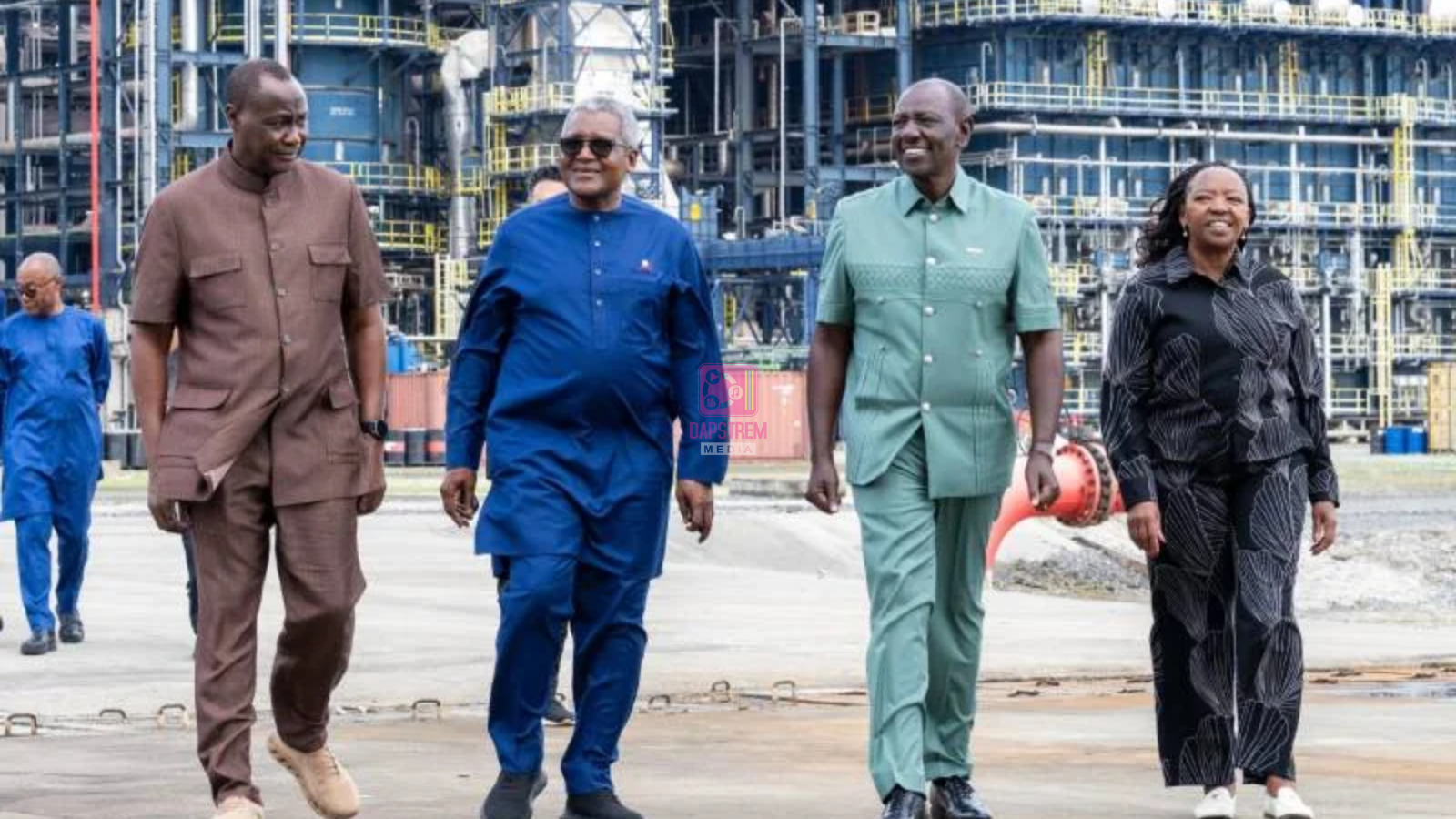
Kenya is preparing to host one of the most significant industrial events in its recent history as President William Ruto leads the groundbreaking of the proposed Dangote East Africa Oil Refinery in Lamu, a project valued at about $16 billion (more than KSh2 trillion) and designed to transform the country’s position in the regional energy market.
The ceremony is expected to bring together several African leaders, senior government officials, business executives and local representatives, underscoring the regional ambitions attached to the project.
Among the leaders reported to be attending are Rwanda’s Paul Kagame, Uganda’s Yoweri Museveni, Ethiopia’s Abiy Ahmed, Burundi’s Évariste Ndayishimiye and Togo’s Jean-Lucien Savi de Tové, alongside President Ruto. Benin’s Romuald Wadagni has also been listed among expected dignitaries in some reports. The exact final attendance list has varied across reports, so the description of “six Heads of State” should be treated as referring to the confirmed or expected foreign leaders rather than a definitive final count.
The ceremony marks the transition of a project that has been discussed for months from planning towards construction.
A $16 billion bet on East Africa’s energy future
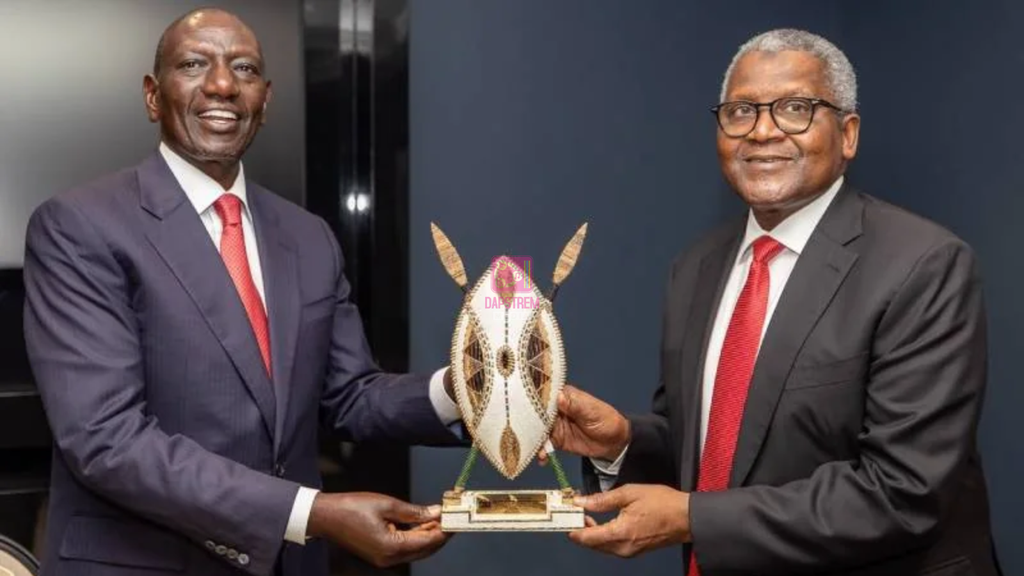
The proposed refinery is being developed by Nigerian industrialist Aliko Dangote, whose conglomerate operates the 650,000-barrel-per-day refinery in Lagos.
The Lamu facility is planned to have a capacity of 700,000 barrels of crude oil per day, making it potentially the largest refinery in East Africa once completed.
Reuters reports that Dangote expects construction to be completed around 2030. The facility is intended to serve Kenya as well as markets across the region, reducing reliance on imported refined petroleum products.
The project is expected to produce fuels including petrol, diesel and aviation fuel, while also supporting a wider industrial ecosystem involving petrochemicals, storage, logistics and manufacturing.
For Kenya, the investment comes at a time when the country remains heavily dependent on imported petroleum products.
The government’s argument is that producing more refined fuel locally could improve supply security and reduce the amount of foreign currency spent importing finished petroleum products.
But the refinery’s ambitions go beyond Kenya.
Why Lamu?
The choice of Lamu is closely connected to the area’s strategic position on Kenya’s Indian Ocean coast.
The refinery is planned near Lamu Port, the deep-water port at the heart of the Lamu Port-South Sudan-Ethiopia Transport corridor, commonly known as LAPSSET.
That location gives the project access to maritime routes for importing crude and distributing refined petroleum products to inland markets.
The first major physical sign of construction activity arrived on September 26, when the vessel MV Da Yang Bai He docked at Lamu Port carrying approximately 2,930 tonnes of construction equipment and materials for the refinery project.
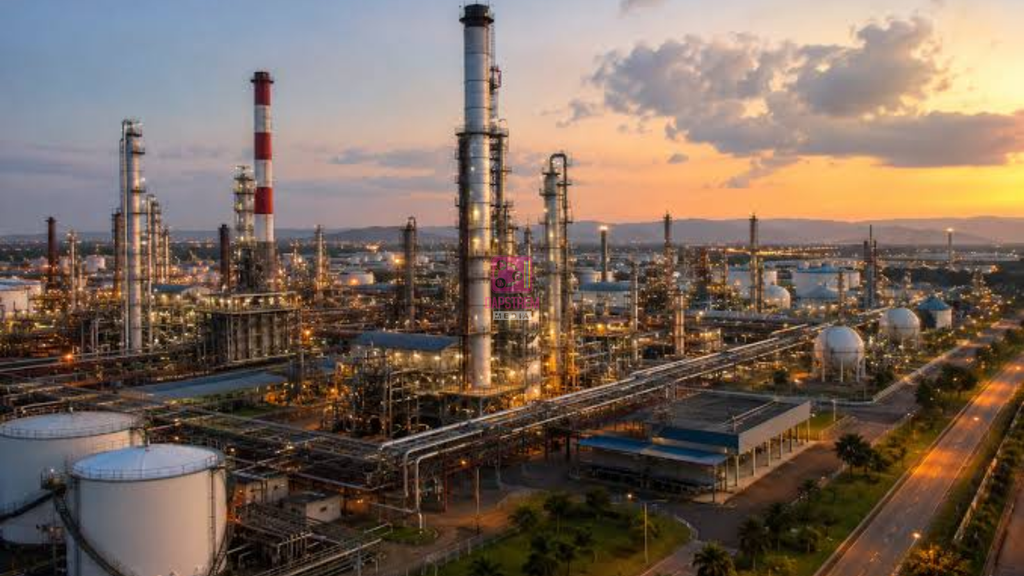
The project therefore has the potential to give Lamu a role extending far beyond its traditional importance as a tourism and fishing destination.
Government officials envision an industrial and energy complex incorporating manufacturing, storage, petrochemicals and logistics.
A proposed 1,000-megawatt power plant and special economic zone are also part of the broader development plans.
A regional refinery, not simply a Kenyan project
One of the most significant aspects of the development is its proposed ownership structure.
Dangote has offered East African governments a combined 30 percent stake in the refinery and associated developments.
Kenya has been offered a stake of about 10 percent, valued at approximately $500 million (KSh64.7 billion). Rwanda has expressed interest in taking a share, while other regional governments have also shown interest.
That structure helps explain the diplomatic importance of Wednesday’s ceremony.
A refinery capable of processing 700,000 barrels per day would require markets substantially larger than Kenya alone. Dangote has therefore positioned the facility as a regional supplier.
The intended markets include Uganda, Tanzania, Rwanda, Burundi, Ethiopia, South Sudan and the Democratic Republic of Congo, in addition to Kenya.
Pipelines and other distribution infrastructure would eventually be needed to move refined products from Lamu into some of these landlocked markets.
The crude supply question
Perhaps the biggest long-term question surrounding the project is not refining capacity but where the crude will come from.
Kenya currently does not have commercial-scale crude production capable of supplying a refinery of this magnitude.
Dangote has said the Lamu facility will therefore source crude from a combination of regional producers and international markets, including supplies from the Middle East and the United States.
Kenya’s own crude-oil industry could eventually contribute, while Uganda and South Sudan also have oil resources. But transporting crude to Lamu at the scale required by a 700,000-barrel-per-day refinery will require substantial infrastructure and dependable supply arrangements.
Reuters has identified crude availability and East Africa’s relatively underdeveloped energy infrastructure among the key challenges facing the project.
That means the groundbreaking is an important milestone, but it is not the end of the project’s financing, engineering, supply and infrastructure challenges.
Jobs and industrialisation
The Kenyan government has presented the refinery as a major employment and industrialisation opportunity.
Deputy President Kithure Kindiki has said the project could create more than 50,000 jobs, while other government projections have put the wider employment impact at around 60,000 positions when associated industries and services are included.
The jobs would not all be inside the refinery itself.
Construction would require engineers, technicians, transport operators, construction workers and suppliers. Once operational, the refinery could support additional employment in petrochemicals, warehousing, transportation, maintenance and manufacturing.
The government also expects the refinery to attract further private investment to the Coast.
Dangote has argued that the refinery could act as a catalyst for other investors, describing it as a gateway to additional industrial development in Kenya.
But the project faces opposition
For all the economic expectations surrounding the refinery, the project has not escaped controversy.
Local residents have challenged aspects of the development in court, including land rights.
On September 28, the Malindi Environment and Land Court ordered parties to maintain the existing status quo on a disputed parcel of land until the matter is heard on October 14. The case was brought by residents who say the land is ancestral property.
Reuters also reports that environmentalists and conservation groups have raised concerns about the potential impact of the refinery on Lamu’s sensitive coastal environment and the nearby Lamu Old Town, a UNESCO World Heritage site.
The legal dispute has not stopped the groundbreaking ceremony. Dangote said the court order would not prevent the official launch, although it could affect activities on parts of the site.
That creates a delicate balance for Kenya: pursuing a major industrial investment while addressing land, environmental and cultural-heritage concerns in one of the country’s most historically important coastal areas.
Lamu’s heritage meets industrial ambition
The contrast is particularly striking.
Lamu is internationally known for its centuries-old Swahili architecture, narrow streets, traditional culture and maritime heritage. Lamu Old Town is a UNESCO World Heritage site and remains an important tourism destination.
The refinery, by contrast, represents heavy industry on a massive scale.
Tourism Cabinet Secretary Rebecca Miano, while welcoming Togo’s President Savi de Tové ahead of the ceremony, highlighted precisely this tension describing the refinery as an opportunity for industrial development while stressing the need to balance development with conservation and the protection of Lamu’s cultural heritage.
How that balance is achieved could become one of the defining issues surrounding the project as construction progresses.
A test of Kenya’s industrial ambitions
For President Ruto’s administration, the refinery represents more than another infrastructure project.
The government has made industrialisation, energy security and attracting large-scale foreign investment central components of its economic agenda.
Ruto has said the refinery will be structured as an open investment, with the government taking a stake and ordinary Kenyans potentially able to acquire shares through the Nairobi Securities Exchange.
For Dangote, meanwhile, Lamu represents a major expansion beyond Nigeria and into one of Africa’s fastest-growing regional energy markets.
The Nigerian billionaire is effectively attempting to replicate the logic behind his Lagos refinery: build at enormous scale, integrate refining with downstream industries and use the facility to replace imports while creating export capacity.
Whether that model can be reproduced in East Africa will depend on several factors reliable crude supplies, financing, infrastructure, regional demand, political cooperation and the resolution of legal and environmental concerns.
Why the six leaders matter
The presence of presidents and senior leaders from across Africa gives the groundbreaking a significance beyond the construction site in Lamu.
Rwanda, Uganda, Ethiopia and Burundi are all potential consumers or participants in a regional petroleum network supplied from the Kenyan coast. Togo’s participation also points to the broader continental business and diplomatic interest surrounding Dangote’s expansion.
The project is therefore being presented not simply as Kenya’s refinery, but as an emerging piece of East Africa’s energy infrastructure.
If completed at the proposed scale, the facility could alter the flow of petroleum products across the region shifting part of the supply chain from imported refined fuels towards refining and distribution centred on the East African coast.
But the scale of the ambition is matched by the scale of the challenge.
The ceremony on September 30 is the beginning of construction, not the completion of the project. Between the groundbreaking and the targeted 2030 completion date lie billions of dollars of investment, complex engineering, crude-supply arrangements, infrastructure development and unresolved questions around land and environmental protection.
For Lamu, meanwhile, the refinery could usher in a new industrial era while testing how successfully Kenya can reconcile that ambition with the preservation of one of its most distinctive cultural and environmental landscapes.
The groundbreaking, therefore, is not simply about laying the first stone of a refinery. It is the opening move in a much larger experiment: whether Lamu can become East Africa’s next major energy and industrial gateway without losing the heritage that made the town globally significant in the first place.