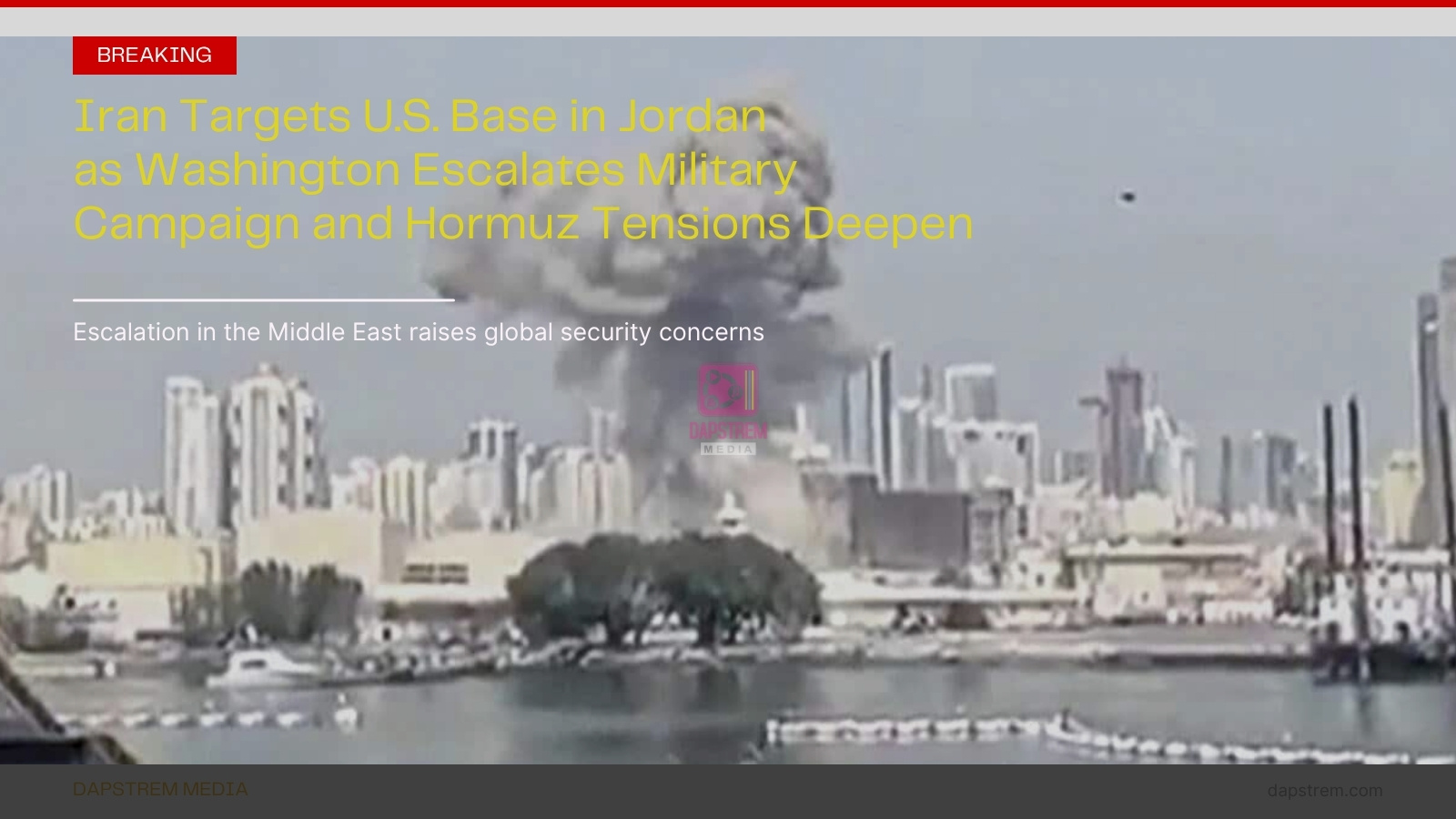
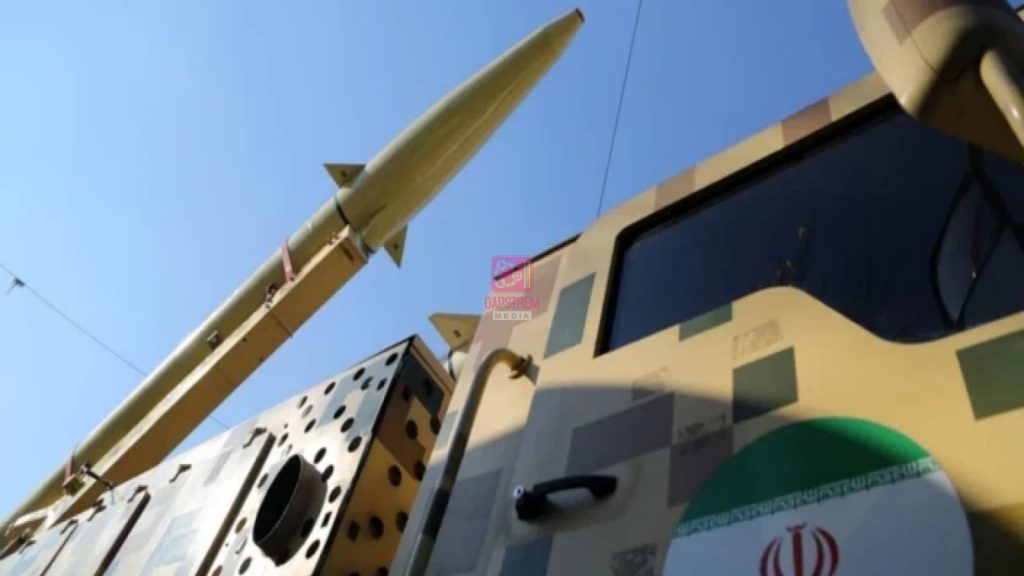
Iran claimed responsibility for launching ballistic missiles at a U.S. military base in Jordan on Tuesday, marking a significant escalation in regional hostilities as Washington continued its sustained military campaign against Tehran.
In a statement carried by Fars News, Iran’s Islamic Revolutionary Guard Corps (IRGC) said the strike targeted an American base in Jordan while urging Jordanians to dismantle U.S. military installations in the kingdom.
“You know very well that not only do we not have any enmity with your country, but we also love you, the noble people, who understand the pain and oppression of the Palestinian people more than any other nation,” the IRGC said.
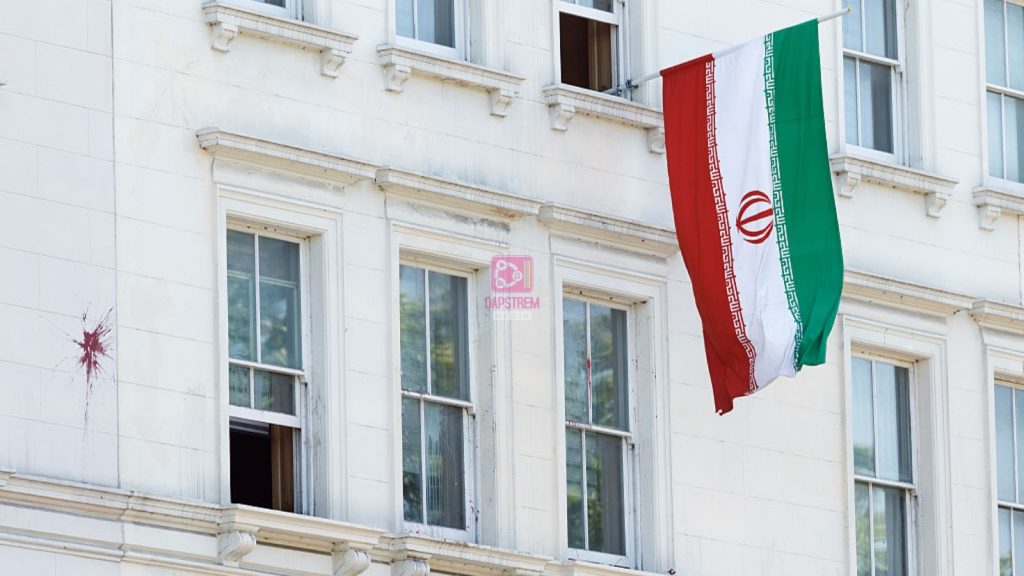
Jordan’s armed forces confirmed intercepting and destroying four missiles that entered its airspace from Iranian territory, according to the state news agency.
The missile attack coincided with a fresh wave of U.S. airstrikes on Iran, ordered by President Donald Trump and executed by U.S. Central Command. The five-hour operation marked the third consecutive night of American strikes targeting Iranian positions.
Trump has also reinstated a naval blockade of Iran and proposed imposing a 20% fee on cargo transiting the Strait of Hormuz, arguing the United States should be compensated for safeguarding one of the world’s most strategic maritime corridors.
Iran expands military response as Strait of Hormuz tensions fuel global concern.
Iranian media reported strikes on several cities across the country, with at least four people injured as emergency responders launched rescue operations.
Speaking on the “Hugh Hewitt Show” on Monday, Trump warned that Iran would be hit “very hard tonight, and we’re going to hit them hard tomorrow. And there’s not a damn thing they can do about it.”
The latest developments come after Tehran announced over the weekend that it was closing the Strait of Hormuz, raising fresh concerns over a fragile interim agreement aimed at halting the conflict and triggering a sharp rise in global oil prices.
In a post on Truth Social, Trump declared: “The Hormuz Strait is OPEN, and will remain OPEN, with or without Iran. We are reinstating THE IRANIAN BLOCKADE.”
He added that the United States would henceforth be known as “THE GUARDIAN OF THE HORMUZ STRAIT” and proposed a 20% fee on all cargo passing through the waterway as reimbursement for American protection.
Iran swiftly rejected the proposal.
The country’s top joint military command insisted Washington had no authority to determine the future of the strategic waterway. Foreign Minister Abbas Araqchi wrote on X that Iran had always been and would remain the guardian of the Strait of Hormuz, adding in response to Trump’s proposal: “20% is, of course, too much. We will be fair.”
Before the conflict erupted in February, roughly one-fifth of the world’s oil and liquefied natural gas shipments passed through the Strait of Hormuz each day, transporting more than 15 million barrels of oil valued at over $1.2 billion. Analysts estimate that a 20% transit fee could generate approximately $240 million daily.
The United Nations shipping agency rejected Trump’s proposal, stressing that international law provides no legal basis for mandatory tolls on vessels navigating international straits.
Oil prices climbed nearly 3% on Tuesday, reaching their highest level in four weeks as renewed military action and uncertainty surrounding the Strait of Hormuz heightened concerns over global energy supplies.
UAE Reports Missile Strike on Oil Tankers
The United Arab Emirates Ministry of Defense said Iranian cruise missiles struck two Emirati oil tankers while they were transiting the southern shipping lane of the Strait of Hormuz in Omani territorial waters.
Separately, the United Kingdom Maritime Trade Operations (UKMTO) reported that a tanker was hit by an unidentified projectile about 40 nautical miles northeast of Oman’s Qalhat. Reuters could not immediately verify whether the UKMTO report referred to the same incident cited by the UAE.
The IRGC later claimed responsibility for disabling two “offending” supertankers after they allegedly ignored repeated warnings and switched off their navigation systems.
Although the Iranian military did not identify the vessels or confirm whether they were the same ships reported by the UAE, it accused the United States of directing vessels along what it described as an illegal route. The IRGC warned that any cooperation with the “aggressor enemy” would lead to further attacks, delays in reopening the Strait of Hormuz and a worsening global energy crisis.
Meanwhile, the U.S. Navy-led Joint Maritime Information Center announced that the renewed blockade of Iran would take effect at 2000 GMT on Tuesday, covering all vessel traffic along Iran’s coastline, including its ports and oil terminals.
The center clarified that the measure would not interfere with the right of neutral vessels to transit the Strait of Hormuz to and from non-Iranian destinations. Humanitarian shipments, it added, would continue to be permitted following inspection.
The latest escalation follows the outbreak of conflict on February 28, when the United States and Israel launched coordinated strikes on Iran. Tehran retaliated with attacks on Israel and Gulf states hosting American military bases. Since then, the conflict alongside Israeli operations in Lebanon has claimed thousands of lives and displaced millions across the region.