
Tenri Schools Embu Holds Student Presidential Elections Under IEBC Supervision
Tenri Schools Embu has captured national attention after organizing a student presidential election that closely mirrored Kenya’s real democratic process, with officials from the Independent Electoral and Boundaries Commission (IEBC) overseeing the voting exercise. The event, held within the school grounds, was designed to educate learners on leadership, democracy, and civic responsibility through a practical, hands-on experience that reflected the structure and seriousness of national elections.
The school election featured candidates vying for the position of student president, alongside other leadership roles within the student council. Campaigns had been ongoing in the days leading up to the vote, with aspirants engaging in debates, manifesto presentations, and door-to-door persuasion within classrooms and dormitories. Students used the opportunity to present their visions for improving school life, focusing on issues such as discipline, academic performance, co-curricular activities, student welfare, and communication between learners and administration.
The involvement of IEBC officials added a layer of authenticity to the process, transforming what would ordinarily be a routine school election into a structured civic education exercise. Election materials such as ballot papers, voter registers, indelible ink, and sealed ballot boxes were used to replicate real electoral procedures. Students were required to verify their details before casting votes, just as citizens do during national elections, reinforcing the importance of transparency and accountability in democratic systems.
The exercise attracted interest not only within the school but also from education stakeholders who view such initiatives as essential in shaping responsible future citizens. Teachers and administrators emphasized that the goal of the election was not merely to choose student leaders, but to instill values of fairness, respect for rules, peaceful participation, and acceptance of outcomes—principles that are fundamental to democratic governance.
Campaigning in the lead-up to the election was both vibrant and competitive. Candidates relied on posters, school assemblies, and peer networks to communicate their messages. Some focused on improving academic support systems such as peer tutoring and study groups, while others emphasized better sports facilities, improved dining services, and stronger student discipline frameworks. Despite the competitiveness, school authorities ensured that campaigns remained peaceful and respectful, discouraging divisive rhetoric or misinformation.
On election day, students lined up in an orderly manner to cast their votes, guided by election officials and student polling clerks who had been trained to manage the process. The presence of IEBC representatives ensured that procedures were followed strictly, from voter identification to ballot issuance and counting. This professional approach helped students understand the importance of integrity in elections and the role of independent institutions in safeguarding democracy.
Observers noted that the exercise also served as a powerful lesson in leadership accountability. By participating in a structured voting process, students experienced firsthand how leaders are chosen and how citizens exercise their right to influence decision-making. Teachers highlighted that such experiences are crucial in helping young people develop a sense of responsibility and awareness of civic processes long before they reach voting age.
The school administration described the initiative as part of a broader effort to integrate experiential learning into the curriculum. Rather than teaching democracy only through textbooks, Tenri Schools Embu has embraced practical simulations that allow students to engage directly with concepts such as governance, leadership, and elections. This approach is intended to make civic education more engaging, memorable, and impactful.
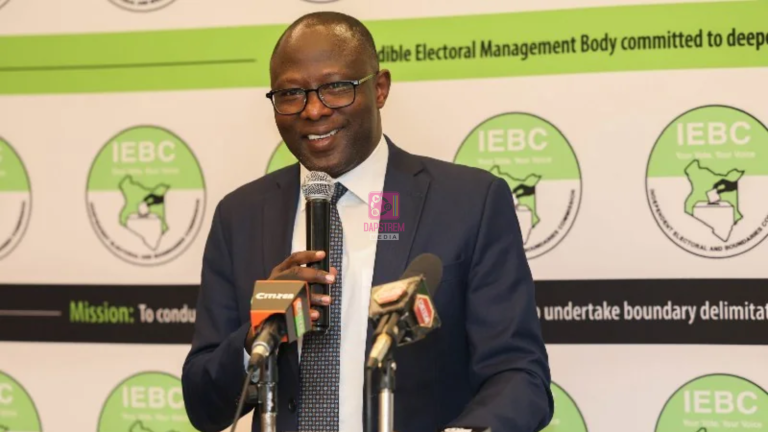
IEBC officials who participated in the exercise praised the school for its commitment to civic education, noting that early exposure to electoral processes helps build a culture of democratic participation. They emphasized that understanding voting procedures, electoral ethics, and the importance of peaceful transitions of leadership should begin at a young age to strengthen future democratic institutions.
As results were tallied and announced, students gathered to witness the outcome of the election. The atmosphere reflected a mix of excitement, anticipation, and nervous energy, as is often seen in national elections. Once the winner was declared, attention quickly shifted to acceptance speeches and messages of unity, with the newly elected student leaders calling for cooperation and collective responsibility in advancing the school’s goals.
One of the key lessons emphasized throughout the process was the importance of accepting election results, regardless of personal outcome. Teachers used the opportunity to explain that democracy is not only about winning but also about respecting the will of the majority and working together after competitive processes. This message was particularly important in reinforcing discipline and harmony within the student body.
The event also highlighted the growing role of schools in shaping civic awareness in Kenya. With increasing attention on governance and youth participation in national affairs, educational institutions are being encouraged to take a more active role in preparing students for future leadership. Programs like the one at Tenri Schools Embu demonstrate how schools can serve as training grounds for responsible citizenship.
Parents and community members who learned about the exercise expressed appreciation for the initiative, noting that it provides students with practical skills beyond academics. Leadership, communication, teamwork, and decision-making are all qualities that are nurtured through such experiences and remain valuable long after students leave school.
The success of the election has sparked discussions about expanding similar programs to other schools across the country. Education stakeholders believe that if more institutions adopt structured electoral simulations, it could significantly improve youth understanding of democracy and reduce political apathy in the future.
In many ways, the student election at Tenri Schools Embu was more than just a school activity—it was a reflection of Kenya’s democratic values in miniature form. By allowing students to experience the electoral process in a controlled and educational environment, the school helped bridge the gap between theory and practice, ensuring that the next generation gains a deeper appreciation of civic responsibility.
As the day came to a close, the school community reflected on a successful exercise that combined learning, participation, and leadership development. The newly elected student leaders now face the responsibility of representing their peers, implementing their promises, and working closely with the administration to improve school life.
Ultimately, the event at Tenri Schools Embu stands as a powerful reminder that democracy is not only learned in parliament or during national elections—it begins in classrooms, playgrounds, and school halls where young people first discover the meaning of leadership, voice, and collective decision-making.