Police Map Election Violence Hotspots as Kenya Steps Up Security Preparations Ahead of 2027 Polls
The National Police Service has begun mapping areas considered vulnerable to election-related violence as Kenya steps up preparations for the 2027 General Election, with security officials warning that political gangs, hooliganism and organised criminal groups could pose a serious threat if they are allowed to grow unchecked.
The mapping exercise is part of a broader effort by security agencies to identify potential trouble spots early and develop preventive measures before political competition intensifies. Police officials say the objective is not simply to deploy officers after violence has already erupted, but to identify emerging threats and intervene before they turn into major security incidents.
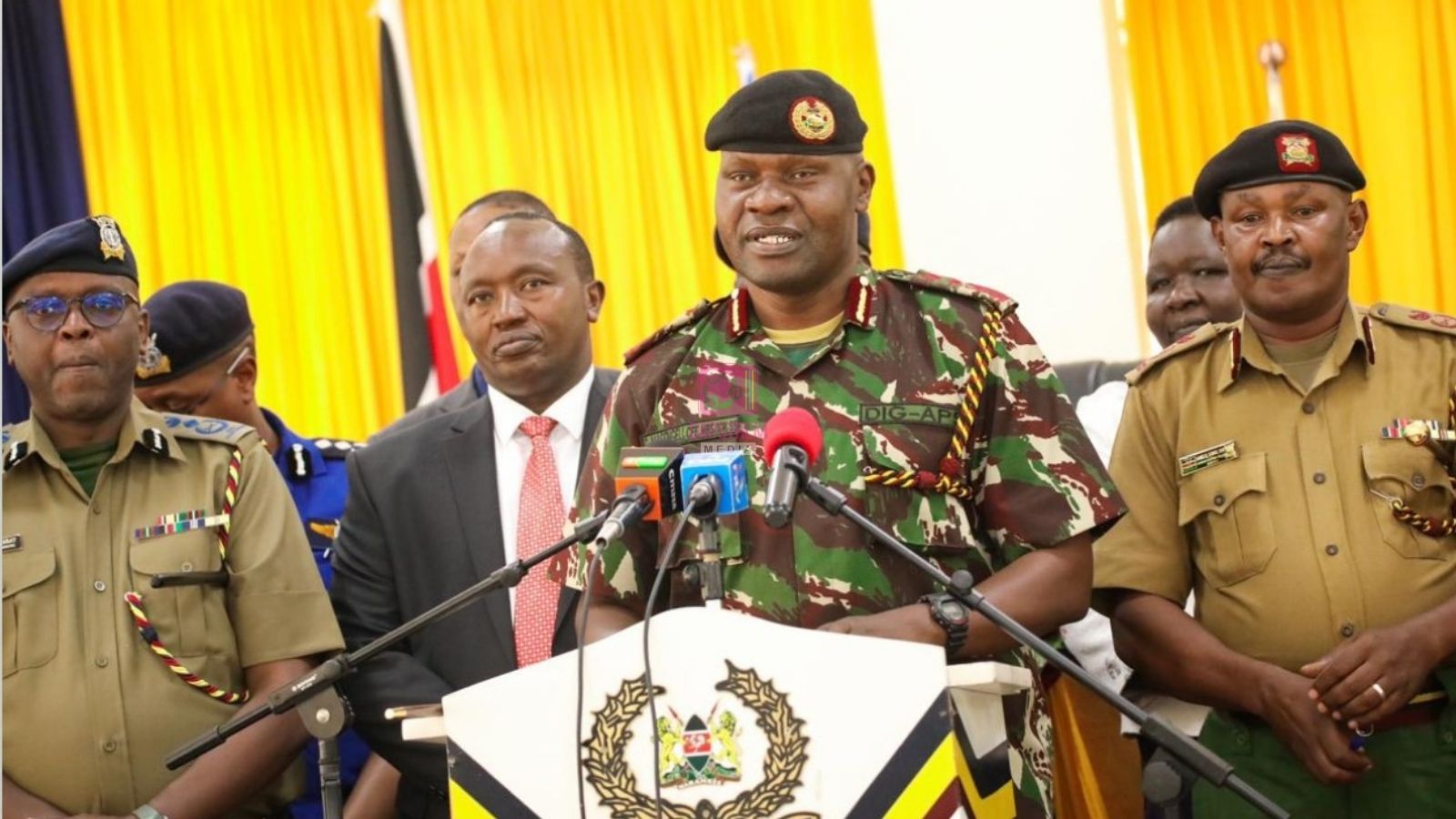
Deputy Inspector General of Police Eliud Masengeli said police would pay particular attention to areas where political hooliganism and gangs are considered a threat. He warned that security agencies would confront groups that attempt to disrupt political meetings, attack opponents or destroy property.
“For us as police, our main aim is to make sure the public is safe,” Masengeli said, while also calling on politicians to stop using young people as shields for political interests.
The announcement comes at a sensitive time for Kenya. With the 2027 elections approaching, political parties and potential candidates are increasingly positioning themselves, holding public meetings and building grassroots networks. The political temperature is expected to rise further as the country moves closer to the campaign period.
For the police, this means preparations cannot wait until election year.
The mapping exercise is therefore intended to give security commanders a clearer picture of areas where violence could emerge, the nature of threats in those locations and the resources that may be required to prevent escalation.
Police spokesperson Muchiri Nyaga had earlier disclosed that security agencies were already categorising areas according to levels of political goonism, including moderate, high and very high-risk locations. He said tackling political goonism was not solely a police responsibility and required communities and other institutions to play their part.
The latest exercise reflects a growing recognition among security and governance institutions that election violence does not suddenly appear on polling day.
In many cases, warning signs emerge weeks or months before an election.
They can include the mobilisation of criminal groups, inflammatory political speeches, ethnic or community-based mobilisation, threats against opponents, attacks on political meetings, the spread of misinformation and the movement of armed groups into politically sensitive areas.
Identifying these warning signs early can give authorities an opportunity to intervene before violence becomes widespread.
Kenya’s history makes such preparations particularly important.
The country experienced its worst episode of election-related violence following the disputed 2007 presidential election. More than 1,000 people were killed and hundreds of thousands displaced during the crisis, while communities in several parts of the country were caught in politically and ethnically driven violence.
Although Kenya has since conducted relatively peaceful elections, the memory of 2007 and 2008 remains a major factor in discussions about electoral security.
Civil society organisations have already raised concerns about the re-emergence of political gangs and organised violence ahead of 2027.
The International Commission of Jurists has warned that some of the patterns currently being observed resemble those that preceded the 2007/08 post-election violence. ICJ chairperson Christine Alai said criminal gangs could become particularly dangerous if political actors were able to mobilise them for electoral purposes.
That warning has added urgency to the police mapping exercise.
The concern is not necessarily that every area identified as a hotspot will experience violence. Rather, mapping is intended to help authorities understand where risks are higher and determine how best to prevent them.
Police themselves have previously cautioned that the word “hotspot” should not automatically be interpreted as a declaration that a particular community or neighbourhood is violent.
A National Police Service document explains that policing hotspots are generally based on concentrations of recorded incidents and are used as an internal management tool to help determine where limited security resources should be deployed. It also notes that hotspots can change over time as political and social conditions change.
This distinction is important because labelling an area as violent can itself create fear and stigma.
The purpose of mapping should therefore be prevention rather than profiling.
Security agencies will need to ensure that information gathered during the exercise is used to protect residents and political actors rather than to target communities based on their political affiliations, ethnicity or perceived opposition to the government.
That is where police neutrality becomes particularly important.
Inspector General of Police Douglas Kanja has already outlined neutrality, professionalism, human rights and inter-agency cooperation as key principles of the National Police Service’s preparations for the 2027 elections.
Kanja said the police would work with the Independent Electoral and Boundaries Commission and other stakeholders to support a peaceful, secure and credible electoral process. The NPS has adopted a phased preparedness plan covering the period beginning in September 2026 and extending through the post-election period in 2027.
The phased approach is significant because election security involves much more than deploying officers on voting day.
Police have to prepare for political rallies, party nominations, campaign events, election-day operations, counting centres, results transmission, protests and the period immediately after results are announced.
Each stage can produce different security challenges.
Political party nominations, for example, can be particularly competitive because aspirants from the same party are competing against one another.
Disagreements over nominations can lead to confrontations between supporters, especially where candidates have large political networks or access to organised groups.
Campaign rallies can also become flashpoints when supporters of rival parties meet.
In some cases, violence can begin with verbal confrontations before turning into stone throwing, destruction of property or physical attacks.
Police mapping can help identify such patterns and allow commanders to plan preventive measures.
The exercise also comes amid increasing concerns over the role of organised gangs in Kenyan politics.
Civil society groups have warned that criminal groups can be recruited or used to intimidate political opponents, disrupt meetings and create fear among voters.
Human Rights Watch recently raised concerns over attacks on civil society and opposition political gatherings in the run-up to the 2027 elections. The organisation said unidentified armed groups had attacked several gatherings, with at least six people reportedly killed and dozens injured over recent months. It called on Kenyan authorities to conduct prompt and transparent investigations and ensure citizens can exercise their political rights without fear of violence.
These concerns demonstrate why mapping alone cannot be enough.
Identifying a hotspot is only the first step.
Authorities must then determine what is driving the risk and what interventions are appropriate.
In some areas, the problem may be organised criminal gangs.
In others, it may be land disputes, historical community tensions, competition over local political positions or inflammatory political rhetoric.
There may also be urban areas where economic hardship and unemployment make young people vulnerable to recruitment by political groups.
That is why the police have repeatedly said political goonism is not purely a policing problem.
The involvement of communities, religious organisations, civil society groups, local administrators and political leaders is essential.
Kenya has also been developing early-warning mechanisms beyond traditional policing.
In July, police and civil society organisations launched the Early Warning and Early Response, or EWER107, digital platform to track signs of conflict and prevent violence before it escalates.
The system was rolled out across 14 counties in the Rift Valley and is intended to strengthen the ability of authorities and communities to respond to emerging threats.
Another initiative, known as PeacePulse, is targeting young people in 11 counties.
The programme is designed to monitor early signs of electoral violence, misinformation and hate speech both in communities and on digital platforms. It covers Nairobi, Machakos, Kajiado, Kiambu, Homa Bay, Migori, Mombasa, Lamu, Tana River, Nyeri and Garissa.
The involvement of young people is particularly important because they are often at the centre of political mobilisation.
Young people make up a large proportion of Kenya’s population and are heavily involved in political campaigns, online discussions and street demonstrations.
They can therefore either become a source of political tension or play a major role in preventing it.
The challenge is to ensure that young people are not recruited as political foot soldiers.
Masengeli specifically warned politicians against using young people as shields for political gains.
That warning reflects a longstanding concern in Kenya’s elections.
Political leaders may have the resources and influence to organise campaigns, but it is often ordinary young people who end up facing arrest, injury or death when political confrontations turn violent.
Their communities can also suffer when businesses are destroyed, transport is disrupted and families are forced to flee their homes.
This is why political leaders have a major responsibility in preventing election violence.
Security agencies can deploy officers, but they cannot eliminate political incitement on their own.
Candidates and parties must also reject violence and avoid encouraging supporters to attack rivals.
The National Cohesion and Integration Commission has similarly been preparing for the 2027 elections.
The commission recently launched a roadmap aimed at preventing electoral violence and identified political intolerance, ethnic mobilisation, misinformation, disinformation, unemployment, historical grievances, organised criminal gangs and community conflicts among the potential drivers of electoral conflict.
The NCIC plans to conduct nationwide conflict hotspot mapping, strengthen mediation structures and monitor social media and public spaces for hate speech and dangerous speech.
This means several institutions are now working on different parts of the same problem.
The police are mapping security risks.
NCIC is monitoring conflict and hate speech.
Civil society organisations are developing early-warning mechanisms.
Young people are being recruited to identify threats.
IEBC is engaging security agencies as part of preparations for the election.
The success of these efforts, however, will depend heavily on coordination.
Kenya cannot afford to have different institutions collecting information without sharing it or responding to the same warning signs in completely different ways.
The 2022 election offers an important lesson in this regard.
Research examining police preparedness during the 2022 election found that coordinated efforts between police, local administrators, community representatives and other stakeholders helped diffuse tensions in areas that had previously experienced violence.
Community dialogue, visible police presence, information sharing and early intervention were among the approaches that helped prevent tensions from escalating.
That experience suggests that policing alone is not necessarily the answer.
In some communities, residents may be more willing to report threats when they trust local authorities.
In others, respected elders, religious leaders or community organisations may be able to intervene before a dispute becomes violent.
The police therefore need to build relationships with communities well before election day.
Trust will be particularly important.
Citizens must be confident that reporting a potential threat will not expose them to retaliation or political victimisation.
At the same time, security agencies must demonstrate that they will respond to threats regardless of which political side is involved.
A peaceful election requires equal protection for everyone.
That includes government supporters, opposition supporters, independent candidates, journalists, civil society organisations, election officials and ordinary voters.
The mapping exercise must therefore remain professional and evidence-based.
It should not be used to classify communities as loyalists or opponents.
It should focus on identifiable risks such as criminal activity, previous incidents of violence, threats against political meetings, mobilisation of armed groups, hate speech and other warning signs.
Another major challenge will be misinformation.
Social media has transformed the way political information spreads in Kenya.
A false claim can reach thousands of people within minutes.
Videos can be taken out of context, old footage can be presented as new, and fabricated messages can create panic before authorities have an opportunity to respond.
Artificial intelligence is adding another layer to the problem because manipulated audio, photographs and videos can increasingly appear convincing.
NCIC has already identified the rapid growth of artificial intelligence alongside misinformation and disinformation as an emerging electoral challenge.
Police and other agencies will therefore need to monitor the digital environment without undermining legitimate freedom of expression.
This will require a careful balance.
Authorities have a responsibility to prevent incitement and violence, but citizens must also retain the right to criticise political leaders, debate policies and express their political opinions.
Over-policing political speech could create another source of tension.
The same principle applies to demonstrations.
Peaceful assembly is a fundamental democratic right, and security agencies must distinguish between peaceful protesters and individuals who deliberately engage in violence or destruction of property.
The success of the 2027 security plan will partly depend on whether police can maintain this distinction.
There will also be pressure on police resources.
Kenya is a large country, and the NPS cannot place large numbers of officers in every location considered potentially sensitive.
This makes risk assessment important.
Mapping allows police commanders to prioritise resources based on available intelligence.
However, a hotspot map should not become static.
Political alliances change.
Candidates emerge.
Community tensions can rise or fall.
A previously peaceful area can suddenly become volatile following a controversial political incident.
The National Police Service itself has acknowledged that hotspots can change with time and circumstances.
Continuous monitoring will therefore be necessary.
The ultimate measure of the mapping exercise will not be the number of areas identified.
It will be whether violence is actually prevented.
Kenya has an opportunity to approach the 2027 election differently by acting on warning signs before they become crises.
Instead of waiting for crowds to clash, authorities can intervene when intelligence shows that violence is being organised.
Instead of waiting for hate speech to trigger attacks, relevant institutions can address dangerous rhetoric early.
Instead of waiting for political gangs to become powerful, security agencies can investigate criminal networks and hold their organisers accountable.
And instead of waiting for communities to become divided, local leaders can bring rival groups together for dialogue.
That approach would make election security more preventive and less reactive.
The police mapping exercise is therefore an important early step, but it must be accompanied by accountability.
Whenever violence occurs, investigations must be conducted quickly and transparently.
Those who organise or finance violence should face the law regardless of their political connections.
This is especially important because failure to hold perpetrators accountable can encourage future violence.
If political actors believe they can use gangs or criminal groups without consequences, the problem can become entrenched.
But if organisers understand that violence will lead to investigation and prosecution, the incentive to use young people as political weapons becomes weaker.
As Kenya approaches the 2027 General Election, the country is once again being reminded that electoral peace cannot be left to chance.
The work has to begin long before voters line up at polling stations.
Police mapping, early-warning systems, community dialogue, monitoring of hate speech, responsible political leadership and strong accountability all have a role to play.
The coming months will test whether Kenya can turn the lessons of previous elections into practical preventive action.
For ordinary Kenyans, the expectation is straightforward.
They want to attend political meetings without fear.
They want to vote without intimidation.
They want to support candidates of their choice without becoming targets.
They want their businesses and homes protected regardless of political affiliation.
And they want security agencies to protect everyone equally.
The 2027 election is still months away, but the preparation for a peaceful election has already begun.
The decision by the National Police Service to map potential violence hotspots signals that security agencies are attempting to get ahead of the risks.
The challenge now is to ensure that the information gathered is converted into meaningful action.
If the mapping identifies a community at risk, authorities must engage that community.
If it identifies criminal networks, investigations must follow.
If it identifies inflammatory political rhetoric, political leaders must be held accountable.
If it identifies misinformation capable of triggering violence, accurate information must reach the public quickly.
And if it identifies young people being recruited into political gangs, interventions must focus on dismantling the networks behind the recruitment rather than simply arresting the young people at the bottom of the chain.
Kenya’s electoral history has shown the devastating cost of waiting until violence has already begun.
The country therefore has an opportunity to prove that election security can be built around prevention, professionalism and respect for rights.
The mapping of hotspots may appear to be a technical exercise, but its success could have a direct impact on the safety of millions of voters.
As political competition intensifies, the responsibility will belong not only to the police but also to politicians, communities, civil society, religious leaders, the media and ordinary citizens.
The goal should be clear: identify the danger early, address the causes before they escalate and ensure that every Kenyan can participate in the 2027 election without fear.