
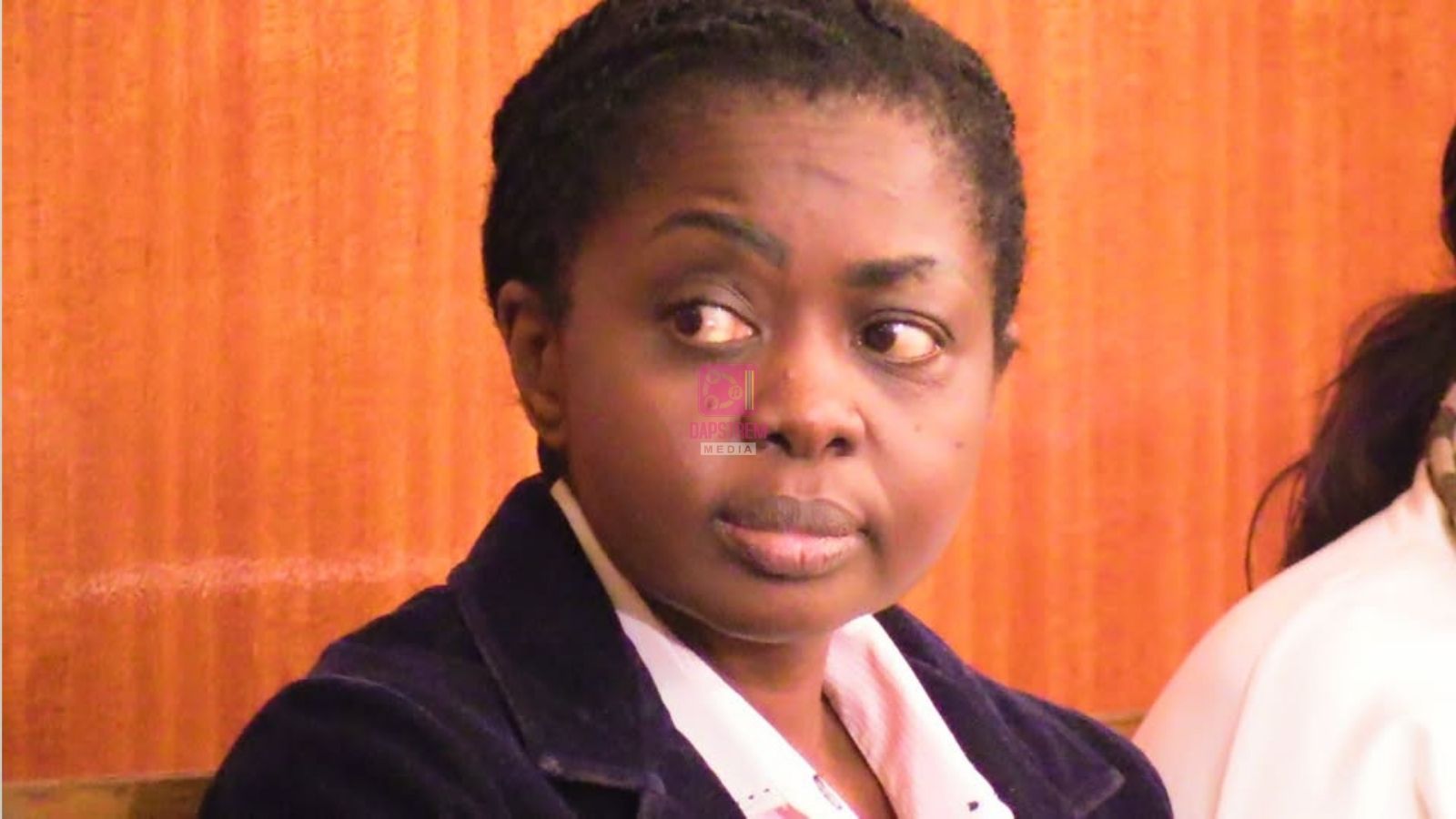
Lawyer Angela Mulwa Re-Arrested as Police Link Her to Murder of Dr Victoria Mutiso
The murder investigation into clinical psychologist and mental health researcher Dr Victoria Nthunya Mutiso has taken another dramatic turn after city lawyer Angela Mulwa was re-arrested and is now set to face a murder charge over the killing of her stepmother.
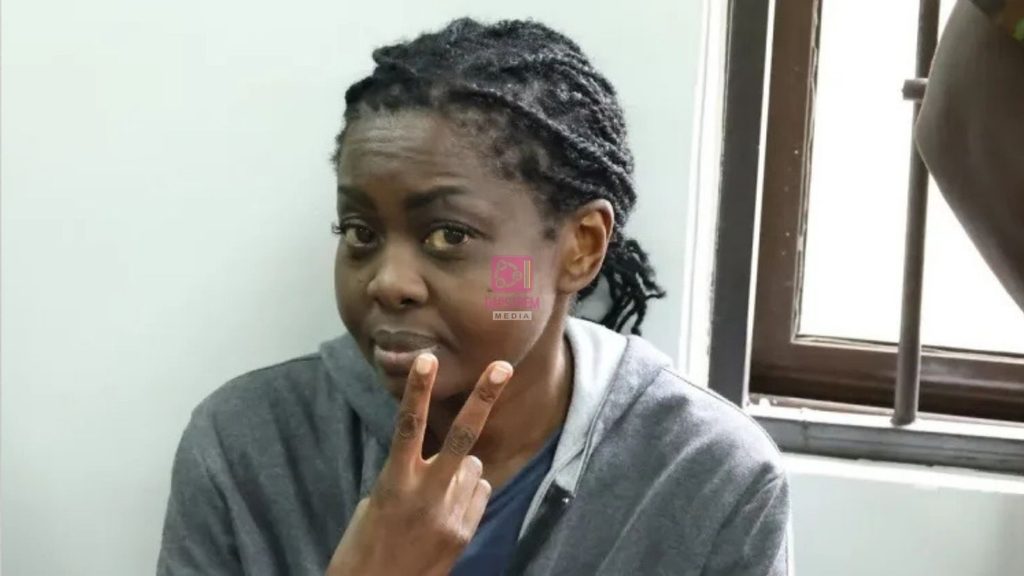
Mulwa was re-arrested on August 20, 2026, shortly after she secured her release on a Sh1 million cash bail in a separate case involving alleged theft of vehicles linked to property associated with the late Dr Mutiso and her husband, Prof David Ndetei. She was subsequently taken back into custody by Directorate of Criminal Investigations (DCI) homicide detectives as investigators moved to process her for a substantive murder charge.
The latest development has significantly escalated a case that has already attracted widespread public attention because of the circumstances surrounding Dr Mutiso’s death, the property dispute surrounding her family and the growing number of people being investigated in connection with the killing.
Mulwa is expected to be charged alongside her mother, Rose Mbithe Mulwa, and brother, Chris Mulwa, with the matter set to come before the Milimani Law Courts. The prosecution’s decision to pursue a murder charge marks a major shift from the earlier stage of the investigation, when Mulwa had primarily been held as a person of interest in relation to alleged vehicle theft and other issues connected to the wider investigation.
The DCI has now placed her at the centre of its murder inquiry, alleging that preliminary investigations have established that she played a significant role in the events leading to Dr Mutiso’s death. The allegations remain matters for the prosecution to prove in court, and Mulwa remains presumed innocent unless and until a court finds otherwise.
Dr Mutiso was fatally shot on July 29, 2026, while travelling in an Uber in Nairobi’s Upper Hill area. According to reports, her vehicle was blocked by a black Toyota Prado near the junction of Mbagathi Link Road and Mawenzi Road before gunmen riding on a motorcycle opened fire. She was rushed to Kenyatta National Hospital but was pronounced dead on arrival.
The killing immediately triggered a major homicide investigation, with detectives seeking to establish who planned the attack, who executed it and what motive may have been behind the shooting.
One of the major lines of inquiry has been a long-running dispute involving property in Mlolongo. Investigators have been examining whether the dispute could be connected to the circumstances surrounding Dr Mutiso’s killing.
The property dispute reportedly involves a parcel of land and developments associated with Prof David Ndetei and Dr Mutiso. Police have been investigating allegations surrounding the eviction and demolition of property on the land, as well as the subsequent disappearance of several vehicles.
The DCI has said that the property dispute is among the issues being investigated as detectives attempt to establish the motive behind the murder.
The investigation has also drawn attention to an alleged Sh300,000 payment that detectives claim was made as a down payment in an earlier attempt to have Dr Mutiso killed.
According to an affidavit presented by the DCI, investigators allege that Mulwa was present on April 24, 2026, when the money was allegedly paid in connection with an earlier plan to kill Dr Mutiso. The police claim that the first attempt did not succeed.
This allegation is among the most serious pieces of information emerging from the current investigation. However, it remains an allegation contained in the investigators’ case and will have to be tested through the criminal justice process.
Detectives have also alleged that Mulwa maintained communication with a senior police officer whose firearm was allegedly used in the murder. The DCI says communication records are part of the evidence it is examining as it seeks to establish the roles played by different individuals.
The claims have added another layer to an already complicated investigation because they suggest that detectives are not only examining the alleged actions of the people directly connected to the family dispute but are also tracing communication networks, financial transactions and possible links to individuals outside the family.
The DCI has been conducting forensic examinations of CCTV footage and communication records as part of the investigation. Earlier court proceedings revealed that detectives were reviewing CCTV footage from the Upper Hill area in an effort to identify people and vehicles that may have been connected to the shooting.
The black Toyota Prado reportedly seen in the area where Dr Mutiso was attacked has also formed part of the investigation.
Vehicles have become an important element of the case because detectives have been investigating several cars allegedly taken from property linked to Dr Mutiso and Prof Ndetei. One of the vehicles, a black Range Rover Sport reportedly valued at about Sh15 million, was recovered from premises associated with Mulwa, according to investigators.
That investigation initially resulted in Mulwa and another suspect, Nelson Masiga Makaralu, being detained
A Mavoko court later released Mulwa and Masiga on Sh1 million bond each after declining a request by prosecutors for additional time to hold them while investigations continued. Mulwa’s release, however, lasted only a short time before homicide detectives re-arrested her over the murder investigation.
The sequence of events has raised important legal questions, particularly concerning the use of separate miscellaneous applications to obtain detention orders while investigations continue.
Mulwa’s lawyers challenged the continued proceedings, arguing that if investigators had sufficient evidence linking their client to the murder, she should be formally charged rather than repeatedly subjected to detention applications.
On Monday, August 24, Milimani Magistrate Joan Mati dismissed Mulwa’s preliminary objection challenging the jurisdiction of the court to hear the application seeking her detention. The court held that the objection did not meet the required threshold and allowed the proceedings to continue.
The ruling clears the way for investigators and prosecutors to proceed with the murder case against Mulwa.
The involvement of her mother and brother has made the case even more striking.
Rose Mbithe Mulwa and Chris Mulwa had already been detained in connection with the murder investigation. Their detention followed allegations concerning threats reportedly made against Dr Mutiso before her death. Investigators have said that the deceased had previously reported being followed and threatened.
According to the DCI, Dr Mutiso had reported an earlier incident at Kilimani Police Station on July 7, 2026, after allegedly escaping an attempted attack. Investigators are now examining that report alongside the events that eventually culminated in her killing on July 29.
The earlier threats could become an important part of the prosecution’s case if investigators are able to establish a connection between those incidents and the eventual shooting.
The case has consequently moved beyond the question of who pulled the trigger.
Investigators are now attempting to establish whether the killing was planned, who may have financed or facilitated it, whether there were earlier attempts to carry it out and whether the property dispute provided a possible motive.
Those questions could become central when the accused persons are formally charged.
The murder of Dr Mutiso has generated significant public interest because she was a prominent mental health professional and researcher. Her death came as a shock to colleagues, friends and members of the medical and mental health communities.
The circumstances of her death have also generated considerable concern because the attack occurred in Nairobi while she was travelling in a vehicle, demonstrating the vulnerability of even prominent professionals to organised criminal attacks.
The investigation has therefore attracted significant pressure on detectives to establish the truth and ensure that anyone responsible is brought before the courts.
At the same time, the case presents a major test for the principle of due process.
The seriousness of the allegations should not be confused with proof of guilt.
Mulwa, her mother and her brother are entitled to the presumption of innocence and the right to defend themselves in court. Any evidence presented by investigators will have to be tested through the judicial process.
This will be particularly important because some of the allegations emerging from the investigation are highly serious, including claims of prior planning, financial payments and communication with individuals allegedly connected to the murder.
The prosecution will ultimately be required to demonstrate the connection between those allegations and the actual killing.
For investigators, the challenge will be to build a case that goes beyond circumstantial links and establishes the specific roles, if any, played by each accused person.
A murder case involving multiple suspects can be particularly complicated because different people may allegedly play different roles.
One person may be accused of planning an attack, another of financing it, another of providing information and another of carrying out the actual shooting.
The prosecution will therefore need to establish the individual responsibility of each accused person rather than relying solely on family relationships or associations.
The fact that the accused individuals are members of the same family is itself not proof of involvement.
The courts will have to examine the evidence against each person separately.
The property dispute is also likely to receive significant attention.
According to investigators, the dispute involved property that was demolished during an eviction and was valued at a substantial amount. The DCI has been examining the circumstances surrounding the eviction, the ownership of the land and the subsequent movement of vehicles from the property.
If prosecutors establish a direct link between the dispute and the killing, the alleged motive could become an important part of the case.
But if that link cannot be demonstrated, the court will have to consider the murder allegations independently of the property dispute.
The next phase of the case is therefore expected to provide greater clarity.
As Mulwa is brought before the Milimani Law Courts, prosecutors will have to formally present the charges and outline the legal basis for the case.
The defence will have an opportunity to respond to the allegations and challenge the prosecution’s evidence where appropriate.
The court will then determine how the matter proceeds in accordance with Kenyan law.
The case also highlights the importance of forensic evidence in modern criminal investigations.
CCTV footage, mobile-phone records, financial transactions, vehicle tracking information and other digital evidence can potentially help investigators reconstruct events and establish links between suspects and locations.
However, such evidence must also be properly obtained, authenticated and presented before court.
The same applies to alleged financial transactions.
If investigators claim that money changed hands as part of a murder plot, they will ultimately need to provide evidence capable of demonstrating the purpose and circumstances of the transaction.
The prosecution’s case will therefore be closely watched as it moves from investigation to formal proceedings.
For the family and friends of Dr Mutiso, the developments may bring some hope that those responsible will eventually be held accountable.
But the case is far from over.
The investigation has already demonstrated how complicated the path to justice can be when a murder is allegedly connected to family relationships, property disputes and multiple suspects.
There will also be significant public interest in whether investigators can establish the identity of the people who physically carried out the shooting.
The gunmen who allegedly opened fire on Dr Mutiso remain a critical part of the puzzle.
Establishing who hired them, how they were contacted, how they were paid and what information they received could help detectives determine the full chain of events.
The alleged involvement of a firearm linked to a police officer is another matter that could require careful investigation.
If the allegations are proven, the issue would raise serious questions about how a service firearm came to be associated with a criminal offence.
However, those claims must also be tested through evidence and due process.
The re-arrest of Mulwa therefore represents a major development, but it should be viewed as one stage in a larger investigation rather than the conclusion of the case.
The coming court proceedings will determine whether the evidence collected by detectives is sufficient to support the charges and eventually prove them beyond reasonable doubt.
For now, the focus is on the Milimani Law Courts, where the murder case is expected to take a more formal direction.
What began as an investigation into the shocking shooting of a respected mental health professional has now expanded into a complex criminal case involving several members of a family, a disputed property, alleged vehicle theft, reported threats and claims of an earlier attempt on Dr Mutiso’s life.
The prosecution will face the difficult task of connecting those separate pieces of evidence into a coherent case.
The defence, meanwhile, will have the opportunity to challenge the allegations and insist on the constitutional rights of the accused.
For Kenyans following the case, the most important expectation is that the judicial process will establish the truth based on evidence rather than speculation.
Dr Mutiso’s death has left a family mourning and raised serious questions about the circumstances that preceded the killing.
As Angela Mulwa, Rose Mbithe and Chris Mulwa face the prospect of murder charges, the courts will now become the central arena where the competing claims will be tested.
The latest development is undoubtedly a major turning point in the investigation, but it is only the beginning of what could become a lengthy legal process.
The ultimate question will be whether prosecutors can prove, through admissible and credible evidence, the specific roles allegedly played by each accused person in the death of Dr Victoria Mutiso.
Until that process is completed, the allegations remain allegations, and the accused remain entitled to the full protection of the law.