Senegal’s Parliament Speaker Resigns Two Days After President Faye Sacks PM Ousmane Sonko
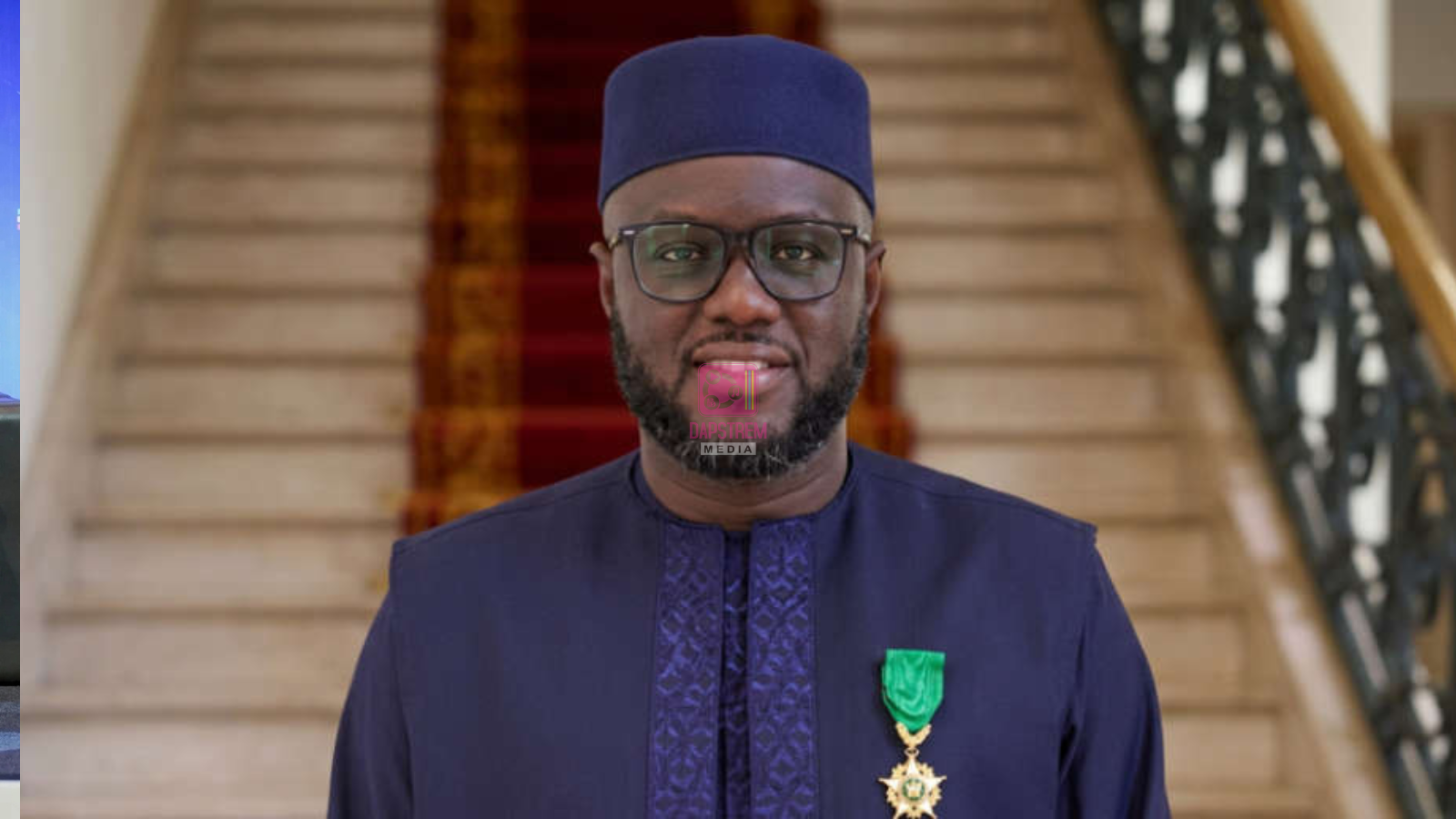
The political landscape in Senegal has been thrown into fresh uncertainty following the resignation of parliament speaker El Malick Ndiaye just two days after President Bassirou Diomaye Faye dismissed Prime Minister Ousmane Sonko and dissolved the government. The dramatic developments have sent shockwaves across the country and sparked growing concern over the stability of the ruling administration that only came to power in 2024 on a wave of public optimism and promises of reform.
Ndiaye’s resignation, announced on Sunday, marks yet another major blow to the ruling PASTEF party, which had risen rapidly from an opposition movement into the center of national power. In a brief but carefully worded statement, Ndiaye described his resignation as a personal decision made in the “higher interest of the nation,” though many political observers believe the move reflects deeper tensions within the ruling coalition and widening divisions among the country’s top leadership.
The resignation comes at a particularly sensitive moment for Senegal, a nation long viewed as one of West Africa’s most stable democracies. The sudden unraveling of unity within the country’s leadership has raised fears of political instability, especially given the strong alliance that once existed between President Faye and Sonko. Their partnership had symbolized hope for many Senegalese citizens who were frustrated with economic hardship, corruption allegations, unemployment, and rising living costs under previous administrations.
When Faye and Sonko swept into power together in 2024, many supporters saw their victory as the beginning of a new political era. Sonko, known for his fiery speeches and anti-establishment politics, had built a loyal grassroots following over the years. However, legal challenges had complicated his presidential ambitions, paving the way for Bassirou Diomaye Faye, a close ally and fellow PASTEF member, to emerge as the presidential candidate. Their alliance proved successful, defeating the political establishment and energizing young voters across the country.
At the time, the partnership between the two leaders appeared unbreakable. Sonko was widely regarded as the ideological force behind the movement, while Faye presented a calmer, more measured leadership style that appealed to broader sections of the electorate. Together, they promised transparency, economic reforms, institutional independence, and stronger governance.
But beneath the public image of unity, tensions reportedly began to emerge within months of taking office. Differences over governance style, economic policy, political appointments, and management of national affairs gradually widened. Sources close to the administration suggest that disagreements intensified as Senegal faced mounting economic pressure tied to growing debt obligations and global instability.
The domestic impact of the Iran war added another layer of strain to the already fragile economic situation. Rising global fuel prices, inflation, disruptions in international trade, and increasing pressure on government spending reportedly fueled disagreements within the administration on how best to respond. While some leaders pushed for aggressive state intervention and populist economic policies, others favored more cautious fiscal management to reassure international lenders and investors.
These policy disagreements are believed to have contributed significantly to the breakdown in relations between Faye and Sonko. Over recent months, rumors of friction between the president and the prime minister became increasingly difficult to ignore. Political analysts pointed to public disagreements, delayed policy decisions, and signs of internal rivalry as evidence that the once-powerful alliance was weakening.
The dismissal of Sonko on Friday therefore did not come entirely as a surprise to insiders, though the speed and scale of the fallout have stunned many Senegalese citizens. By dissolving the government, President Faye effectively reset the country’s executive leadership, signaling his intention to regain control of the political direction of the administration.
However, Sonko remains one of the most influential political figures in Senegal and continues to command strong support among young people and grassroots activists. His removal could potentially trigger political resistance, protests, or even fractures within the ruling PASTEF movement. Already, supporters on social media and within political circles have begun questioning whether the party can remain united without the close cooperation that once existed between its two most prominent leaders.
El Malick Ndiaye’s resignation further complicates the situation. As parliament speaker, Ndiaye occupied one of the most powerful institutional positions in the country and was considered a key pillar within the PASTEF political structure. His departure has fueled speculation that more resignations or internal divisions could emerge in the coming days.
For many observers, Ndiaye’s decision appears less like an isolated personal move and more like part of a broader political realignment taking place behind the scenes. Some analysts believe senior figures within the ruling coalition may now be forced to choose sides between loyalty to President Faye and continued alignment with Sonko’s political vision.
The uncertainty also raises important questions about the future of governance in Senegal. Investors, international partners, and regional allies are likely to watch developments closely as the country navigates this turbulent political phase. Senegal has historically been praised for peaceful transitions of power and institutional stability, making the current turmoil particularly significant for the wider West African region.
Opposition parties are also expected to capitalize on the unfolding divisions. Critics of the ruling administration argue that the current crisis exposes weaknesses within the coalition and demonstrates the difficulty of transforming a protest movement into a stable governing force. Others, however, insist that political disagreements are normal within democracies and that Senegal’s institutions remain strong enough to manage the transition peacefully.
Ordinary Senegalese citizens now find themselves watching a government they elected with enormous hope facing one of its biggest tests only a short time after taking office. Many had expected rapid economic improvements, job creation, and political reforms. Instead, they are witnessing high-level resignations, power struggles, and uncertainty over the country’s future direction.
The coming days will likely prove crucial for Senegal’s political future. President Faye faces the difficult task of restoring confidence, rebuilding government cohesion, and reassuring both citizens and international partners that the country remains stable. At the same time, Ousmane Sonko’s next political move could significantly shape the direction of the crisis. Whether he chooses confrontation, negotiation, or political mobilization will determine how deeply the divisions within PASTEF evolve.
Senegal stands at a political crossroads. The alliance that once inspired millions now appears fractured, and the resignation of parliament speaker El Malick Ndiaye has intensified concerns that the crisis may be far from over. As the nation waits for further announcements and political reactions, one thing is increasingly clear: the balance of power within Senegal’s leadership has fundamentally shifted, and the consequences could redefine the country’s political landscape for years to come.